


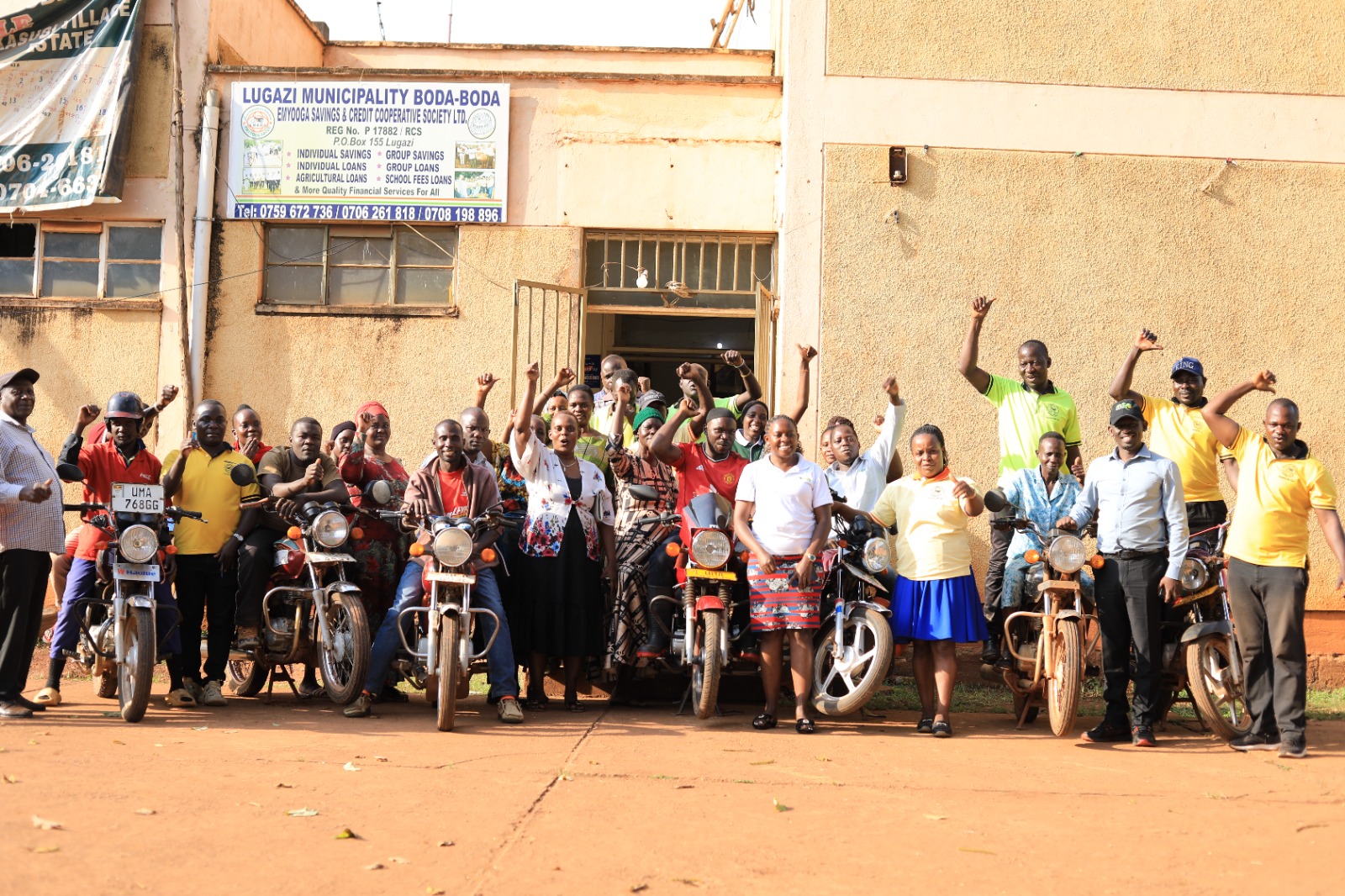
LUGAZI — Six years ago, a handful of boda boda riders in Lugazi Municipality shared a simple dream: to own a savings cooperative that would free them from exploitative lenders and expensive motorcycle financing schemes.
Today, that dream has evolved into one of the growing Emyooga success stories in Buikwe District.
The Lugazi Municipality Boda-Boda Emyooga Savings and Credit Cooperative Society (SACCO) Ltd, supported by the Microfinance Support Centre (MSC) under the Government’s Presidential Initiative on Wealth and Job Creation (Emyooga initiative), has grown from just 30 members to 1,450 members organised in 82 Associations, built capital worth about Shs350 million, mobilised Shs310 million in member savings, and disbursed more than Shs1 billion in loans.
Beyond the figures, members say the SACCO has changed livelihoods by helping riders own motorcycles, families acquire land, women start businesses, and parents educate their children without falling into crippling debt.
“Our dream was always to have a SACCO, but we lacked the resources,” said Gitta Joseph, Chairperson of Lugazi Municipality Boda-Boda Emyooga SACCO.
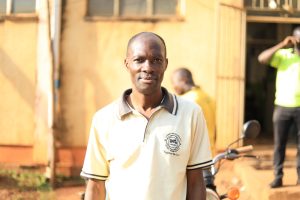
“When President Museveni introduced the Emyooga Initiative, it presented the opportunity we had been waiting for because it aligned perfectly with our dream.”
The SACCO officially opened in 2020 after members raised Shs3 million through their own savings before receiving Shs30 million in Emyooga seed capital from MSC in 2021. Later, MSC provided another Shs 40 million, giving the cooperative the financial muscle to expand its lending portfolio.
Gitta says government funding alone did not build the SACCO. “Capacity building has also played a major role in our success. The Microfinance Support Centre has provided us with continuous training. When we started, we had limited knowledge of how to run a SACCO effectively. Through the Centre’s support, we visited other successful SACCOs to learn best practices and improve our operations,” he said.
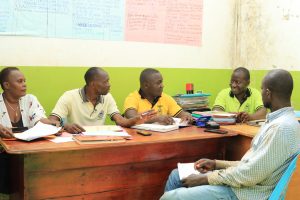
Those exchange visits exposed the leadership to governance structures, savings mobilisation and sustainable business models adopted by more established SACCOs.
The cooperative has since diversified beyond lending. It is planning to construct its own office within two years and has already started a dairy enterprise with three cows to create additional income streams beyond members’ contributions.
Treasurer Kigenyi Michael says MSC’s support transformed not only the SACCO’s finances but also its management systems.

“The Microfinance Support Centre trained our SACCO leaders, who in turn trained association leaders, and those leaders passed the knowledge on to members. One of the strengths of our SACCO is that anyone can start saving, even with as little as Shs1,000,” he said.
He added that the SACCO now operates both manual and digital banking systems.
“We use Stanbic Bank’s FlexiPay platform, where we have created unique payment codes for different groups. This allows members to deposit money without having to come physically to the SACCO offices,” he explained.

The SACCO has also adopted internal mechanisms that ensure sustainability. Whenever a member takes a loan, 10 percent is converted into shares while 20 percent goes into compulsory savings, steadily growing members’ equity.
Michael says the cooperative currently has Shs41 million in share capital and has disbursed more than Shs401 million in loans among members in addition to its broader lending portfolio.
One of its most popular products is motorcycle financing.

“A motorcycle worth about Shs5 million can end up costing someone Shs11 million or more through commercial financing companies. In our SACCO, we ensure that members pay no more than about Shs7 million. So far, we have financed more than 30 motorcycles,” he said.
The impact of those loans is evident in the lives of members.
For Namazzi Lillian, a nurse and mother of five who now chairs the Sagazi Victors Association, joining the SACCO marked the first time she embraced a culture of saving.
She had initially wanted a Shs.5 million loan but was first required to become a member and save regularly.

“I started by saving Shs120,000 and eventually qualified for my first loan of Shs400,000. Today, my business has grown significantly, and I can now access loans of up to Shs2 million from the SACCO,” she said.
She says affordable credit has replaced dependence on predatory moneylenders. “I borrowed Shs1.2 million from a money lender and had to pay Shs190,000 every month for an entire year. By the time I finished repaying the loan, my drug shop had almost collapsed,” she recalled.
“This SACCO has given me peace of mind. As a single mother, I can now support my children, who are all in school, without the constant fear of losing everything.”
Another beneficiary, Kigenyi Acram, 30, says the SACCO rescued him after the COVID-19 pandemic wiped out his livelihood as a builder and porter.

“A friend introduced me to the SACCO and encouraged me to start saving whatever little money I could. I gradually saved up to Shs1 million. The SACCO then helped me acquire a motorcycle through its loan programme,” he said.
After repaying the first loan, he qualified for another motorcycle and now works as a Safe-Boda rider.
“Today, I ride using my own motorcycle. My life has changed completely. Through the income I earn, I have bought a plot of land, built a house, and improved the welfare of my family,” he said.
He believes SACCO financing offers a better alternative to commercial motorcycle financing companies.
“A motorcycle worth about Shs7 million can eventually cost more than Shs12 million. That is why I believe borrowing through my SACCO is a much better option.”
The benefits extend even to those employed by the cooperative itself.
Rehema Naluzze, SACCO Manager, says the SACCO has created jobs while improving household incomes.
“We currently employ four staff members, including a cashier, an office assistant, a cook, and me. The SACCO has created these jobs, enabling us to earn stable incomes and support our families,” she said.

Naluzze herself has benefited directly from the institution she manages.
“Through the SACCO, I was able to access a loan that helped me buy a motorcycle, which now generates income for me. Today, I can comfortably pay school fees for my children, provide for my family, and look to the future with confidence,” she said.
According to the SACCO’s Chairperson, Gitta, the SACCO’s greatest achievement goes beyond financial growth. He says that members who once rented motorcycles now own them, while others have bought land and built homes, and many have invested in farming, poultry, and businesses for their spouses.
“The SACCO has transformed our community in many ways. Members acquire motorcycles through the SACCO and repay gradually, which protects them from exploitation. We also help members acquire plots of land, while farmers access loans to invest in activities such as poultry keeping. All these initiatives have contributed significantly to transforming the livelihoods of our members and the wider community,” he said.

The cooperative has an ambitious vision. “By 2030, we hope to have grown from a SACCO into a bank, or at least be very close to achieving that goal,” Gitta said.
“We are confident that our SACCO can now stand on its own. Thanks to the training we have received, our growing membership, and the strong foundation we have built, we believe we are well-positioned to continue growing independently.”
The Presidential Initiative on Wealth and Job Creation, also known as Emyooga, was launched by President Yoweri Museveni in 2019 to transform Ugandans’ lives by increasing access to financial services and promoting wealth creation.
The programme targets economically active Ugandans, including women, youth, and persons with disabilities, organised under eighteen (18) Emyooga enterprises by availing seed capital to financially excluded Ugandans engaged in similar enterprises/categories.
These include Boda Boda operators, Women entrepreneurs, Carpenters, Salon operators, Taxi operators, Restaurant owners, Welders, Market vendors, Youth leaders, Persons with disabilities, produce dealers, Mechanics, Tailors, Journalists, performing artists, Veterans, widows and orphans, Fishermen and elected local leaders. By doing so, Emyooga aims to foster socio-economic empowerment for wealth and job creation, contributing to Uganda’s commitment to sustainable and inclusive economic growth and transformation.