


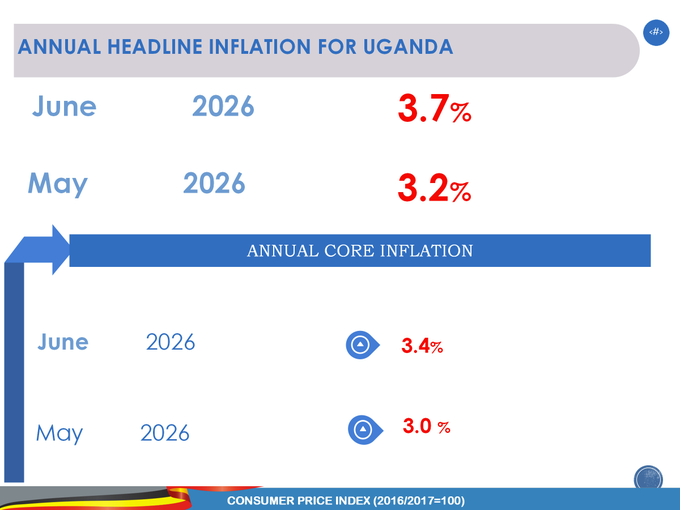
KAMPALA — Uganda’s annual inflation increased to 3.7 percent in June 2026, up from 3.2 percent in May, driven mainly by rising fuel prices, transport costs, and some services, according to the latest report from the Uganda Bureau of Statistics (UBOS).
The figures mean that, on average, Ugandans paid about 3.7 percent more for goods and services compared to the same period last year.
UBOS says the increase was largely influenced by higher costs in transport, energy (fuel and electricity), and services such as education and passenger transport.
Fuel and transport push prices up
The biggest pressure came from fuel and energy costs. Annual inflation for energy, fuel and utilities rose to 11.9 percent in June, up from 9.1 percent in May.
Petrol prices increased by 26.3 percent, diesel by 37.3 percent, kerosene by 31.7 percent, and cooking gas by 5.4 percent compared to last year.
Transport costs also went up, with transport inflation rising to 8.8 percent, driven by more expensive passenger fares and fuel costs.
Services also become more expensive
Prices in the services sector rose to 4.9 percent from 4.6 percent, mainly due to increases in education costs and transport services.
Passenger transport services inflation jumped to 11.9 percent, while education services rose to 5.7 percent, reflecting higher school-related costs.
Food prices mostly stable or falling
Food prices, however, remained relatively stable.
Food crops and related items recorded 0.0 percent inflation, meaning prices were broadly unchanged on average compared to last year.
Some foods became cheaper, including matooke, beans, onions and carrots. For example, matooke prices dropped by 6.6 percent, and dry beans by 7.2 percent.
UBOS noted that this helped cushion overall inflation from rising fuel and service costs.
What this means for ordinary Ugandans
For households and businesses, the figures show a mixed picture: fuel and transport are becoming more expensive, school and service costs are rising and food prices are stable or slightly lower.
Overall, the cost of living is rising slowly but steadily.
Monthly prices also edge up
On a monthly basis, inflation for June 2026 was 0.6 percent, slightly lower than May’s 0.7 percent.
However, fuel prices continued to rise within the month, with petrol up 9.5 percent, diesel up 13.2 percent, and cooking gas up 4.3 percent.
Food prices, on the other hand, fell during the month, helped by lower prices for matooke, beans and avocados.
Annual average inflation falls slightly
UBOS also reported that the average inflation for the financial year 2025/26 was 3.3 percent, slightly lower than 3.5 percent recorded in the previous financial year.
The bureau said this was mainly due to lower average core inflation during the year.
What experts watch next
Economists often track inflation closely because it affects borrowing costs, business prices, wages, and household budgets.
Rising fuel and transport costs are expected to remain key drivers in the coming months if global oil prices stay high.