


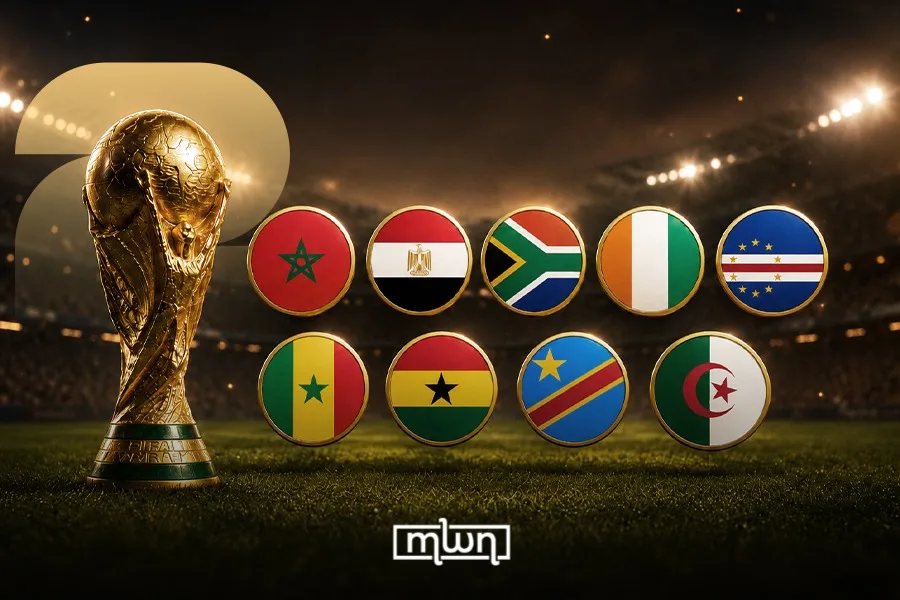
Africa has reached an unprecedented milestone at the 2026 FIFA World Cup, with a record nine nations advancing to the Round of 32, marking the continent’s strongest-ever collective performance at football’s biggest tournament.
The historic achievement comes in the first FIFA World Cup to feature an expanded 48-team format, with the knockout stage now comprising 32 teams. The nine African representatives progressing to the next round are Morocco, South Africa, Senegal, Côte d’Ivoire, Ghana, Cape Verde, Egypt, the Democratic Republic of Congo and Algeria.
The qualification of nine African teams surpasses the continent’s previous best World Cup performances and underscores the growing competitiveness of African football on the global stage. Before the start of the tournament, the Confederation of African Football (CAF) had described the expanded format as an opportunity for Africa to achieve its strongest-ever World Cup showing.
Among the standout performers has been Morocco, which continued the momentum built from its historic semi-final run at the 2022 World Cup. South Africa reached the knockout stage for the first time in its history, while Cape Verde continued its remarkable rise by qualifying alongside traditional African football powerhouses such as Senegal, Egypt, Ghana, Algeria and Côte d’Ivoire. The Democratic Republic of Congo also secured a memorable place in the Round of 32 after an impressive group-stage campaign.
The Round of 32 fixtures present several high-profile encounters for the African teams. South Africa opens the knockout stage against co-hosts Canada, Morocco faces the Netherlands, Côte d’Ivoire meets Norway, DR Congo takes on England, Senegal plays Belgium, Algeria faces Switzerland, Egypt will battle Australia, while Cape Verde has a daunting clash against defending champions Argentina. Ghana is set to face Colombia.
The achievement also highlights Africa’s impressive qualification rate. Nine of the continent’s ten representatives reached the knockout stage, with only Tunisia failing to progress from the group phase.
Football analysts say the record-breaking performance reflects years of investment in youth development, improved coaching structures and the growing experience of African players competing in Europe’s top leagues.
It also strengthens the continent’s hopes of producing its first-ever FIFA World Cup finalist—or even champion—as the tournament enters the knockout rounds.