


NEW YORK/GENEVA — The United Nations High-Level Meeting on HIV/AIDS has concluded with an overwhelming majority of Member States adopting a new Political Declaration reaffirming the global commitment to end AIDS as a public health threat by 2030.
The declaration, adopted after weeks of negotiations involving governments, communities, civil society, and development partners, sets renewed targets aimed at accelerating progress in the global HIV response over the next five years. It also reaffirms the importance of human rights, equitable access to services, and sustainable financing amid declining international funding and mounting geopolitical pressure on multilateral cooperation.
At a moment described by UN officials as challenging for global cooperation, the outcome was widely presented as a reaffirmation that collective action on HIV remains possible.
“This Political Declaration has sent a clear message: HIV remains one of the defining health and development challenges of our time, and the world cannot afford complacency. We leave New York with renewed political commitment and a shared understanding that progress is possible when countries lead, communities are empowered, and solidarity is sustained,” said Dr Aaron Motsoaledi, Minister of Health of South Africa.
Javier Padilla, Spain’s State Secretary for Health, welcomed the agreement, noting that it signals continued global willingness to act despite political divisions.
“This is a positive development in a moment when multilateral cooperation is being tested. Countries have sent an important signal. Despite differences and a more complex political context, there remains strong support for sustaining progress and accelerating action to end AIDS,” he said.
Malawi’s Minister of Health, Madalitso Baloyi, also underscored the importance of sustained collective effort. “This outcome shows that even in a very difficult global environment, countries remain committed to collective action in responding to the AIDS pandemic. The challenge now is to sustain investment, strengthen partnerships and deliver results for people,” he said.
The declaration sets out new commitments, including expanding equitable access to HIV testing, treatment and prevention, addressing funding gaps, strengthening human rights protections, advancing gender equity, and supporting local production of HIV-related medicines and technologies. It also calls for greater inclusion of communities and civil society in the response.
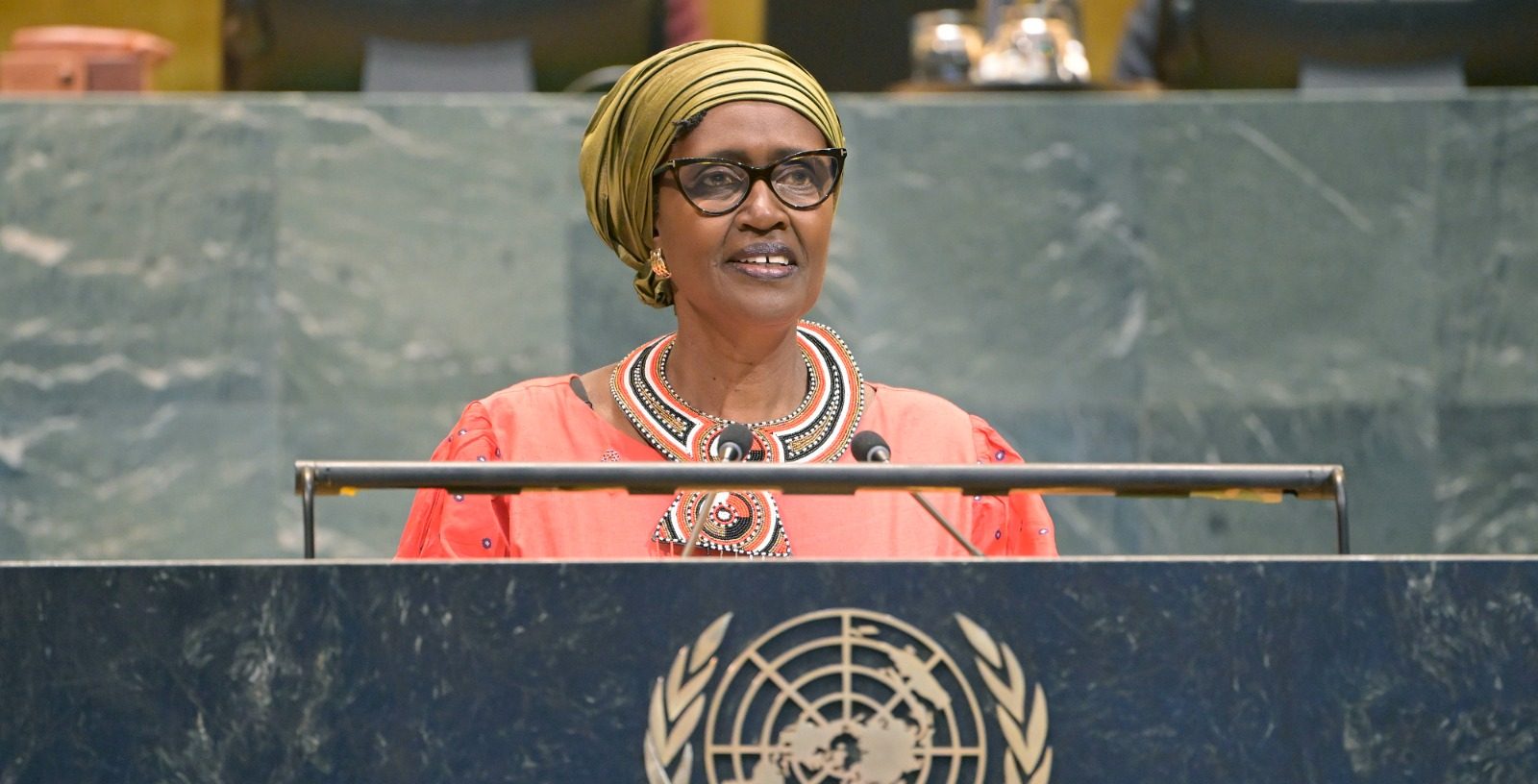
Winnie Byanyima, Executive Director of UNAIDS, welcomed the outcome, describing it as a significant step forward for global cooperation. “That so many Member States voted to support this political declaration at the moment is recognition that our progress remains worth protecting and that there is a willingness to sustain the actions we need to achieve the 2030 goal,” she said.
In a separate statement reflecting on the outcome, Byanyima added: “My deep thanks to all Member States for their engagement in the High Level Meeting on HIV/AIDS. I welcome the new Political Declaration adopted by most countries—it is our chance to build on 25 years of progress and show multilateralism can deliver. A bold step forward towards the #SDGs target to end AIDS by 2030.”
She further emphasised the importance of continued global cooperation, stating: “Governments of the world, supported by communities, have come together and affirmed that multilateralism is alive and well. A majority of countries have adopted a strong declaration that sets ambitious targets for the world to race to the 2030 goal of ending AIDS as a public health threat. They have kept the promise of 25 years ago.”
Mariangela Simao, Brazil’s Secretary of Health and Environmental Surveillance at the Ministry of Health, said the agreement reflects both progress and remaining challenges.
“The strong support shown for this Political Declaration on HIV reflects our shared recognition of the progress achieved to date, while acknowledging that important challenges remain,” she said.
Throughout the meeting, discussions highlighted the central role of communities, civil society, scientists, and the private sector in sustaining the HIV response. Delegates stressed that domestic resource mobilisation and international solidarity must complement each other, particularly as countries transition to financing models.
The High-Level Meeting was convened by the President of the UN General Assembly, Annalena Baerbock, with negotiations led by the Permanent Representatives of Botswana, Ambassador David Masole, and Georgia, Ambassador David Bakradze.
UNAIDS said the declaration provides a roadmap for accelerating progress toward the 2030 target, including a commitment to convene another High-Level Meeting in 2031 to review global progress following the milestone year.
UNAIDS concluded that while challenges remain, the adoption of the declaration marks a renewed global commitment to ending AIDS as a public health threat within the decade.