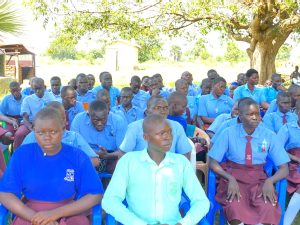



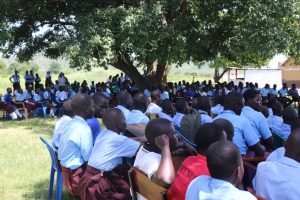
ADJUMANI — The Environmental Conservation Trust of Uganda (ECOTRUST), in partnership with government and development agencies, has spearheaded a large-scale tree planting exercise at Arinyapi Seed Secondary School in Adjumani District as part of activities to commemorate World Environment Day and strengthen climate resilience in the region.
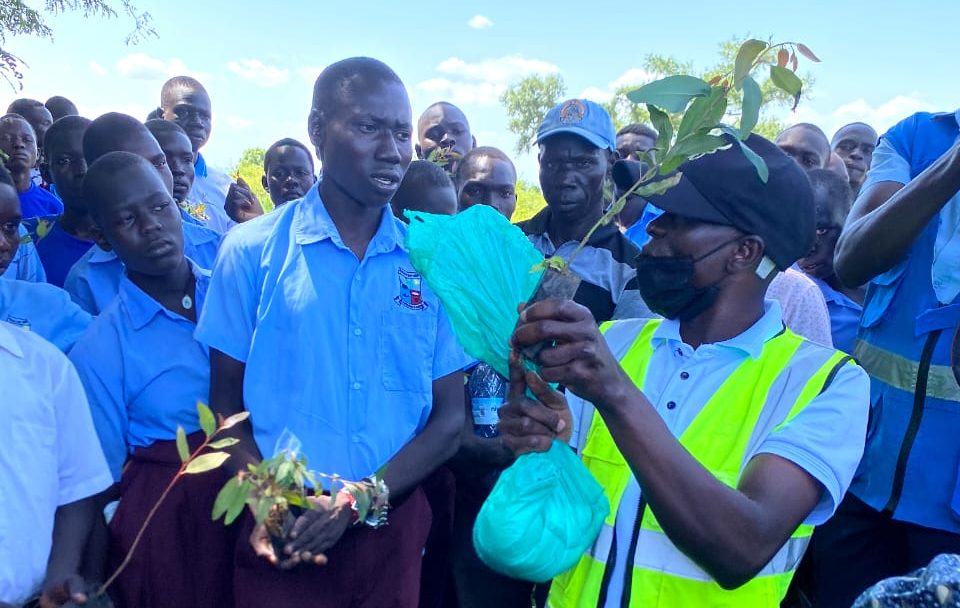
The exercise, held on June 11, brought together students, local leaders, conservation experts and development partners who planted 5,000 high-quality clonal eucalyptus seedlings across a five-acre school woodlot. The trees were planted at a standard spacing of two by two metres to ensure healthy growth, proper management and long-term sustainability.
The initiative was implemented under the Investing in Forests and Protected Areas for Climate-Smart Development (IFPA-CD) Project, a Government of Uganda programme funded by the World Bank through the Ministry of Water and Environment. The project, which concludes this month, is being implemented by a consortium comprising NIRAS International Consulting, ECOTRUST, Havilah Company Limited and Green Life International.
Project performance records indicate that Adjumani District has exceeded its institutional woodlot establishment target. Against an initial target of 368 hectares, the district has successfully established 601 hectares, representing significant progress in forest restoration efforts.
The district has also surpassed its farmer enrollment target under the programme. While the project aimed to register 1,000 farmers, ECOTRUST mobilised and enrolled 1,085 farmers, bringing overall project performance in Adjumani to 108.5 percent of its original target.
As the lead partner responsible for community engagement and model farmer enrollment, ECOTRUST coordinated the tree planting exercise, mobilised stakeholders, supervised the layout of the woodlot and worked closely with students, district officials and community members to ensure the successful establishment of the plantation.
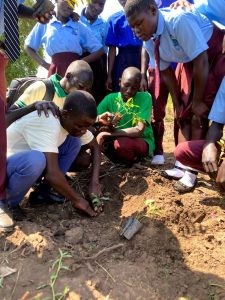
District leaders said Arinyapi Seed Secondary School was deliberately selected because the surrounding area is among the most vulnerable to the effects of climate change in Adjumani. The locality experiences extreme temperatures during dry seasons and frequent flooding during rainy periods, making environmental restoration interventions particularly important.
Speaking during the event, Adjumani District Natural Resources Officer Charles Gayoyo said the initiative is intended to safeguard critical water catchment areas while helping communities adapt to climate change.
“Arinyapi is one of the areas most affected by climate change in Adjumani. During the dry season, it becomes extremely hot, and when it rains, the area experiences flooding. Our goal is to protect the Tete River catchment and the River Nile. If we plant more trees, we will protect our water resources and strengthen our environment for future generations,” Gayoyo said.
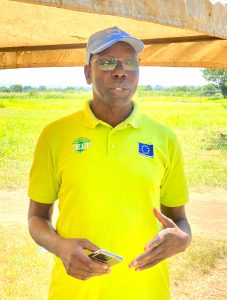
School administrators welcomed the project, noting that the woodlot will improve the learning environment while providing long-term educational and environmental benefits.
Deputy Head Teacher Dricih Festo Lahn expressed gratitude to the district and implementing partners for selecting the school.
“We are grateful that our school has been selected for this important tree planting exercise because it will help improve our environment and support future generations of learners,” he said.
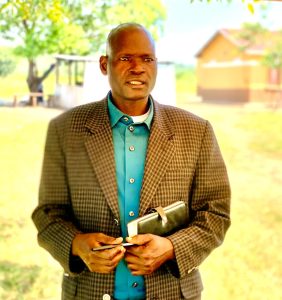
To improve seedling survival rates, particularly during prolonged dry spells, ECOTRUST introduced aqua soil technology, which enhances water retention around tree roots.
According to Denis Emmanuel Oweka, ECOTRUST Regional Coordinator for the West Nile Northeast Region covering Adjumani, Moyo, Lamwo, Amuru and Obongi districts, the technology is expected to significantly increase tree survival during drought conditions.
“We are using aqua soil technology to help the trees survive during drought,” Oweka explained.
“ECOTRUST is leading community engagement, training and farmer enrollment to ensure communities understand the long-term value of environmental conservation. Today, we brought 5,000 seedlings provided by NIRAS to this school, and the students are actively participating. These learners will grow together with these trees and become future custodians of the environment.”
Local leaders urged students and residents to take ownership of the woodlot and protect it from destruction, emphasising the economic opportunities associated with tree growing.
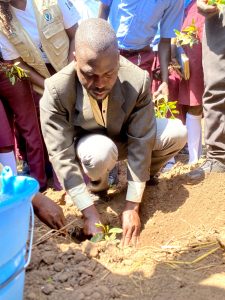
Adjumani District Vice Chairperson Geoffrey Obulejo said the plantation would not only improve the school environment but could also generate income in the future.
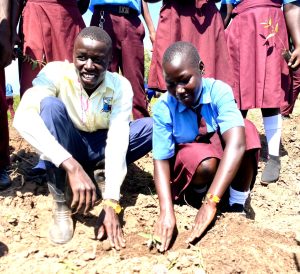
“The trees we are planting today will beautify the school and protect the buildings from strong winds. Trees can also become a source of income. Personally, tree planting changed my life and helped me generate income over the years. That is why I encourage the students and the school administration to protect these trees and ensure they grow,” Obulejo said.
Representatives from NIRAS International Consulting, the lead contract holder managing the project on behalf of the Ministry of Water and Environment, credited the project’s success to strong community participation and effective mobilisation by ECOTRUST.
Speaking on behalf of NIRAS, Community Engagement Expert Deziderius Irumba said the programme’s achievements demonstrate the value of collaborative environmental conservation efforts.
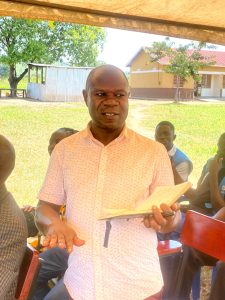
“NIRAS manages the project on behalf of the Ministry of Water and Environment, but conservation requires teamwork. We are pleased to see strong community participation and registration levels exceeding our targets. The trees belong to the community and the schools. They will contribute to livelihoods, environmental protection and long-term resilience,” Irumba said.
Through support from the Government of Uganda, the Ministry of Water and Environment, the World Bank and implementing partners, the IFPA-CD project is helping communities restore degraded landscapes, strengthen climate resilience and improve household livelihoods across northern Uganda.
As the project draws to a close, stakeholders say the gains made in Adjumani demonstrate how coordinated environmental action can deliver both ecological and economic benefits while preparing communities for the challenges of a changing climate.