


LAMWO, Uganda — In the refugee-hosting communities of Northern Uganda, a transformative agroforestry initiative is proving that environmental conservation can go hand in hand with improved household incomes and long-term community resilience.
The programme is being implemented under the Investing in Forests and Protected Areas for Climate-Smart Development (IFPA-CD) Project, a Government of Uganda initiative financed by the World Bank through the Ministry of Water and Environment. The project aims to improve the sustainable management of forests and protected areas while increasing the economic benefits communities derive from natural resources.
A key component of the project targets refugee-hosting districts and surrounding communities through the establishment of tree cover outside protected areas, promoting sustainable land management, climate resilience and livelihood improvement.
At the centre of these efforts is the Intensive Mixed-Use Agroforestry Systems on Household Plots (MAS) Project, a two-year initiative launched in early 2025 and scheduled to conclude in June 2026. The project seeks to increase the adoption of agroforestry practices across 19 districts in Northern and Western Uganda, particularly in communities hosting refugees and those located within a five-kilometre radius of refugee settlements.
The Environmental Conservation Trust of Uganda is implementing the project in five districts, while Catholic Relief Services and World Agroforestry Centre are overseeing implementation in the remaining districts.
Although the project is nearing completion, ECOTRUST says it will continue supporting participating farmers through its Trees Grow Back initiative to ensure the survival and management of planted trees beyond the project’s lifespan.
Combining Conservation with Income Generation
Unlike traditional tree-planting campaigns, the MAS project integrates trees, crops and livestock to create sustainable farming systems that improve productivity while restoring degraded landscapes.
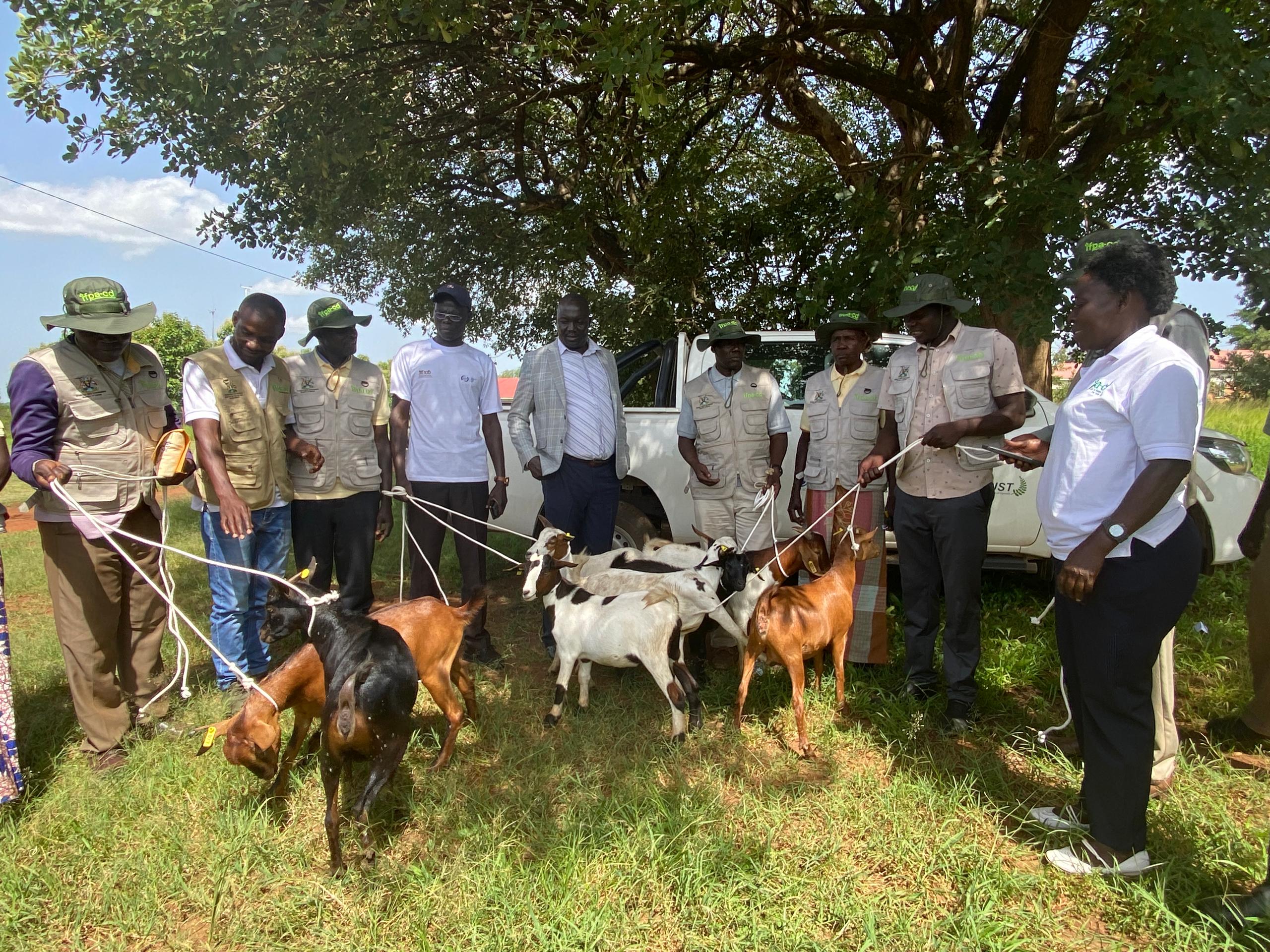
To ensure conservation efforts translate into tangible economic benefits, ECOTRUST has supported selected model farmers in parishes including Palabek Nyimur, Palabek Kal, Aceba and Agora with alternative income-generating activities such as livestock rearing, beekeeping, honey production and shea nut processing.
“The selected model farmers are our pioneers,” said Lamwaka Grace, ECOTRUST’s Project Coordinator in Lamwo District.
“We hope to work with them as they improve their livelihoods and inspire those around them in the community. This initiative enables our farmers to have alternative sources of income while they actively conserve the environment,” she said.
As part of the programme, model farmers have received goats as an incentive to support household income and strengthen economic resilience while maintaining tree-growing activities.
Farmers Reaping the Benefits
Among the beneficiaries is Alice Achan, a model farmer from Agora Sub-county who has planted more than 1,760 trees, including indigenous white teak and several fruit tree varieties.
Achan says the livestock component has significantly expanded her opportunities for income generation.
“When these animals grow and multiply, I will sell them to help pay school fees for my children and take care of the family,” she said.
“I will also be in a better position to get more money to reinvest in and support my farming.”
Project implementers say selecting model farmers with strong local knowledge of indigenous crops, livestock and tree species has been critical to the programme’s success. These farmers also serve as community champions, demonstrating sustainable land-use practices and encouraging wider adoption.
Empowering Women Through Climate-Smart Agriculture
Gender inclusion is another cornerstone of the IFPA-CD project.
According to Odong Cosmos, Assistant District Veterinary Officer for Lamwo, ensuring women benefit directly from the programme is essential for both social and economic development.
“Gender sensitivity in this project is crucial,” Cosmos said. “In our community, a disproportionate amount of work has historically been left to women. Therefore, more women need to be actively involved in projects like this, ensuring they can directly improve their own livelihoods as well as those of their families.”
Project leaders say empowering women through ownership of productive assets and participation in decision-making helps strengthen household resilience and accelerate community development.
Building a Lasting Legacy
Local leaders have expressed confidence that the project’s impact will continue long after the official implementation period ends.
Justine Peace Odur, Chairperson of Lamwo District, said ECOTRUST has established a strong record of environmental conservation and livelihood support in the region.
“We have been working closely with ECOTRUST to protect the environment and support local livelihoods through different projects,” Odur said.
“Even with the eventual closure of this specific programme, I am confident that ECOTRUST will continue its monitoring and support of the farmers in this region.”
As Uganda confronts the growing challenges of climate change, environmental degradation and rural poverty, the IFPA-CD project is increasingly being viewed as a model for how conservation efforts can be linked to economic empowerment.
By combining ecological restoration with practical livelihood opportunities, the initiative is helping communities in some of Uganda’s most vulnerable landscapes build a more sustainable and climate-resilient future.