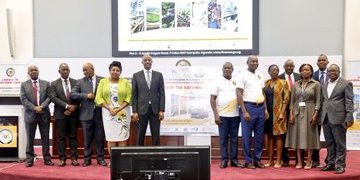



KAMPALA — The Permanent Secretary and Secretary to the Treasury, Dr Ramathan Ggoobi, has officially launched the National Budget Month for the 2026/27 financial year, unveiling a budget strategy centred on commercial agriculture, industrialisation, digital transformation and market access as the Government pursues its goal of achieving tenfold economic growth.
Speaking at the launch in Kampala on Monday, June 1, 2026, Dr Ggoobi said preparations for the FY2026/27 budget began in July 2025 and involved extensive consultations with stakeholders across the country.
“The national budget is prepared through extensive consultations with key stakeholders, including the private sector, civil society, religious leaders, cultural leaders, development partners, local governments, academia, the media, youth, persons with disabilities, and ordinary citizens,” Ggoobi said.
“This is not a budget prepared in isolation. It is a highly consultative process.”
According to the PSST, consultations were held with President Museveni, Cabinet, Parliament, ministries, local governments, development partners, civil society organisations, community leaders and citizens through radio programmes, town hall meetings and the National Budget Conference.
He noted that even artists and creatives were consulted and contributed ideas on strengthening Uganda’s creative economy.
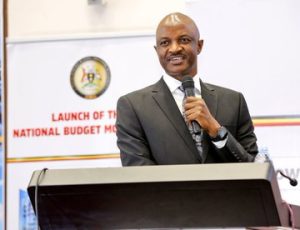
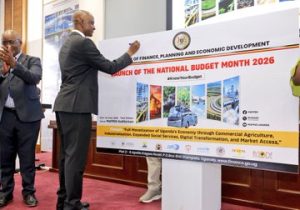
The budget, which Parliament approved on April 24, 2026, is themed “Full Monetisation of Uganda’s Economy through Commercial Agriculture, Industrialisation, Expanding and Broadening Services, Digital Transformation and Market Access.”
“Every word in that theme is deliberate and purposeful,” Ggoobi said.
ATMS at the Centre of Growth Strategy
Dr Ggoobi said the budget is anchored on the Government’s ATMS strategy, which prioritises Agriculture, Tourism, Minerals, and Science, Technology and Innovation as the key drivers of economic growth.
“In summary, this budget is about transforming Uganda through the ATMS strategy and its enablers,” he said.
He explained that the government has identified several critical enablers to support the ATMS sectors, including security, infrastructure, electricity, industrial parks, human capital development, irrigation, domestic revenue mobilisation and regional market access.
“The first enabler is security. Economic activity cannot thrive without peace and stability. Whether in agriculture, tourism, mining, or industry, security remains the foundation for growth,” he said.
On infrastructure, Ggoobi said investments in roads, bridges and transport networks support multiple sectors simultaneously.
“For example, tourism development is not only funded through the tourism sector budget. Investments in roads and bridges that provide access to national parks and tourism sites are equally investments in tourism,” he noted.
The PSST added that electricity remains a critical component of economic transformation. “None of the ATMS sectors can function effectively without reliable power. Electricity supports value addition in agriculture, industrial production, digital innovation and tourism facilities.”
More Than 85% of Spending Directed to Growth Sectors
Dr Ggoobi revealed that over 85 percent of government expenditure in the coming financial year has been directed towards the ATMS sectors and their supporting enablers.
“Overall, more than 85 percent of government expenditure is directed towards the ATMS sectors and their supporting enablers. That is where the major focus of this budget lies,” he said.
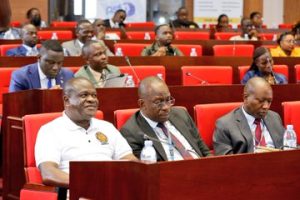
He emphasised that investments in health, education and water remain essential to economic growth. “Without healthy and educated citizens, economic growth cannot be sustained,” he said, noting that Uganda’s life expectancy has increased from about 45 years in the 1980s to approximately 68 years today.
“This progress is the result of deliberate investments in healthcare, education and improved living standards.”
Government Seeks Greater Public Participation
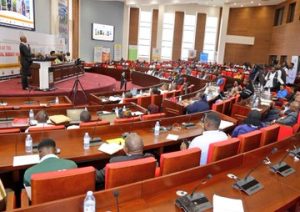
Dr Ggoobi said National Budget Month is intended to ensure that citizens understand government priorities and participate in monitoring public expenditure.
He outlined five objectives of the campaign: promoting transparency, reporting on budget implementation, highlighting opportunities in the new budget, gathering public feedback and improving access to budget information.
“We want every Ugandan to understand the budget, know the opportunities available, and participate in monitoring implementation,” he said.
The Ministry of Finance plans to use radio, television, social media, publications, town hall meetings and civil society platforms throughout June to communicate the budget to citizens ahead of the national budget reading on June 11.
Uganda Scores Above Global Average in Budget Transparency
Dr Ggoobi said Uganda continues to perform above the global average in budget transparency and oversight.
According to the Open Budget Survey, Uganda’s transparency score improved from 58 percent in 2021 to 59 percent, compared to a global average of 45 percent.
The country’s budget oversight score increased from 59 percent to 67 percent, above the global average of 52 percent.
However, he acknowledged that public participation remains an area requiring improvement. “Although Uganda remains above the global average, we must do more to ensure citizens actively participate in the budget process,” he said.
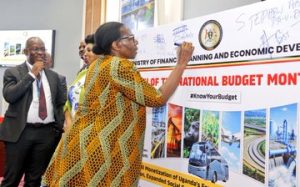
He called on civil society, development partners, the private sector and citizens to continue supporting efforts aimed at strengthening accountability and good governance.
“As Government and the Ministry of Finance, Planning and Economic Development, we remain committed to deepening collaboration with both state and non-state actors as we work towards improving budget transparency, accountability and service delivery,” Ggoobi said.
“Uganda’s future is bright. Together, we must ensure that public resources are used effectively to transform the economy and improve the lives of our people.”
The launch marks the beginning of a nationwide public engagement campaign leading up to the reading of the FY2026/27 National Budget by the Minister of Finance on June 11.