



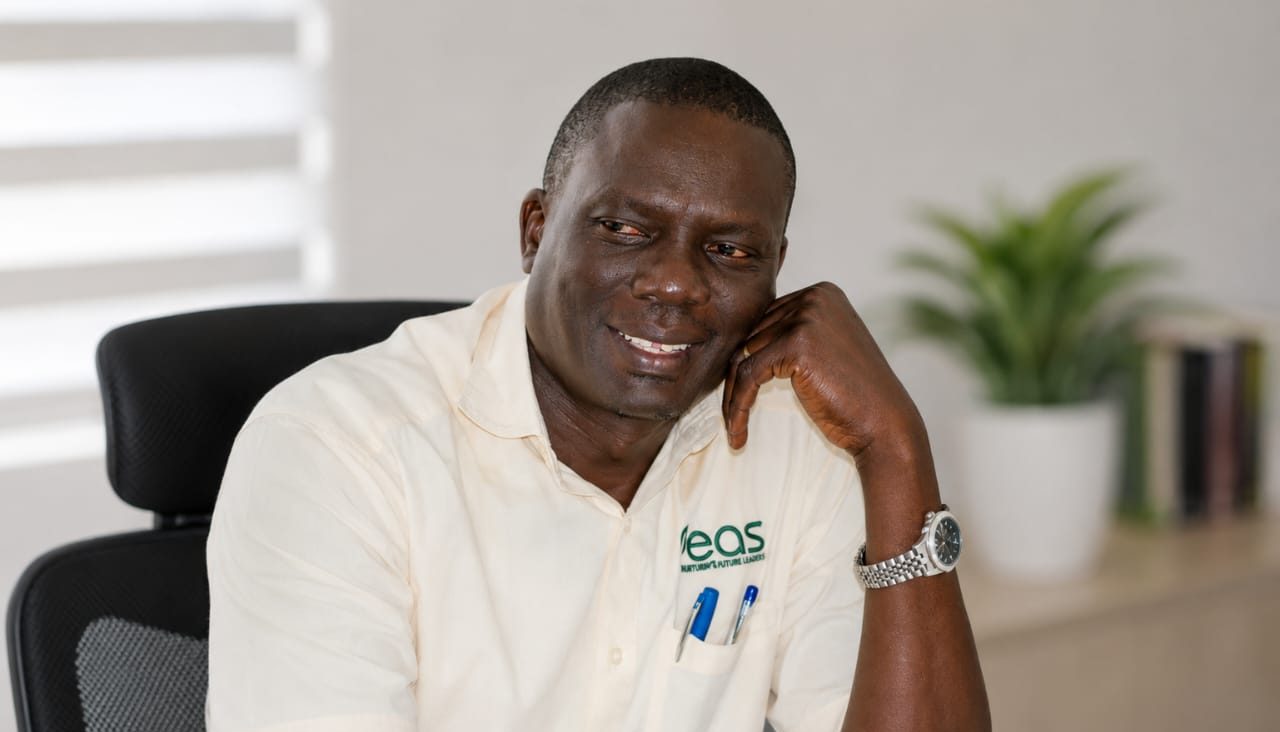
By Daniel Kyasanga
In Sub-Saharan Africa, millions of students sit in secondary school classrooms that are, on paper, open for learning yet where the conditions for that learning remain fragile, underfunded, and disconnected from any coherent system of support.
The biggest challenge is not of access but architecture; the architecture of how schools are led, how teachers are supported, and how accountability and improvement are built into the very fabric of an education system.
The data is sobering. According to UNESCO’s 2023 Global Education Monitoring Report, sub-Saharan Africa has the world’s lowest secondary school completion rate by 42 percent for upper secondary.
The report estimates that over half of all adolescents in low-income countries leave school without foundational literacy and numeracy. Yet these numbers can speak what is truly possible when deliberate, system-level investments are made in school leadership and teacher development.
Resilient and transformative education systems emerge from intentional decisions by governments and educational stakeholders, to invest in the middle tier of education delivery; the level where policy meets practice, and where the quality of daily classroom delivery and instruction is shaped, not by decree, but by the capacity and confidence of the persons (Leaders, parents and learners) inside every school.
Why System Strengthening Matters?
For too long, the dominant style in African education reform has been infrastructure-first: build classrooms, hire teachers, enrol students. This approach, while necessary, is insufficient. Research published in the Journal of Development Economics by Muralidharan & Sundararaman in 2013 demonstrated that school inputs alone, physical resources, textbooks, even teachers produce marginal gains in learning outcomes when institutional management is weak.
What moves the needle is leadership quality and teacher professional development embedded within a functioning support system.
Countries that have made the greatest strides in secondary education outcomes like Rwanda, Kenya in East Africa and Botswana in South Africa share a common thread: strong inspection frameworks, continuous professional development structures, and distributed leadership models that push agency down to the school level.
Rwanda reduced its secondary school repetition rate from 12.6 percent in 2010 to under 4 percent by 2020, largely through decentralised school improvement planning and mandatory head teacher training programmes. Kenya’s National School-Based Teacher Development Programme, scaled across 15,000 secondary schools, documented a 14 percent improvement in examination pass rates among participating schools within 3 years.
In Uganda
The work of Promoting Equality in African Schools (PEAS) in Uganda has proven to be a pilot for other stakeholders if they are intentional to support the education sector. The Uganda Ministry of education strategic plan 2025/26-2029/2030 proposes implementing a more focused strategic intervention; key among these is the strengthening of the inspection and regulation function; improving the management and school administrative capacity and supporting continuous teacher development.
In supporting the fulfilment of this strategic plan,, PEAS has partnered with the Ugandan Directorate of Education Standards (DES) under the Ministry of Education and Sports to co-design and implement the Inspect and Improve (I&I) programme, a structural reform effort that brings together the government’s inspection framework with PEAS’s school improvement approach, with the goal of improving the quality of school leadership and transforming secondary schools to a focused continuous school improvement trajectory.
PEAS’s System Strengthening pillar now supports 215 partner schools, having reached 218,000 students across 23 rural districts. By the end of 2026, the programme targets improvements in learning outcomes and enrolment for close to half a million students.
An independent evaluation by the National Foundation for Educational Research (NFER) confirmed that the programme produced significant improvements in teacher attendance, student attendance, school management capacity, and the quality of learning environments even during the disruptions of COVID-19, teacher strikes, and compounding socio-economic challenges.
Take home for Stakeholders
Strengthening Africa’s secondary education systems requires practical, evidence-based reforms focused on leadership, mentorship, collaboration, and accountability. Effective school inspections must include follow-up support and monitoring, while School Improvement Officers help bridge policy and practice through coaching and trust-building. Participatory school improvement planning and peer learning networks among teachers and school leaders have proven to improve performance, retention, and student outcomes.
Research across Uganda, Rwanda, and South Africa shows that mentorship for school leaders and peer-to-peer teacher support significantly enhance governance, teaching quality, and learner achievement. Ultimately, resilient education systems are built on strong professional relationships, support structures, and sustained collaboration.
The Writer is the Deputy Country Director of PEAS Uganda.