


Kampala —Leaders from government, the private sector, and the United Nations have raised concern over workplace safety, while urging decisive action to improve safety and accountability across institutions.
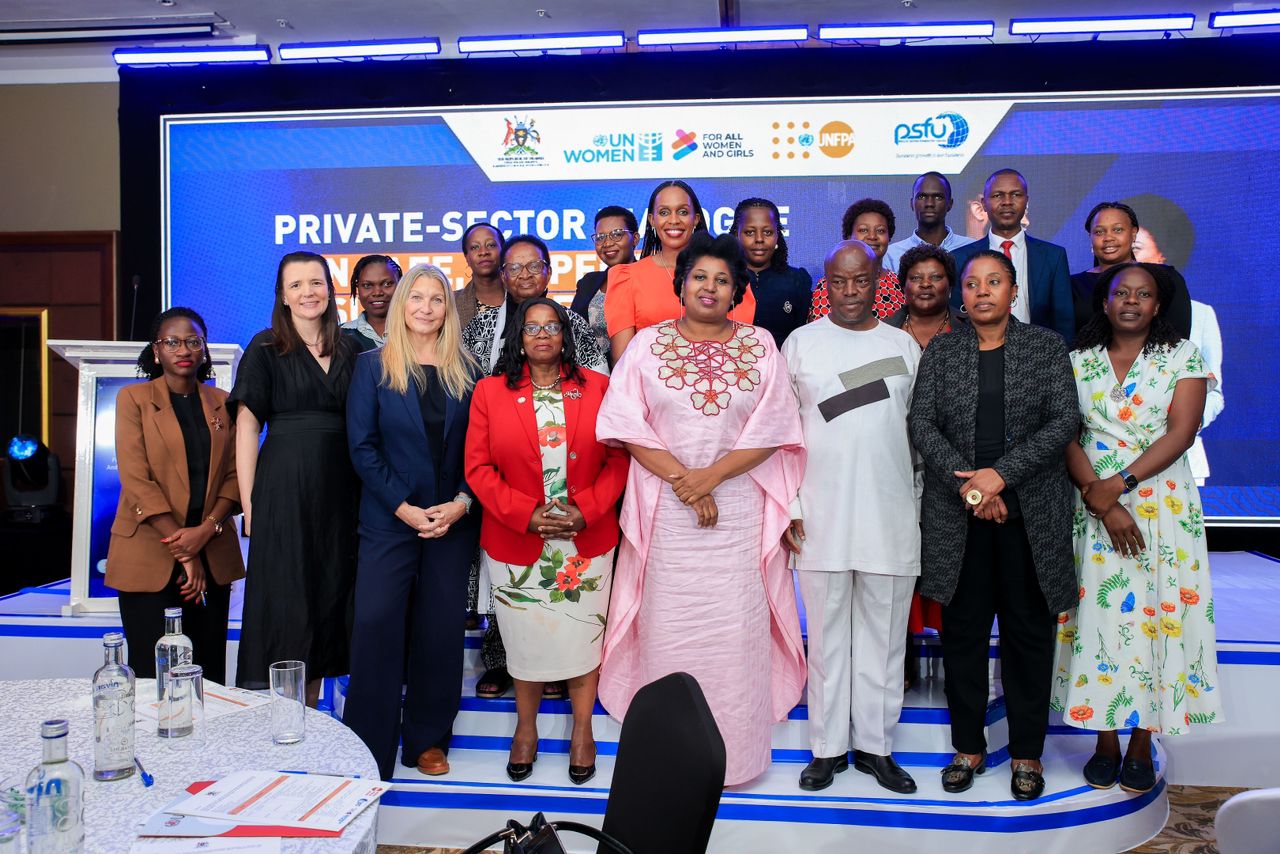
The calls were made during a Private Sector Dialogue on safe, respectful, and survivor-centred workplaces held on 27 April 2026 at the Sheraton Hotel Kampala ahead of International Labour Day.
The dialogue, convened by Private Sector Foundation Uganda (PSFU), Ministry of Gender, Labour and Social Development, United Nations Population Fund (UNFPA), and UN Women, brought together the business community to strengthen institutional responses to sexual and gender-based violence (SGBV) in work environments.

Opening the discussions, the Vice Chair of the Board of Directors, Ms Sarah Kagingo, underscored the urgency of addressing workplace risks amid a rapidly changing global labour environment.
“The world of work is undergoing a profound transformation, driven by digitalisation, artificial intelligence, platform economies, and evolving work arrangements. While these shifts present immense opportunities for productivity and innovation, they introduce new and complex risks related to workplace safety and dignity,” Kagingo said.
Kagingo highlighted the scale of the challenge, citing global and national data.
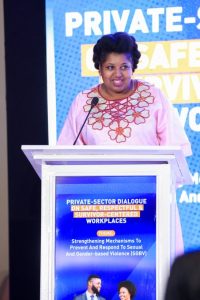
Kagingo also pointed to informality in Uganda’s labour market. “A recent UBOS report revealed that Uganda’s workforce stands at 9.3 million people, with approximately 7.1 million working in the informal sector—largely dominated by women,” Kagingo noted, warning that informality increases vulnerability to workplace abuse.
She further noted that PSFU had made deliberate investments in advancing safe, inclusive, and responsible business practices. “As an institution, we have a Human Resources unit that ensures compliance with national laws, and a Gender Equality Committee that serves as a staff-led effort and a first point of contact, while at the leadership level, the People and Culture board committee is charged with matters of PSFU people.”
Evidence from the International Labour Organisation (ILO) indicates that more than one in five workers have experienced harassment at work,” she said, adding that, “according to the Uganda Bureau of Statistics (UBOS) Survey, verbal abuse accounts for 84% of reported workplace harassment cases.”
Kagingo added that PSFU had, in partnership with the United Nations Development Programme (UNDP), supported 90 companies to attain the Gender Equality Seal, aimed at driving gender-responsive leadership and workplace policies.
“In collaboration with UNFPA, PSFU led corporate collective action to address harassment in workplaces – supporting enterprises to establish frameworks, confidential reporting systems, and survivor -centered responsive mechanisms,” said Kagingo.
She highlighted the intersection between safe and respectful workplaces, performance, productivity, profitability, and sustainable businesses. “There is a strong link to reputation and market access. Investors, partners, and customers increasingly peg decisions to how companies treat their people,” said Kagingo, stressing that “businesses known for safe and respectful workplaces are more likely to win global contracts, attract investment, build customer trust and brand loyalty.”

Rallying private firms to integrate people-centric policies in their leadership and operations, Kagingo observed that “safe workplaces are not optional -they are foundational to performance, productivity, profitability, innovation, and Uganda’s economic transformation.”
She called on private firms to adopt sustainable business practices, saying that “ESG considerations are fast-becoming global standards and partners do not need your permission to look into your company in a bid to gauge compliance or how you treat people.”
Delivering closing remarks in the afternoon at the event attended by Uganda Manufacturers Association (UMA), the Grain Milling Council, Women in Construction, DfCU Bank, among others, Kagingo observed that the dialogue had made a business case for safe and respectful workplaces.

“When employees feel physically and psychologically safe, they are more engaged and productive, and that translates into higher output.”
Delivering the keynote, Mona Muguma, Chief Executive Officer of aBi Finance, called for collective responsibility in advancing gender equality.
“Gender equality and safe workplaces are not ‘women’s issues’ alone. Men must be active partners in speaking up, shaping inclusive systems and driving change where women may not always have a seat at the table,” she added.

Muguma warned that gender-based violence carries significant economic consequences. “We are losing about UGX 3.76 trillion in productivity, accounting for about 2.76 percent of our GDP in this country due to the effects of gender-based violence,” she said.
She further emphasised the need for stronger institutional systems. “Violence is not limited to physical abuse, but also includes psychological harm, intimidation, and unsafe work environments that affect well-being and performance,” Muguma noted.

Representing the UN Resident Coordinator, the UNAIDS Country Director in Uganda, Ms Jacqueline Makokha, said unsafe workplaces undermine both individual dignity and national development.
“Safe workplaces are central to staff well-being and national development. Unsafe workplaces reduce productivity, weaken institutional performance and erode trust in systems designed to protect workers,” she said. She added that evolving work models continue to introduce new risks.
“As the world of work evolves through digitalisation and new models, risks of violence persist. Global data shows that one in five workers are affected, with women disproportionately impacted,” Makhokha stressed.
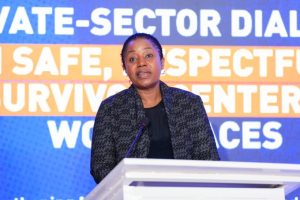
Government, through the Ministry of Gender, Labour and Social Development, reaffirmed its commitment to tackling workplace violence.
Dr Angela Nakafeero, Commissioner for Gender and Women Affairs, painted a stark picture of the situation in Uganda. “More than one in five workers globally experience violence or harassment in the world of work. In Uganda, the situation is even more concerning. According to a World Bank survey, 84% of Ugandans have experienced some form of workplace abuse,” Nakafeero said.
She added: “On average, 86% of Ugandans—across both the private and public sectors—have been exposed to work-related violence. These statistics represent real people and real lives.”
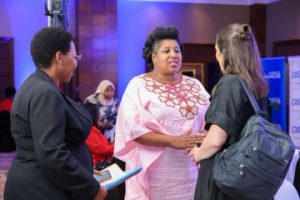
Nakafeero emphasised that workplace violence has far-reaching consequences. “Workplace violence undermines opportunities for career advancement and limits access to better incomes. It affects productivity and the overall well-being of workers,” she noted.
While acknowledging progress, she pointed to existing legal frameworks. “The Employment Act provides a strong legal framework for addressing gender-related violence in the world of work. Uganda also ratified the International Labour Organisation Convention 190, committing to eliminate workplace violence,” she said.
However, she stressed that implementation remains key, outlining three priority areas: “Every workplace must have clear, enforceable policies addressing sexual harassment and gender-based violence… We must strengthen reporting mechanisms… and ensure accountability and leadership at all levels,” Nakafeero stated.
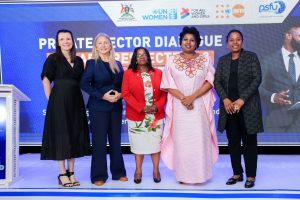
She added: “On average, 86% of Ugandans—across both the private and public sectors—have been exposed to work-related violence. These statistics represent real people and real lives.”
Nakafeero emphasised that workplace violence has far-reaching consequences. “Workplace violence undermines opportunities for career advancement and limits access to better incomes. It affects productivity and the overall well-being of workers,” she noted.
She also highlighted the challenge of underreporting. “Many women remain silent about workplace violence. Without reporting, action cannot be taken,” she said, urging companies to establish confidential, survivor-centred systems.
The dialogue comes as Uganda intensifies labour inspections ahead of International Labour Day, with stakeholders agreeing that stronger collaboration between the government, private sector, and development partners will be critical.