



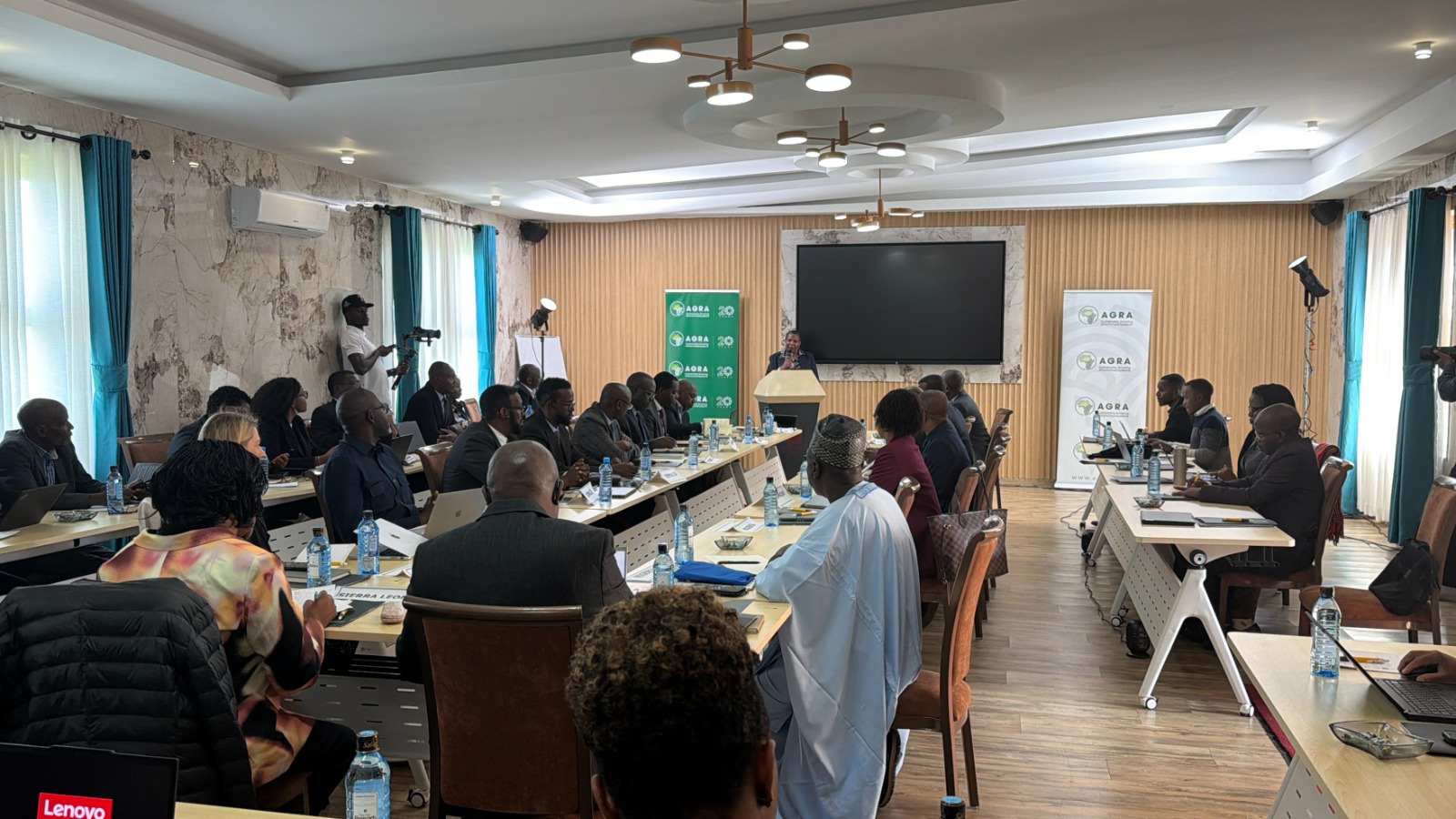
Senior government officials from across Africa have been challenged to deliver tangible improvements in farmer prosperity within the next three agricultural seasons, as a high-level retreat of Permanent Secretaries opened in Limuru.
In her opening remarks, AGRA President Alice Ruhweza set an urgent and results-oriented tone, calling on senior policymakers from 14 countries to move beyond dialogue and translate commitments into measurable outcomes for farmers.
Framing the discussions within a complex and shifting global landscape, she underscored the mounting pressures on African food systems, including climate variability, market disruptions, and financing constraints and emphasised the need for decisive and coordinated action.
“What can you, as Permanent Secretaries, do within the next three farming seasons to materially improve farmer prosperity?” she posed, setting a clear benchmark for accountability.
The retreat brought together key administrative leaders responsible for agriculture, finance, trade, and planning, actors seen as critical to unlocking systemic reforms that can reposition agriculture as a viable and attractive investment sector.
Ruhweza stressed that while many African countries have made notable policy commitments toward agricultural transformation, the persistent gap lies in execution.
She called for a shift toward implementation discipline, urging participants to identify specific, time-bound actions that can unlock productivity, improve market access, and enhance farmer incomes in the short term.
“Over the next two days, I encourage a spirit of candour and a shared focus on advancing what we must do differently, together, for agriculture to become Africa’s next truly investable opportunity,” she said.
The framing signals a growing emphasis on agriculture not only as a development priority, but as an economic sector capable of attracting private capital at scale.
Central to the discussions is the repositioning of agriculture from subsistence-oriented systems to commercially viable and investment-ready value chains.
Participants explored reforms across several priority areas, including strengthening input and seed systems, improving access to finance for smallholder farmers, enhancing aggregation and structured trade, addressing market inefficiencies and cross-border barriers, and building resilience to climate shocks.
The presence of Permanent Secretaries, who oversee policy implementation across ministries, reflects a recognition that agricultural transformation requires whole-of-government coordination.
Ruhweza concluded her remarks by reinforcing the broader economic stakes tied to farmer welfare. “We know that when farmers prosper, Africa prospers.”
The retreat is expected to produce actionable commitments and country-level priorities that can be tracked over the coming planting seasons, with a focus on accelerating delivery and strengthening accountability across participating governments.
As deliberations continue, the emphasis was on translating policy ambition into measurable impact for millions of African farmers, within a defined and immediate timeframe.