


Mombasa — Uganda’s diplomatic missions have been tasked to generate economic value by expanding exports, attracting investment, promoting tourism, strengthening technological partnerships, and gathering market intelligence over the next five years.
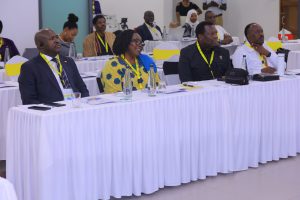
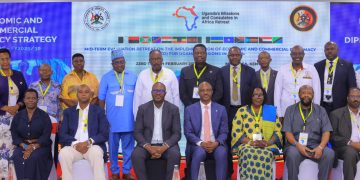
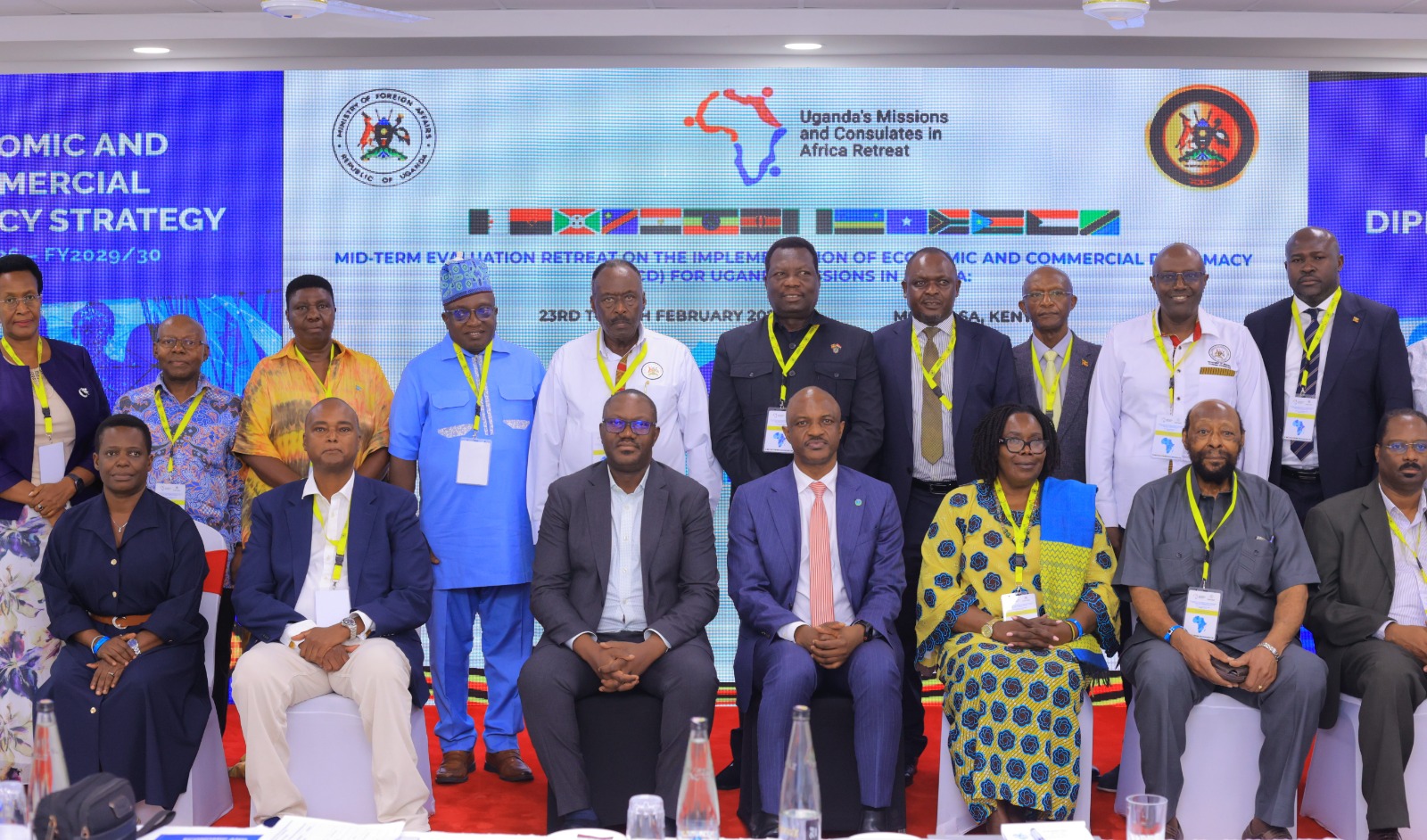
The call was made by Permanent Secretary Vincent Bagiire Waiswa during a three-day Mid-term Review Meeting assessing the implementation of Uganda’s Economic and Commercial Diplomacy (ECD) Strategy. The meeting, attended by Uganda’s African-based missions, is taking place from February 22 to 24, 2026, at Bamburi Beach Hotel in Mombasa.
The ECD Strategy, launched in Gulu in August 2025, is a joint initiative between the Ministry of Finance, Planning and Economic Development (MOFPED) and the Ministry of Foreign Affairs (MOFA). It serves as an operational framework guiding diplomatic missions in advancing Uganda’s economic development agenda in line with the country’s ten-fold growth strategy, which focuses on scaling production, tourism, and investment.
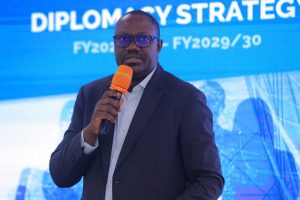
PS Bagiire announced the establishment of an ECD hub and Secretariat under the two ministries to strengthen research capacity and improve the quality of data used by missions in executing their economic diplomacy mandates. Information collected by missions will also support the hub’s analytical operations.
He also emphasised the importance of continuous professional development, proposing an inter-ministerial capacity-building mechanism jointly overseen by the Permanent Secretary of MOFA and the Permanent Secretary/Secretary to the Treasury. Foreign service officers, he said, should gain practical experience within relevant government agencies to better understand Uganda’s products, processes, and market opportunities for effective international marketing.
Secretary to the Treasury Ramathan Ggoobi, who is also attending the review meeting, described Uganda’s missions abroad as economic growth hubs rather than purely political representations.
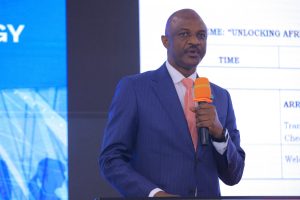
He highlighted the importance of coordination, efficiency, and strategic partnerships in driving economic diplomacy success. The purpose of the mid-term review, he explained, is to evaluate performance through three key questions: Which missions are generating measurable economic outcomes in Africa? Which strategies are delivering results? What needs immediate improvement?
“This is not a compliance review but an investment decision exercise,” Ggoobi stated. He added that successful initiatives will be expanded, operational constraints addressed, and ineffective strategies redesigned.
Ggoobi urged missions to leverage opportunities under the African Continental Free Trade Area (AfCFTA), which presents a market of over 3 billion USD and serves a population of approximately 1.5 billion people.

He stressed that Uganda’s comparative economic advantage begins in Africa before expanding to global markets. He further noted that every diplomatic engagement should be evaluated based on its contribution to improving market access for Ugandan products.
The review meeting identified four priority outcomes: setting clear commercial targets, defining sectoral priorities, identifying potential investors and buyers, and ensuring the development of fundable and measurable work plans.
The Ministry of Finance pledged continued technical and financial support to Uganda’s missions abroad. In return, missions were urged to strengthen strategic planning and implementation.
Officials expressed optimism that aligning diplomatic strategy with commercial execution could significantly enhance Uganda’s economic prosperity over the next fifteen years.