


Uganda has disbursed UGX 3.788 trillion (approx. $1.0 billion) to capitalise 10,589 eligible Savings and Credit Cooperative Societies (SACCOs) under the Parish Development Model (PDM) since 1 July 2021, as the government transitions the flagship transformative programme into its Sustainability and Acceleration Phase.
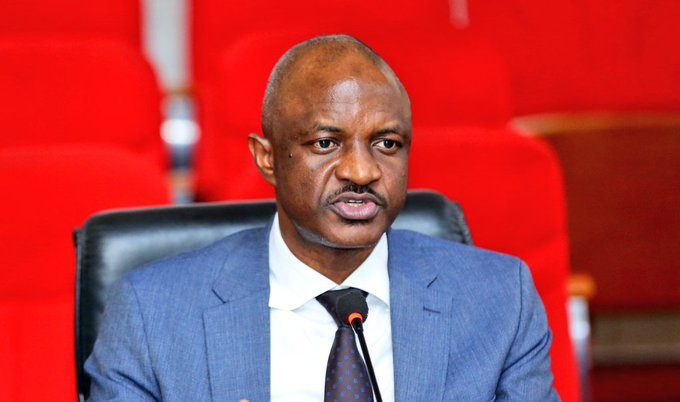
Addressing local government accounting officers, Permanent Secretary and Secretary to the Treasury Ramathan Ggoobi said the next phase will be implemented on a village‑by‑village basis with a sharper focus on extension services, production and market access.
“Since 1st July 2021, the Government has capitalised 10,589 eligible PDM SACCOs to a tune of UGX 3.788 trillion and is now entering the Sustainability and Acceleration Phase,” Ggoobi said.
“Accordingly, all Local Government Accounting Officers should fully budget for all activities under this phase of the PDM through the Extension, Production and Marketing grants.”
Ggoobi further directed that activities related to compiling the SPEAR report and developing Parish Action Plans be financed under the Discretionary Development Equalisation Grant (DDEG), underscoring tighter alignment between parish‑level planning and fiscal allocations.
The Parish Development Model is central to the Uganda government’s strategy to transition subsistence households into the money economy, with SACCOs serving as the primary vehicle for channelling affordable credit at the grassroots.
The initiative targets households engaged in subsistence farming, which account for roughly 39% of Ugandan households with the aim of integrating them into commercial economic activities through organised enterprise groups and access to finance.
At the PDM’s launch in February 2022, President Yoweri Museveni described the programme as a multi‑sectoral strategy to move households out of subsistence into the money economy using the parish as the epicentre for development. He emphasised that the approach includes increasing production, processing, marketing, and infrastructure services at the grassroots, and that SACCOs would play a key role in mobilising savings and extending credit directly to households.
Museveni also highlighted the historical context of Uganda’s subsistence economy: as of 2013, around 68 percent of homesteads were outside the money economy, a figure that the government has worked to reduce over the last decade through reforms and targeted interventions, including Operation Wealth Creation (OWC) and its next phase, PDM.
The Sustainability and Acceleration Phase is expected to deepen this transformation by strengthening extension services, improving production capacities, enhancing market linkages, and ensuring parishes can plan and execute development activities effectively.
By positioning the parish as the lowest operational unit for planning and resource delivery, the government aims to bring economic opportunities closer to citizens and enable measurable improvements in livelihoods across rural Uganda.