



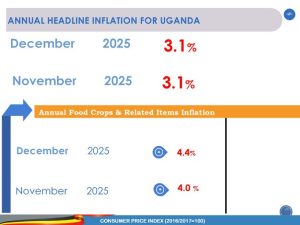
Kampala — The cost of living in Uganda did not change much in December 2025, with inflation remaining at 3.1 percent, the same level as in November, according to the Uganda Bureau of Statistics (UBOS).
Inflation means the rate at which prices of everyday goods and services increase. UBOS measures it using common items people buy, such as food, transport, fuel, rent, school fees and health services.
The figures were released to the media on Wednesday, December 31, 2025, at Statistics House in Kampala.
Presenting the findings, Ms Aliziki K. Lubega, Director of Economic Statistics at UBOS, said inflation remains moderate and stable, but warned that food and energy prices need close monitoring because they directly affect household spending.
Overall prices remained stable
According to her, the headline inflation rate — which shows general price changes — stayed the same in December. This means that overall prices are still rising slowly and remain under control.
What became more expensive
Even though overall inflation stayed the same, some items became more expensive, especially food and energy-related products. Food crop inflation rose from 4.0% to 4.4%.
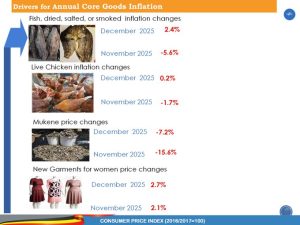
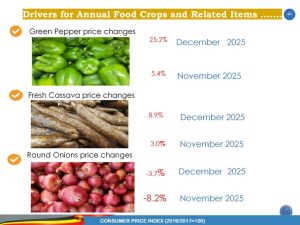
This was mainly due to sharp increases in prices of: cabbage (up by 35.7%), passion fruits (11.1%), fresh cassava (8.9%), green pepper (25.2%) and Irish potatoes, which moved from price declines to increases.
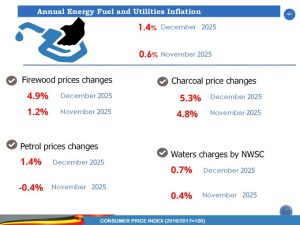
Energy, fuel and utilities inflation increased from 0.6% to 1.4%. This was driven by higher prices of: firewood (4.9%), charcoal (5.3%), petrol (1.4%) and water charges (0.7%).
These increases mean many households paid more for cooking fuel, transport and basic foods in December.
What became cheaper or rose slowly
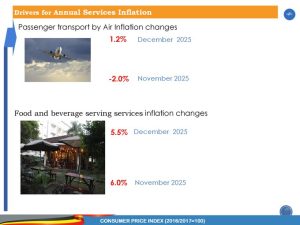
Prices of some services helped to slow down inflation: Transport inflation dropped sharply to 0.1%, from 1.4% in November. Restaurants and accommodation services slowed to 4.7%, down from 5.2%. Clothing and footwear slightly eased to 2.6%.
Higher fuel and energy prices affected transport and cooking costs.
Core inflation slightly reduced
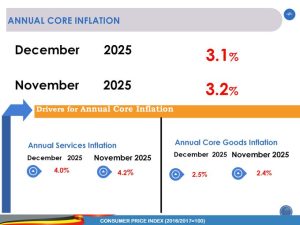
UBOS also tracks core inflation, which removes food crops and fuel because they change prices often. Core inflation fell slightly to 3.1 percent, from 3.2 percent in November. This was mainly because prices for services increased more slowly.
Monthly prices increased
Compared to November, prices rose by 0.5 percent in December. This was mainly caused by: higher prices of vegetables, increased transport costs and rising fuel and firewood prices.
Inflation in 2025 is higher than in 2024
For the whole year, average inflation in 2025 was 3.6 percent. This was higher than 3.3 percent in 2024. UBOS says this was due to higher prices of services and non-food items during the year.
Prices varied across the country
Inflation varied across different areas: Kampala (high-income areas) had the highest inflation at 4.2 per cent, while Masaka recorded 3.7 per cent, and Mbale had the lowest inflation at 1.0 per cent, partly due to falling prices of clothes and household items.
What this means for Ugandans
In simple terms, overall prices are not rising fast, but many people still felt pressure in December due to higher food, fuel and cooking costs. However, stable inflation shows that the economy avoided sudden and sharp price increases.