



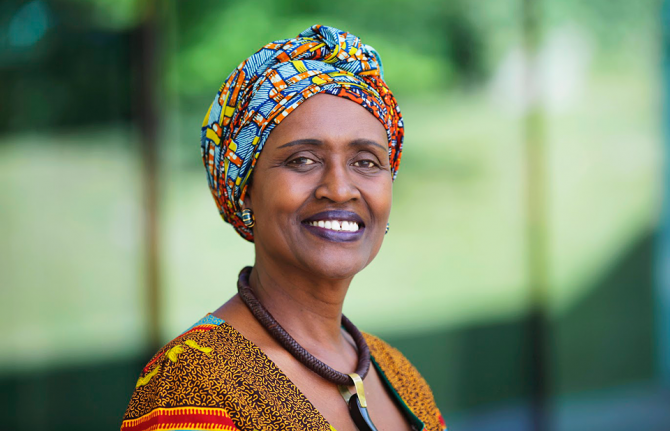
Geneva — On World AIDS Day 2025, UNAIDS Executive Director Winnie Byanyima has called for renewed global commitment to ending AIDS, warning that fragile progress is under threat due to funding cuts, human rights setbacks, and rising inequalities.
“Nearly a quarter of the world’s 40+ million people living with HIV are not on treatment,” Byanyima said in her message. “Ending AIDS as a public health threat is within our grasp — we must seize the moment now. Lives are at stake.”
Byanyima highlighted the impact of funding disruptions on community-based HIV programs. She recounted the story of Noncedo Khumalo, a 24-year-old peer mentor in Eswatini, whose program supporting women and girls at risk of HIV lost funding. “Losing a peer mentor — a person like them, whom they can trust — puts them at risk of HIV infection,” Byanyima said.
The UNAIDS chief also drew attention to widespread setbacks for women-led HIV organisations. “Over 60% of all women-led HIV organisations have lost funding or been forced to suspend work. Other HIV prevention services have been hit hard too,” she said, noting significant declines in the use of PrEP—HIV prevention medicines—across several countries, including Burundi, Uganda, and Viet Nam.
Byanyima further warned about increasing threats to human rights. “The number of countries criminalising same-sex relationships has increased this year, with Burkina Faso, Niger, Mali, and Trinidad and Tobago introducing criminalisation. Laws protecting the bodily autonomy and sexual and reproductive rights of adolescent girls and women are under threat,” she said.
She stressed that intimate partner violence remains a major driver of HIV in Sub-Saharan Africa, noting that women who experienced violence in the past year are 3.2 times more likely to acquire HIV.
Despite these challenges, Byanyima expressed hope and recognised progress made by governments and communities. “In the hardest of circumstances, I have seen countries and communities overcome disruption and push toward more sustainable, inclusive, and nationally owned HIV responses,” she said. She cited the African Union Roadmap to 2030 and the Accra Reset as frameworks guiding sustainable HIV financing and strengthened health systems.
She also welcomed new innovations in HIV prevention. “The first doses of Lenacapavir, the new, twice-yearly PrEP injections, have arrived in Africa. But the rollout is not moving fast enough, and too many developing countries have been excluded from accessing a generic,” Byanyima noted.
Calling for action on domestic financing, she stressed the need for economic growth, debt restructuring, and progressive taxation to support sustainable HIV programs. “Revenue collection in Africa is just 16% of GDP — far lower than the global average. Governments need continued economic growth and debt relief to increase domestic HIV and health spending,” she said.
Byanyima also highlighted positive developments. “Some countries are advancing human rights. In Rwanda, adolescents can now access sexual and reproductive services without parental consent from the age of 15 — empowering young people to protect their health and keep themselves safe.”
She concluded with a rallying call for collective action. “There is no silver bullet. But if governments, communities, and international organisations can come together to unlock domestic HIV financing, protect human rights and gender equality, and make innovations affordable and accessible for all, we can seize this moment. The world can end AIDS.”
World AIDS Day 2025 serves as both a remembrance of lives lost and a reminder of the urgent need to accelerate global efforts to ensure treatment access, protect human rights, and sustain the fight against HIV.