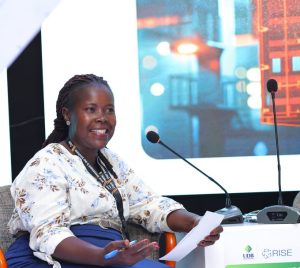



Uganda’s real estate sector is being reimagined as a sophisticated “economic engine” rather than a mere collection of apartments and shopping malls. Uganda Development Bank (UDB) has intensified calls for coordinated investment in industrial infrastructure, positioning construction and industrial real estate as central pillars of Uganda’s long-term economic transformation.
The message came during the RISE Industrial Real-Estate & Construction Multistakeholder Forum held at Sheraton Hotel Kampala on February 26, 2026, bringing together policymakers, financiers, and international sustainability leaders.
Rethinking Construction as a Growth Platform
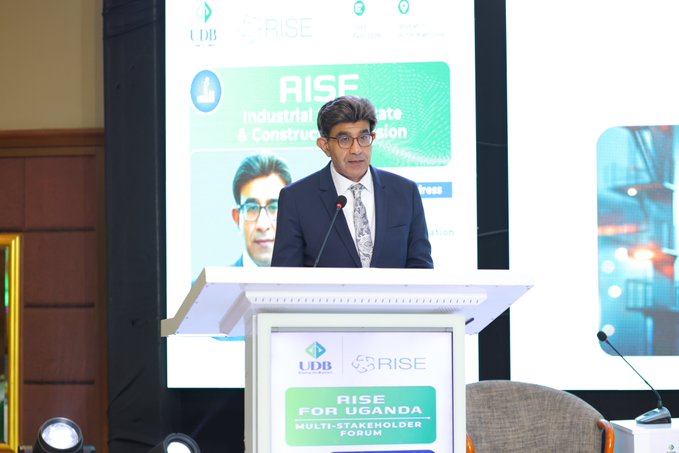
Keynote speaker Arshad Rab, CEO of the European Organisation for Sustainable Development and Chairman of the International Council for Sustainability Standards Initiative, challenged stakeholders to rethink construction as a driver of national growth.
“When real estate becomes a speculative asset, development may appear to rise on glossy brochures, but incomes remain horizontal, and value chains remain shallow,” Rab said.
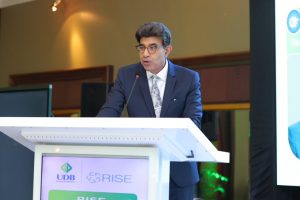
“It’s time to rethink construction — not as an isolated industry — but as a platform for national growth. Every project should activate supply chains, generate jobs, and turn land into active infrastructure.”
Rab called for professionalisation of the sector through enforceable standards, digital registries, transparent project management, and structured financing. “When capital is aligned with productivity, and construction is professionalised, Uganda doesn’t just build structures — it builds capacity for growth,” he added.
Government Targets Manufacturing-Led Growth
Representing the Ministry of Trade, Industry and Cooperatives, Commissioner for Industry Denis Ainebyona reaffirmed the government’s commitment to a manufacturing-driven growth strategy.
“Industrialisation is central to Uganda’s development strategy. Our goal is to create jobs, generate wealth, and leverage the country’s comparative advantages,” Ainebyona said.
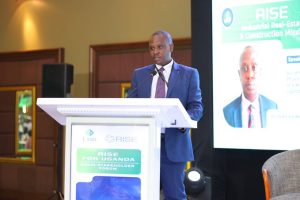
He noted that Uganda’s GDP has grown to $60.2 billion and that manufacturing will play a dual role of import substitution and export promotion. “Our goal is to grow manufactured exports from the current 22% to 35%, focusing on high-value, high-tech products,” he said.
Ainebyona revealed that Uganda currently has 10 operational industrial parks, though infrastructure development remains ongoing. However, only about 10% of industries — roughly 645 — are located within designated industrial zones.
“Our priority is to guide the remaining industries to these parks, ensuring Uganda maximises the benefits of organised industrial growth,” he said.
Structured Framework for Industrial Parks
Ainebyona added that Uganda launched guidelines in November 2023 for the development and management of industrial parks, supported by the Global Green Growth Institute, outlining a structured process from feasibility studies to environmental assessments and licensing.

“Collaboration between government, private sector, development partners, and financial institutions is essential,” he said. “By following the guidelines and engaging stakeholders, we can avoid repeating past challenges.”
Industrial Real Estate as the “Backbone”
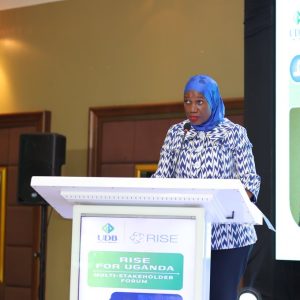
Delivering remarks on behalf of UDB, Company Secretary and Director Legal Sophie Nakandi said the country’s industrial ambitions cannot be achieved without deliberate investment in physical systems that support production.
“Uganda’s ambition is even greater — to grow from a $50 billion economy to $500 billion by 2040. That transformation cannot happen without the right physical systems in place,” Nakandi said.
She noted that Uganda’s industrial sector contributes nearly 25% of GDP, with manufacturing accounting for over 15% and generating close to 30% of national tax revenue. “Industrial real estate is not an accessory to industrialisation — it is its backbone,” she added, emphasising that serviced industrial parks, logistics networks, and energy-ready land are prerequisites for scaling manufacturing and exports.
Coordinated Investment, Not Fragmentation
Joshua Allan Mwesiga, UDB’s Director of Strategy and Corporate Affairs and moderator of the forum, said industrial real estate is often misunderstood as speculative property development.
“It is land and built infrastructure deliberately designed to enable economic production at scale. It is factories that house manufacturing. It is logistics hubs that connect producers to markets,” Mwesiga explained.
He argued that without well-planned and efficiently constructed industrial infrastructure, productivity remains constrained and export competitiveness limited.
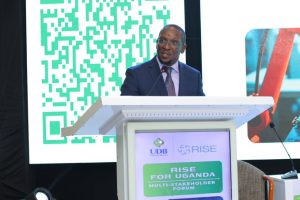
“If energy powers industry, and technology optimises it, industrial real estate houses it,” he said, stressing that Uganda’s 10-fold growth ambition requires coordinated investment and aligned policy rather than fragmented interventions.
Strategic Planning vs. Infrastructure Strain
Mr Vincent Agaba, President of the Africa Real Estate Practitioners Alliance, emphasised that real estate is a “powerful driver of manufacturing.” However, uncoordinated growth is currently straining emerging cities.

Urban planner Nyakwebara Charles warned that “investments are moving faster than local governments can plan,” leading to industries operating in unsuitable areas. He stressed that “planning frameworks must move from paper to ground” to ensure infrastructure is fully utilised through properly zoned industrial parks.

Rethinking Engineering and Sustainability
To achieve scale, Uganda must adapt its construction models. Eng. Apollo Buregyeya, CEO of Eco-concrete, challenged the status quo, urging a shift “from cheap labour and expensive materials to cheap materials and relatively more expensive labour” to ensure Uganda becomes an “active participant in shaping our own industrial future.”

Sustainability is also becoming a financial necessity. Trudy Muwanga of the Green Building Council Uganda noted that green technologies “shape cost, resilience, and long-term performance.” She argued that digital tools like carbon accounting make sustainability “measurable, transparent, and financeable.”
Overcoming Investment Barriers
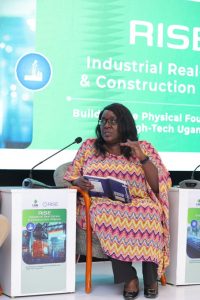
Despite the potential, bottlenecks remain. Prosie Kikabi of the Uganda Investment Authority pointed out that industries often settle far from raw materials or adequate roads, creating “inefficiencies, higher costs, and delays.”
She noted that “to unlock Uganda’s industrial potential, we need strategic planning, coordinated infrastructure, and accessible financing,” ensuring industrial parks become “true engines of sustainable economic growth.”
The RISE mission forms part of a broader UDB platform examining energy, agri-food systems, infrastructure, and technology as interconnected pillars of economic transformation.