



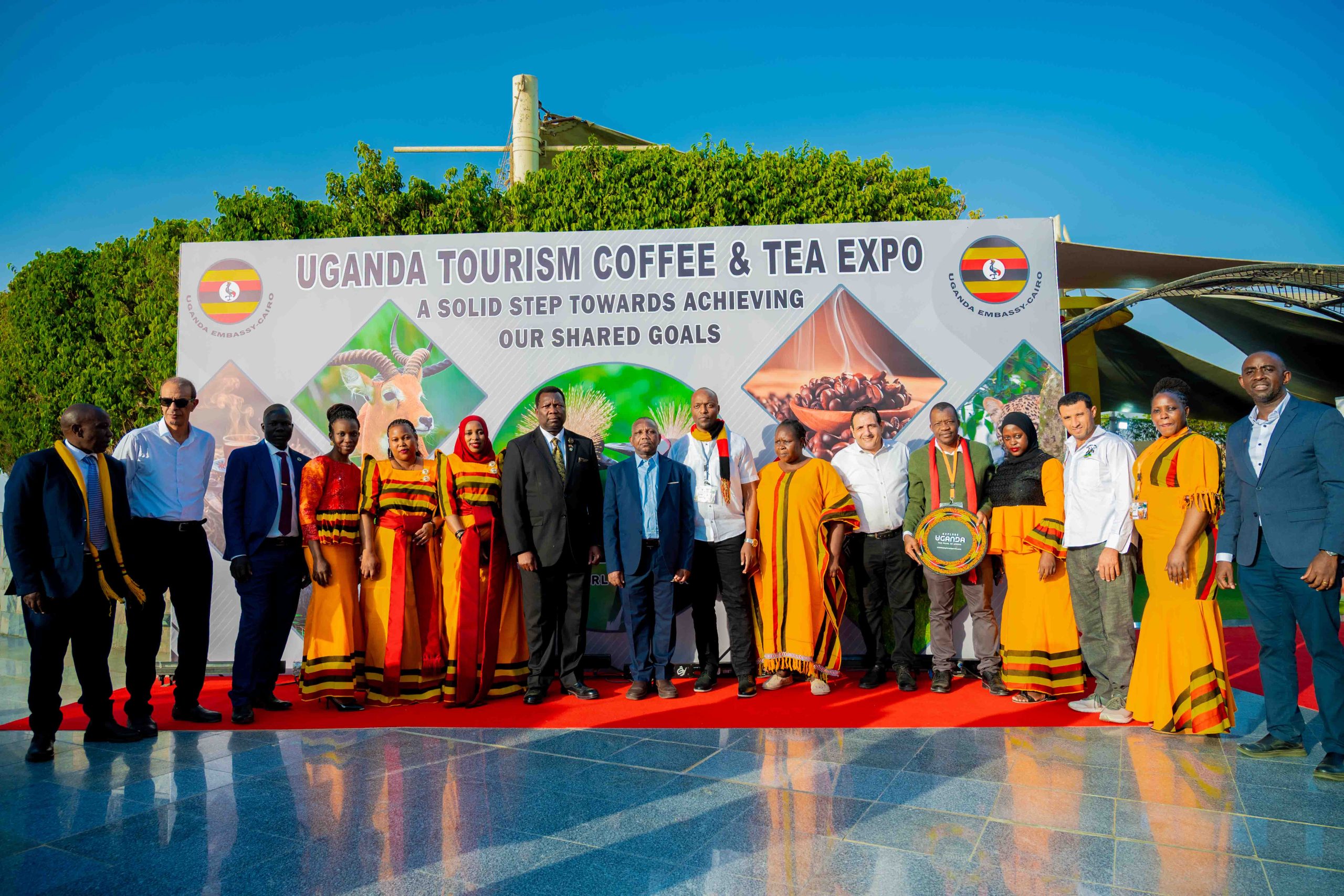
Cairo, Egypt — The 1st Uganda Tourism, Coffee & Tea Expo opened on Thursday at the Royal Maxim Palace Kempinski in Cairo, marking a major push by the Uganda Embassy in Egypt to increase Uganda’s exports and visibility in one of North Africa’s largest consumer markets.
The two-day event, running from 20–21 November 2025, aims to promote Destination Uganda while showcasing the country’s premium coffee and tea to Egyptian buyers.
Organised by the Uganda Embassy in Cairo in partnership with the Ministry of Agriculture, Animal Industry and Fisheries (MAAIF) and the Uganda Tourism Board (UTB), the expo seeks to tap into Egypt’s population of over 110 million, where tea and coffee consumption is among the highest in the region. Organisers also view Egypt as a promising source market for high-end tourists seeking authentic African experiences.
During the opening ceremony, Ambassador Lt Gen Charles Angina, Uganda’s Charge d’Affaires in Cairo, delivered a detailed presentation on Uganda’s tourism attractions and investment opportunities. He said the Embassy was leveraging the warm relations between Kampala and Cairo to expand trade, investment, and tourism flows.
“Good relations must translate into tangible outputs manifested in increased volumes of trade and investment in critical areas,” Amb. Angina told guests.
Strong Egyptian Turnout
The launch event drew hundreds of participants, including Egyptian government officials, diplomats based in Cairo, tour operators, exporters, and business leaders from both countries.
Dr Yousrey Elsekawi, Chairperson of the Egypt Africa Business Association (EABA), commended the growing partnership between the two nations and urged Egyptian investors to take advantage of Uganda’s open investment climate.

Senior Egyptian Presidential Advisor Mostafa El Gendy also applauded Uganda’s pro-investment policies, while Cameroon’s Ambassador to Egypt and Dean of the Diplomatic Corps, H.E. Dr Mohamadou Labarang, attended alongside leaders of the Ugandan diaspora community.
B2B Engagements to Drive Exports
Throughout the expo, Ugandan businesses will hold B2B meetings with Egyptian buyers to explore partnerships aimed at increasing Uganda’s coffee and tea exports.
Trade between the two countries stood at US$141 million in 2023, with Uganda exporting US$32 million worth of products—mainly coffee, tea, dairy, spices, and raw tobacco—while importing US$109 million worth of Egyptian iron and steel, plastics, pharmaceuticals, sugar, cereals, and confectionery. Uganda’s exports to Egypt have grown at an annual rate of 25% since 2018.

Remittances from Egyptians working in Uganda reached US$4.8 million, while Ugandans in Egypt sent home US$1 million in 2023.
Stronger Ties After Museveni–Sisi Talks
The expo follows President Yoweri Kaguta Museveni’s August 2025 working visit to Cairo, where he and Egyptian President Abdel Fattah al-Sisi witnessed the signing of cooperation agreements in agro-processing, manufacturing, mining, energy, and pharmaceuticals. The engagement was built on an earlier visit to Kampala by Egypt’s Ministers of Foreign Affairs and Water Resources.
Amb. Angina said Egypt offers immense potential for tourism collaboration, noting that while Uganda welcomed 1.5 million tourists in 2024, Egypt received 16 million. He said the Embassy is working to position Uganda as a complementary destination offering unique attractions not found in North Africa.

Egypt as a Gateway to Global Markets
The Embassy’s Commercial Officer, Mr Allan Tazenya, emphasised Egypt’s strategic importance in Uganda’s export agenda.
“Egypt is the gateway to Europe and the Middle East,” Tazenya said, urging Ugandan exporters to intensify efforts to capture the Egyptian market. He also announced that the expo will become an annual event in Cairo and other Egyptian cities to maintain visibility for Ugandan products.
The Uganda Embassy in Cairo is among the Missions implementing Uganda’s Economic and Commercial Diplomacy (ECD) strategy, part of the government’s Tenfold Growth Strategy to expand the economy from US$50 billion to US$500 billion by 2040. The strategy focuses on boosting trade, attracting foreign direct investment, promoting tourism, and facilitating technology transfer.