


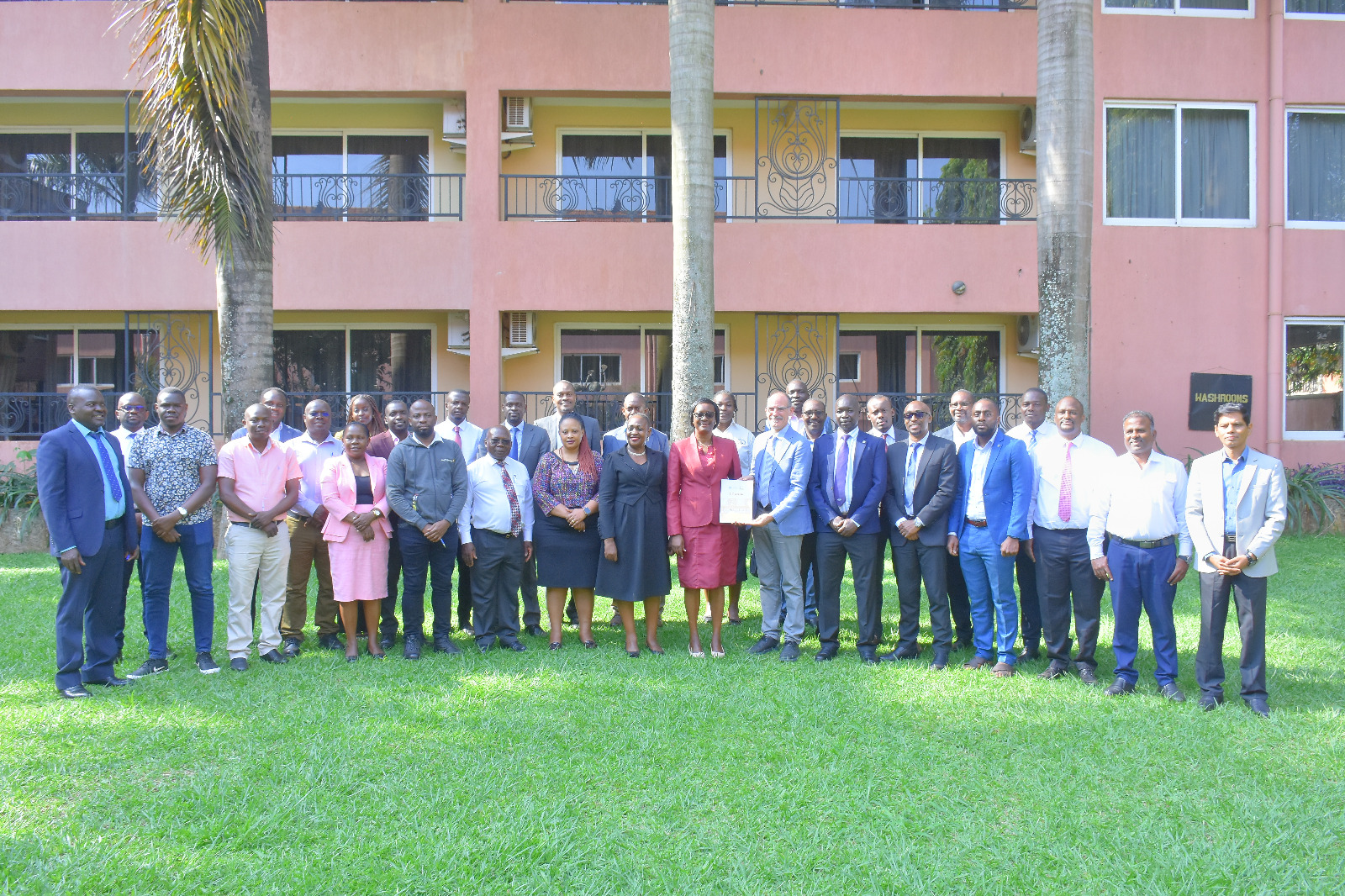
Uganda has taken a major step toward adopting cleaner aviation energy with the presentation of the Final Draft Report of the Sustainable Aviation Fuel (SAF) Feasibility Study, developed in partnership with the International Civil Aviation Organisation (ICAO) and funded by the Government of the United Kingdom.
The report marked a milestone in Uganda’s efforts to build a low-carbon and climate-resilient aviation sector.
UCAA Deputy Director General, Olive Birungi Lumonya, noted that the study confirms Uganda’s strong potential to produce SAF domestically. Uganda’s abundant biomass resources, such as agricultural residues, forestry by-products, and organic waste, position the country to becoming a future producer of sustainable jet fuel.
Lumonya emphasised Uganda’s alignment with ICAO’s global aspiration to reduce aviation CO₂ emissions by 5% by 2030 using SAF, Lower Carbon Aviation Fuels (LCAF), and other cleaner energy sources.
She noted that Uganda has already demonstrated commitment to green aviation, becoming one of the first African countries to voluntarily join ICAO’s CORSIA scheme in 2019.
“Uganda recognises that achieving ICAO’s long-term climate goals requires advancements across the entire sector, from aircraft technology and air navigation operations to the deployment of sustainable aviation fuels,” she said.
She added that SAF is expected to make the largest contribution towards reducing emissions by 2050.
UCAA Acting Director of Safety, Security and Economic Regulation, Irene Atto, reiterated Uganda’s leadership role in continental climate-action efforts, stating that the study provides an evidence-based roadmap for SAF deployment.
“The SAF programme now moves into its next phase—developing a national Business Case Study that will guide implementation in collaboration with key ministries, UNOC, and aviation stakeholders,” she said.
Addressing participants, Barongo Ronny, Director of Safety, Security and Economic Regulation, hailed the feasibility study as “timely and transformative.” He noted that the report provides a comprehensive assessment of Uganda’s technical, economic and environmental readiness to produce SAF, including opportunities for new investments, jobs, and improved energy security.
He added that UCAA has prioritised environmental protection and sustainable aviation in its strategic planning, pointing to Uganda’s strong commitment to CORSIA and the broader global movement toward lower-carbon fuels.
According to ICAO experts, the global shift toward SAF is accelerating, with fuel-blend mandates already required in Europe. Uganda Airlines is among the carriers affected and must uplift SAF-blended fuel on return flights from London, an added cost that could be reduced if Uganda establishes its own SAF production capacity.
Officials noted that SAF production worldwide is currently concentrated in a few technologically advanced countries.
The new feasibility study, however, demonstrates a clear pathway for Uganda to participate across the entire value chain from feedstock production to refining and distribution.