


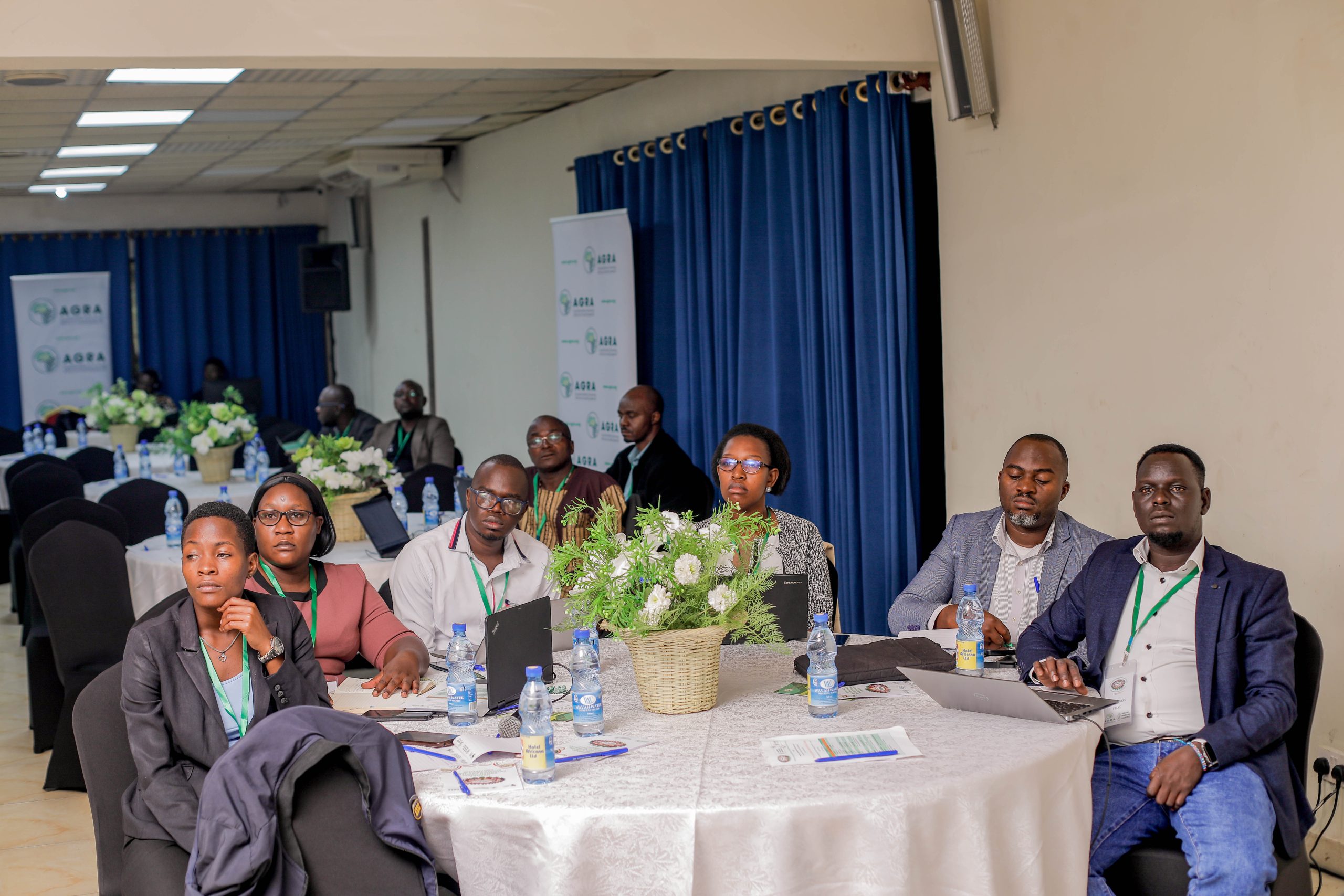
Uganda’s agricultural sector is poised for a major rethink following a high-level national roundtable dialogue on Agricultural Extension and Advisory Services (AEAS), where policymakers, development partners, academics and practitioners called for urgent reforms to fix a fragmented system that has struggled to deliver impact at the farm level.
The Uganda Agricultural Extension Coalition Round Table & Conference, held on Wednesday at Hotel Africana in Kampala, was organised by the Ministry of Agriculture, Animal Industry and Fisheries (MAAIF) and the Uganda Forum for Agricultural Advisory Services (UFAAS), with support from AGRA and the African Forum for Agricultural Advisory Services (AFAAS).
The dialogue focused on policy reform, financing, coordination of extension actors, and the growing role of digital and AI-driven solutions in delivering extension services aligned to agro-industrialisation, climate resilience, and the Parish Development Model.
A Call to Break Silos
AFAAS Executive Director Dr Lihasi Lilian Kidula urged stakeholders to embrace collaboration. “We must work together across sectors if we are to enhance adoption, build resilience, and deliver results at scale,” Dr Kidula said.
She added that the coalition aligns with the African Union’s CAADP Agenda 2063. “No more silos must move from a slogan to a way of working.”
‘The System Is Broken, Not the Farmer’
Delivering some of the forum’s most candid remarks, AGRA Uganda Country Director Mr David Wozemba challenged partners to confront uncomfortable truths about agricultural extension in Uganda.
“The system is broken not because we do not reach the district, but because we do so without coordination,” Wozemba said. “Within the sector, we are about 32 partners, yet many of us work in the same villages, reaching the same farmer—sometimes 30 or 40 times over 10 to 15 years—with similar or even conflicting messages.”
Wozemba questioned whether extension efforts were truly leading to behaviour change, rather than just awareness. “We tell a farmer that a maize variety is good. The farmer agrees. But does the farmer buy it? Often, no—because of affordability, access, and risk. Collectively, we are not removing these constraints.”
He also raised concerns about impact and accountability, noting that the sector absorbed an estimated USD 1.5 billion last year. “The question is not whether the money was spent, but whether it delivered measurable outcomes. Where is the impact? Where are the numbers?”
A Neutral Platform for Change
Dr Richard Miiro, Chairperson of the UFAAS Board, acknowledged that Uganda’s extension ecosystem remains poorly harmonised despite the country’s heavy dependence on agriculture.
“About 85 per cent of our GDP depends on agriculture, and in one way or another, the whole country survives on agriculture,” Dr Miiro said. “Yet we are not very well coordinated.”
He positioned UFAAS as a neutral convening space for all actors—from scientists and extension workers to private sector players and farmers. “UFAS wants to offer itself as a platform that brings everyone together, respects all actors, and allows us to negotiate, listen, and agree on how best to serve farmers.”
‘We Analyse Well, But We Don’t Change Enough’
Representing MAAIF, Ms Jennifer Oyuru, Assistant Commissioner for Agricultural Extension and Skills Management, delivered a sobering assessment of the sector’s performance.
“There has been a lot of money sent into this country in the name of improving the well-being of our farming communities. But to be honest, they are not changing,” Oyuru said. “We must ask ourselves: is the problem us, the policies, or the people we are trying to change?”
She criticised excessive time spent in meetings rather than in the field. “We used to say extension officers should spend 80 per cent of their time in the field. Today it is the opposite—80 or even 90 per cent in offices. Can we change this country with only 10 per cent field engagement? I do not think so.”
Oyuru called for a shift from fragmented interventions to integrated, value-chain-driven approaches, stressing that farmers need practical skills, not just information.
Voices from Practice
Adding a reflective voice, Dr Joshua Zimbe, Principal Dairy Development Officer at MAAIF, urged participants to embrace patience, honesty, and collaboration. “Access is power,” Dr Zimbe said. “This is a process—it’s not a game. Skill matters. Discipline matters. Vision matters.”
He encouraged openness and dialogue within the sector. “What’s wrong with you is not taboo. Talk about it. Even united, we struggle sometimes—but we keep going.”
As the one-day forum concluded, stakeholders agreed that coordination is no longer optional. Participants are committed to breaking institutional silos, strengthening local government leadership in extension, leveraging digital innovations, and ensuring that extension services translate into visible, measurable change on farms.
The outcomes of the roundtable are expected to inform ongoing policy reforms and strengthen Uganda’s agricultural extension system as a driver of inclusive growth, resilience, and agro-industrialisation.