


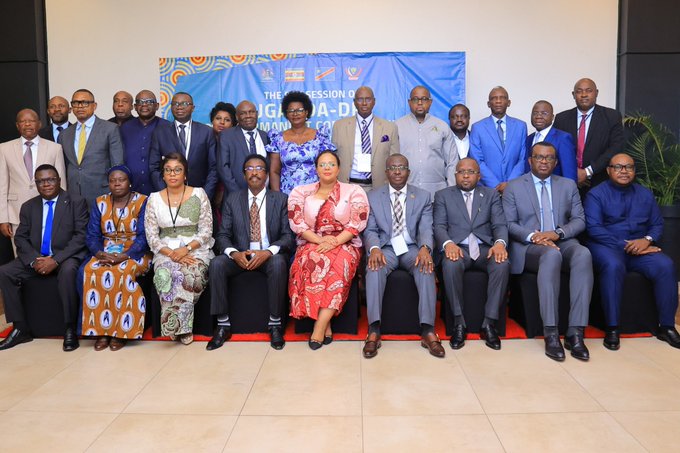
Kampala | Uganda and the Democratic Republic of Congo (DRC) have concluded the 9th Session of the Uganda–DRC Joint Permanent Commission (JPC) in Kampala with a series of major agreements aimed at strengthening bilateral cooperation, regional integration, trade, infrastructure development, and cross-border security.
The high-level ministerial session, held at Mestil Hotel in Kampala, brought together senior ministers, permanent secretaries, and technical officials from both countries, culminating in the adoption of reports from technical working groups on defence and security, political and diplomatic affairs, economic cooperation, trade and infrastructure, as well as social and cultural issues.
Uganda’s delegation was led by Minister of State for Foreign Affairs in charge of Regional Affairs, John Mulimba, while the Congolese delegation was headed by Foreign Affairs Minister H.E. Thérèse Kayikwamba Wagner and Deputy Prime Minister Jacquemain Shabani.
In his opening remarks, Mulimba described the commission as a critical platform for deepening regional integration and transforming diplomatic relations into tangible economic gains.
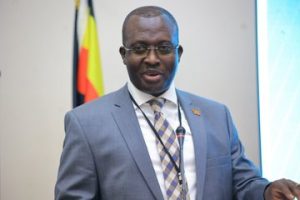
“We reaffirm our shared commitment to peace, regional integration, trade, infrastructure development, and cross-border cooperation,” Mulimba said.
He highlighted progress on several strategic projects, including the operationalisation of the Mpondwe–Kasindi One-Stop Border Post, construction works on the Kasindi–Beni–Bunia Road, and the Ruzizi III Hydropower Project.
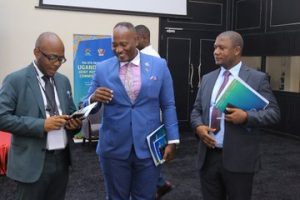
Mulimba further emphasised the need to strengthen border security, remove trade barriers, and promote prosperity for communities living along the Uganda–DRC border.
In her remarks, H.E. Thérèse Kayikwamba Wagner praised the warm reception accorded to the Congolese delegation and reaffirmed the strong ties between Kampala and Kinshasa.
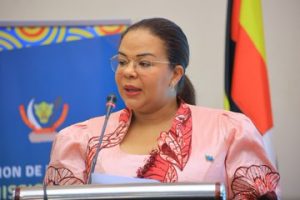
She said Presidents Yoweri Kaguta Museveni and Félix Tshisekedi remain committed to advancing bilateral cooperation and accelerating economic transformation in both countries.
“The discussions focused not only on large investments and major projects but also on the daily realities of our people living in border communities,” Wagner said.
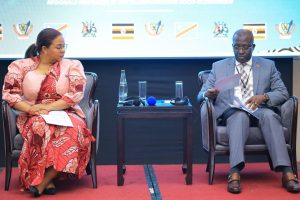
“When we talk about fisheries, for example, we ask ourselves what our fishermen are going through. Across all discussions, there was a clear effort to improve conditions at every level — from small communities to large industries,” she added.
The Congolese foreign minister said the two countries share far more than geographical boundaries.
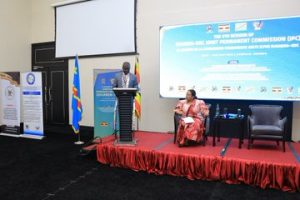
“We are two peoples separated by borders, yes, but we share much more than the borders that divide us. Our governments must accompany populations that are already working closely together,” Wagner noted.
Visa waiver
The session also registered progress on several strategic agreements and cooperation frameworks.
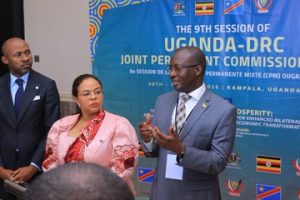
Among the key outcomes was an agreement on visa waivers for holders of diplomatic and official passports, a move officials described as a significant milestone toward easing movement between the two neighbouring countries.
This builds on earlier bilateral progress. A broader visa waiver for ordinary DRC citizens entering Uganda (for tourism/business stays up to 3 months) was already implemented starting in early 2024, following the 8th JPC in 2023.
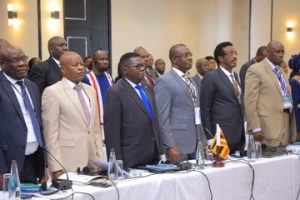
Uganda’s Minister of Justice and Constitutional Affairs, Norbert Mao, welcomed the visa waiver, saying the agreement marks the beginning of broader mobility reforms.
“One of the best developments is the visa waiver for holders of diplomatic and official passports. I’m sure eventually the holders of ordinary passports will also move visa-free between the two countries,” Mao said.
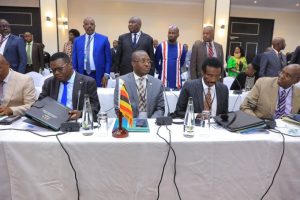
First Deputy Prime Minister Rebecca Alitwala Kadaga also weighed in on the development, urging reciprocal arrangements from Kinshasa. “It is about time the DRC reciprocated our good gesture when we waived visa fees about three years ago,” Kadaga said.
Mulimba, in his closing remarks, described the 9th JPC session as “historic,” saying Uganda and the DRC had moved beyond merely addressing security threats to building long-term economic and development partnerships.
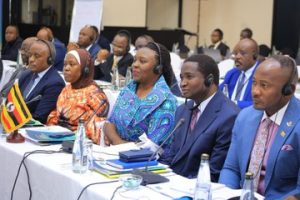
He announced the signing of a Memorandum of Understanding on Standard Gauge Railway connectivity and highlighted progress on the Busanza–Bunagana and Mpondwe–Kasindi One-Stop Border Posts.
The minister further pointed to advances in the Ruzizi III Hydropower Project, cross-border electricity interconnection with Goma, and the launch of a joint certification mechanism for conflict-free minerals.
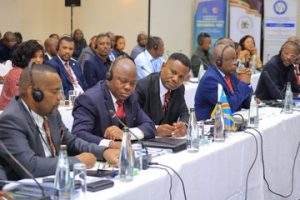
“We have adopted a Matrix of Priority Actions with strict implementation timelines to ensure these commitments are translated into practical outcomes,” Mulimba said.
Security cooperation remained central to the discussions, with both countries reaffirming commitments to joint security measures, intelligence sharing, and ongoing peace initiatives under the Luanda and Nairobi peace processes.
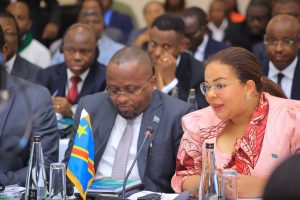
The Ministry of Foreign Affairs said the successful conclusion of the commission reaffirmed the shared commitment of Uganda and the DRC to strengthening bilateral relations, regional peace, economic integration, and people-to-people cooperation.
Permanent Secretary at the Ministry of Energy and Mineral Development, Irene Batebe, who co-chaired the Permanent Secretaries’ Session, said the DRC remains Uganda’s largest trading partner and among its biggest export destinations.
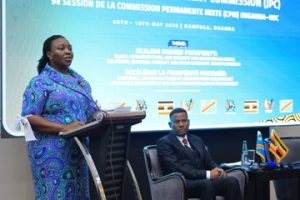
“Recent trade statistics indicate that Uganda’s exports to the DRC were valued at over USD 800 million in the Financial Year 2025/26, with total bilateral trade amounting to approximately USD 1 billion,” Batebe said.
Ms Sarah Kagingo, the Vice Chairperson of the Private Sector Foundation Uganda (PSFU), also participated in the 9th Uganda-DRC Joint Permanent Commission (JPC) to champion private sector interests within the framework of shared regional prosperity, trade, and infrastructure development.
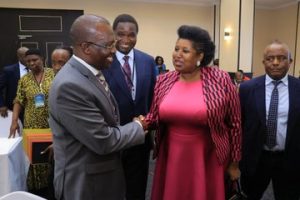
Officials from both countries expressed optimism that the agreements reached during the Kampala meeting will accelerate the implementation of key infrastructure projects, improve cross-border movement, strengthen security collaboration, and unlock new economic opportunities for citizens on both sides of the border.
In a historic show of regional commitment, the 9th Uganda-DRC JPC saw a record-breaking attendance of 17 Congolese Ministers, led by Deputy Prime Minister Jacquemain Shabani Lukoo, signaling a high-level shift toward deeper bilateral integration.