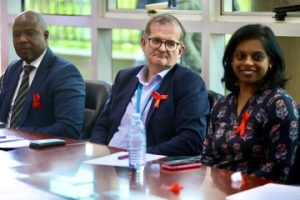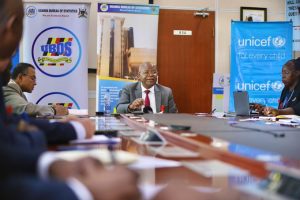



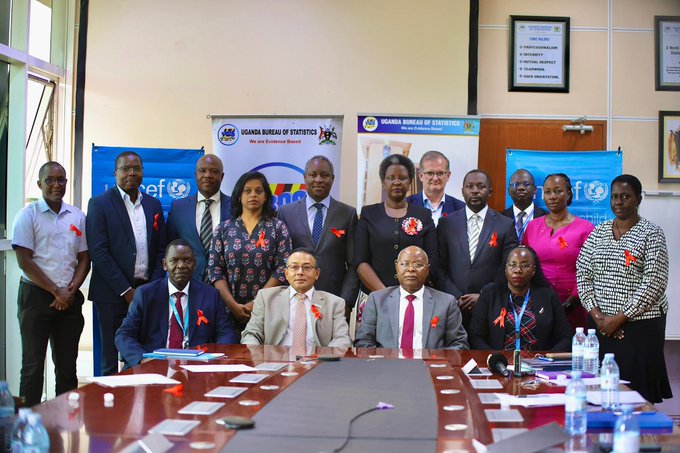
The Uganda Bureau of Statistics (UBOS) has signed a landmark Memorandum of Understanding with UNICEF Uganda to begin the country’s first-ever Multiple Indicator Cluster Survey (MICS) 2026/27—an initiative expected to significantly strengthen Uganda’s national data systems and place children at the centre of development planning.
The survey, globally recognised for producing some of the most reliable statistics on children and households, will support monitoring of the National Development Plan IV (NDP IV), the Sustainable Development Goals (SDGs), and progress on child rights across the country.
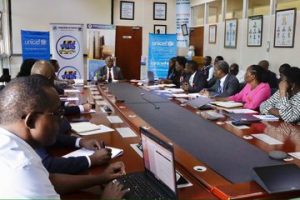
Speaking at the signing ceremony on Monday, UBOS Executive Director and National Statistician, Dr Chris N. Mukiza, said the upcoming MICS will update critical data that has not been refreshed in six years.
“Child poverty in Uganda remains persistent, based on findings from the previous survey conducted six years ago. The MICS 2026/27 will play a critical role in updating this evidence to guide national planning,” Dr Mukiza said.
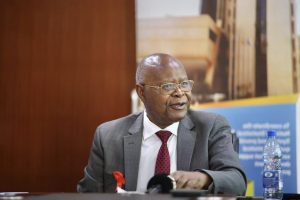
He outlined that 2026 will focus on technical preparations—including forming expert teams, training enumerators, and conducting fieldwork—before the final report is released in 2027. Dr Mukiza also emphasised UBOS’s longstanding commitment to transparency and proper resource management.
“No coin will be lost during this survey. During the Census, there was no case of misuse of resources,” he assured development partners.
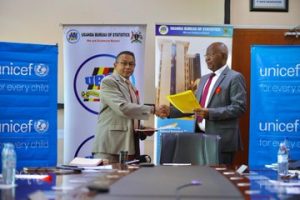
UNICEF Representative to Uganda, Dr Robin Nandy, described the partnership as a major step toward ensuring every child in Uganda is visible in the data that shapes policy and investment.
“Multiple Indicator Cluster Survey 2026/27 is designed to ensure every child is counted and no one is left behind,” Dr Nandy said.
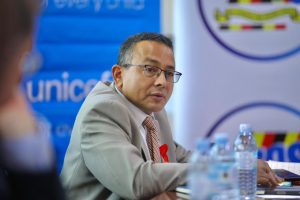
He emphasised that MICS will enable governments and humanitarian actors to invest more strategically in children’s health, education, nutrition, protection, and overall well-being.
“Let us remember that behind each statistic is a human,” Dr Nandy added. “A child who deserves to grow up healthy and educated, a mother seeking safe water and nutrition, and a community striving for a brighter future.”

Dr Nandy reaffirmed UNICEF’s full support: “As Head of UNICEF in Uganda, I can assure my technical and financial support throughout this process.”
MICS, launched by UNICEF in the 1990s, has been implemented in more than 120 countries with over 400 surveys completed, making it one of the world’s most trusted sources of data on children and women.

UBOS and UNICEF officials agreed that the launch marks a renewed commitment to evidence-based decision-making rooted in accuracy, inclusion, and accountability.
The MICS 2026/27, they said, will ultimately help Uganda deliver better plans, better policies, and better outcomes for all children, ensuring that no one is left behind.