




KAMPALA — With 22.9% of Ugandan children now battling substance abuse and depression rates among girls hitting 22%, scholars at Makerere University have warned that the country’s education system is “under siege” by a silent mental health epidemic.
Speaking at a high-level stakeholders’ workshop on March 21, 2026, experts revealed that over 30% of school frontline staff have zero training in psychosocial support, leaving learners vulnerable to a rising tide of anxiety and suicide.
Delivering the keynote address, Rev. Prof. Dr Samuel Abimerech Luboga, Chairperson of the Education Service Commission, warned that schools are increasingly facing a mental health crisis driven by multiple social and economic pressures.

“The mental health crisis among students is growing, driven by family breakdown, poverty, social media pressure to live expensive lifestyles, drug abuse, and gender-based violence, including sexual harassment,” Prof. Luboga said.
He added that these pressures are contributing to “stress, poor academic performance, and even suicide among students,” urging schools to strengthen early identification systems.
“We must recognise warning signs such as lack of concentration and declining grades, foster open communication, encourage mentorship, and work closely with counsellors and senior teachers,” he said.

Research findings: gaps in school mental health systems
Dr Anne Ampaire, Principal Investigator and lead organiser, presented findings from a national assessment covering education stakeholders across Uganda.
She revealed significant systemic gaps in mental health preparedness in schools. “From our responses, we observed a clear gap across all levels of education—from pre-primary to higher institutions,” Dr Ampaire said. “This issue affects the entire education ecosystem, not just learners.”
She disclosed that 32% of respondents reported having no prior training in mental health and psychosocial support, while 68% indicated that available training was limited to peer support mechanisms.

Dr Ampaire called for structured, phased training programmes and stronger institutional systems. “We need clear referral mechanisms, stronger support structures, and a shift from reactive responses to preventive and proactive mental health approaches,” she said.
Mental health literacy and learner wellbeing
Dr Naomi Namanya, Co-Principal Investigator, emphasised the importance of mental health literacy and self-care among school communities, clarifying the distinction between mental health and mental illness.
“Mental health refers to how we think, feel, behave, and cope with life challenges,” she said. “Mental illness, on the other hand, refers to conditions where a person is unable to manage life’s stresses effectively.”

She highlighted rising global and local concerns, noting that approximately 12.5% of the global population experiences mental health disorders, while Africa’s estimate stands at about 10% of its 1.5 billion people.
In Uganda, she said, mental health challenges are particularly significant, with anxiety and depression among the most reported conditions. “Substance use disorders affect about 24% of adults and 22.9% of children and adolescents, which is deeply concerning,” she said.
She further noted gender disparities: “Girls are more affected by depression at about 22%, while boys are more affected by substance abuse at about 21%.”
Strengthening psycho-education systems in schools
Dr Dorothy Kyagaba Ssebowa, Director of the Centre for Teaching and Learning Support, underscored the importance of coordinated psycho-educational interventions.
“The burden of mental health challenges is systemic, affecting the entire school community,” she said. “We need a comprehensive and coordinated approach that strengthens both learners and the systems around them.”
She added that CTLS offers training in mental health and psychosocial support, psycho-education, counselling and career guidance. “These programmes are directly relevant to the challenges we are discussing today, including stress, depression, and career-related dilemmas among learners,” she said.

Learner wellbeing goes beyond academics
Dr Augustine Mugabo, Co-Principal Investigator and facilitator, stressed that learner well-being is shaped by more than academic demands. “Beyond academic pressure, learners’ wellbeing is also impacted by anxiety, emotional distress, and social dynamics,” he said.
He called for stronger school-community collaboration in identifying and supporting learners facing psychosocial challenges. “We must strengthen referral and support systems that connect schools, families, and professional services so that no learner is left unsupported,” he said.
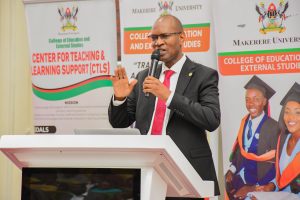
Principal of CEES, Prof. Anthony Mugagga, urged educators to adopt a more compassionate and holistic approach to learner support. “Students today are facing serious mental health challenges. Many are struggling with depression, stress, and emotional distress,” he said.
He cautioned against punitive approaches without proper assessment. “Some students who appear to be underperforming may actually be dealing with serious emotional or family issues,” Prof. Mugagga said.
He added that teachers themselves are under increasing pressure, calling for stronger counselling systems within institutions. “School leadership must create safe spaces where both learners and teachers can seek support,” he said.

Bullying and school violence concerns
Counselling psychologist Dr Wilber Karugahe warned that bullying remains a major threat to learner wellbeing.
“Bullying affects the wellbeing of students,” he said, calling on schools to work closely with learners to prevent school-based violence and create safer learning environments.

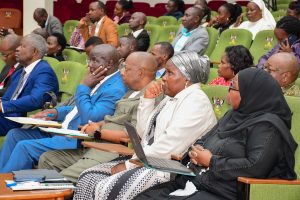
The School Stakeholders’ Workshop held at the Makerere University School of Public Health Auditorium was organised by the Centre for Teaching and Learning Support under the College of Education and External Studies (CEES).