




Electric motorcycle company Spiro Uganda says expanding its battery-swapping network and supporting riders with maintenance and spare parts will be key to meeting rising demand as more Ugandans switch to electric two-wheelers.
Bruce Mucunguzi, the Deputy Country Director Spiro Uganda said the company is integrating solar- and grid-powered mega swapping hubs into its network, with a huge capacity to charge a minimum of 200 batteries to at the same time.
Mucunguzi was speaking at the recently concluded Renewable Energy Conference and Expo 2026 at Kampala Serena Hotel, held under the theme “From Systems to Scale”, organised by the Ministry of Energy and Mineral Development and the National Renewable Energy Platform.
Mucunguzi emphasised safe riding and practical after-sales support, including maintenance and spare parts, as the country’s electric motorcycle market grows.
He attributed the strong uptake of Spiro’s electric two-wheelers to business models that address barriers to customer demand and satisfaction. Spiro Uganda has so far set up four mega battery-swapping hubs in Mukono, Soroti, Jinja and Bukoto in Kampala, and plans to increase the number to 11 by December 2026.
The hubs will support the company’s network of more than 360 battery-swapping stations across the country, making it easier and more convenient for riders to exchange depleted batteries for fully charged ones.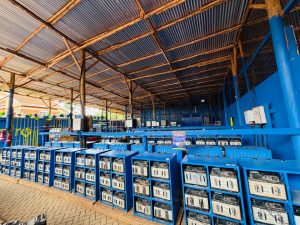
Allan Muhumuza, team leader of the Mobility Bureau at the Ministry of Science, Technology and Innovation, said government policies were attracting more players into the sector.
He said installed electric vehicle production capacity had grown to 79,000 units a year in 2025, with 25,000 electric vehicles, mainly two-wheelers, manufactured locally.
Eng Derick Birimumaso, a senior official at the Ministry of Energy and Mineral Development, said Uganda needs to move beyond pilot projects and develop standards and regulations for electric vehicle infrastructure.
He named the safety of vehicles, users and batteries, accessible charging and the security of users as priorities. The regulations being drafted, he said, will also cover energy metering, tariffs, billing and licensing.