



Parliament has approved the National Budget Framework Paper (NBFP) for the Financial Years 2026/27 to 2030/31, setting the policy and fiscal direction for government ahead of the next national budget.
The approval followed an extensive debate on the report of the Parliamentary Committee on Budget, according to a statement issued by the Ministry of Finance, Planning and Economic Development on Thursday.
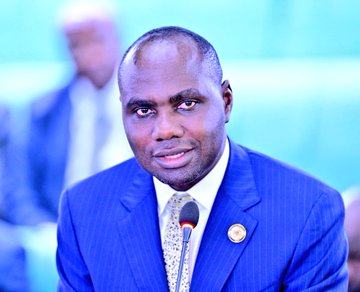
Presenting the government’s position, the Minister of State for General Duties at the Ministry of Finance, Henry Musasizi, said the strategic policy direction for the next financial year and the medium term is to deliver tenfold economic growth by expanding Uganda’s economy to USD 500 billion by 2040.
“The focus of government will be on the key priority sectors—ATMS and enablers—as well as export growth to accelerate socio-economic transformation,” Musasizi said.
He added that the economy is projected to grow between 6.5 and 7 per cent in the 2026/27 financial year.
Musasizi also pledged the government’s support to Parliament to ensure the national budget for FY 2026/27 is processed within the strict timelines set out in the Public Finance Management Act (PFMA), Cap 171.
“In line with the law, we shall work with Parliament to ensure the budget is passed by the end of April 2026, ahead of the inauguration of the 12th Parliament,” he said.
Governance and expenditure reforms
The government outlined a number of priority reform areas it intends to focus on in the next financial year, including stamping out “budget games” that breed corruption and closing leakages in routine expenditures such as transfers to schools, health centres and the public payroll.
Other priorities include improving cash and liquidity management, strengthening sovereign credit ratings, diversifying sources of development finance, and reinforcing internal controls and audit functions to eliminate corruption.
The government is also committed to completing public procurement reforms, improving the management and maintenance of public assets, increasing domestic revenue mobilisation, and strengthening the governance and supervision of state-owned enterprises.
In addition, attention will be placed on improving project execution, addressing low absorption of borrowed funds, strengthening the capacity of the Uganda Bureau of Standards (UNBS) to certify products for both export and domestic markets, and enhancing performance management across the public service.
Musasizi said the government will also prioritise clearing the current stock of domestic arrears and halting the accumulation of new ones.
“A strategy is already in place to eliminate the existing stock of domestic arrears over three financial years starting FY 2025/26,” he noted.
Resource envelope and financing
At the Budget Framework Paper stage, the preliminary resource envelope for FY 2026/27 is estimated at Shs69.399 trillion, down from Shs72.376 trillion in the current FY 2025/26.
Domestic revenues are projected to increase to Shs40.090 trillion in FY 2026/27, up from Shs36.806 trillion in FY 2025/26.
Government discretionary funding, net of arrears, interest payments and domestic debt repayments, is projected at Shs31.059 trillion, down from Shs32.480 trillion in the current financial year.
Domestic borrowing is expected to reduce to Shs8.952 trillion from Shs11.381 trillion, while domestic debt refinancing (roll-over) is projected at Shs9.68 trillion, slightly lower than the Shs10.028 trillion projected for FY 2025/26.
External budget financing is projected to drop sharply from Shs2.084 trillion to Shs330.97 billion, while external project financing is expected to decline from Shs11.327 trillion to Shs10.018 trillion.
The FY 2026/27 budget will be financed through a mix of domestic and external resources, including tax revenues, loans and grants. The government said it will prioritise concessional borrowing for social projects and use innovative financing with competitive terms for high-impact infrastructure investments.
The Ministry of Finance said the government will continue to maintain sound fiscal and monetary policies to ensure macroeconomic stability, improve credit ratings and attract foreign direct investment.