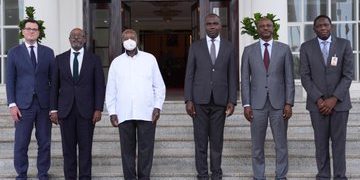




KAMPALA — Yoweri Kaguta Museveni has outlined Uganda’s economic transformation agenda to the International Monetary Fund (IMF), emphasising value addition, cost reduction and reinvestment of profits as central pillars for expanding the country’s $61 billion economy.
On February 17, President Museveni hosted Abebe Aemro Selassie of the International Monetary Fund, where he reiterated that Uganda’s economic “centre of gravity” lies in agriculture and manufacturing.
“The correct line for Uganda is value addition, peace and security, and open markets,” Museveni said. “However, we must deal with the high costs of transport, electricity and money, and discourage the externalisation of profits so that they are reinvested here.”
The President stressed that lowering production costs — particularly in transport, power and access to finance — remains critical to boosting competitiveness and accelerating agro-industrialisation. He argued that deliberate government support toward agriculture and manufacturing would drive exports, create jobs and stabilise incomes.
Focus on Cost Reduction and Reinvestment
Museveni’s remarks reflect ongoing efforts to improve infrastructure and expand electricity generation while offering tax incentives aimed at stimulating local production. He has consistently called for profits generated in Uganda to be reinvested domestically to spur industrial growth.
The IMF engagement comes as Uganda seeks to consolidate macroeconomic stability while addressing private sector concerns about the cost of doing business.
Nabbanja Meets UK-UAE-India Delegation
On the same day in Kampala, Prime Minister Robinah Nabbanja met a high-level trade delegation comprising representatives from the United Kingdom, the United Arab Emirates and India, including high commissioners and business leaders.

The discussions centred on investment opportunities in agriculture, tourism, energy and infrastructure development. Nabbanja assured the delegation of Uganda’s commitment to safeguarding investments and maintaining a stable business environment.
“Uganda remains open for business. We are committed to protecting investments and working with partners who are ready to participate in our development journey,” Nabbanja said.
Government officials highlighted Uganda’s youthful workforce, expanding regional market access under the East African Community, and ongoing public infrastructure upgrades as competitive advantages.
Expanding a $61 Billion Economy
The twin meetings underscore Uganda’s broader strategy to expand its economy through agro-industrialisation, manufacturing growth, tax incentives and infrastructure modernisation.
While Uganda has earned praise for political stability and sustained economic growth, some stakeholders continue to call for more aggressive interventions to address high transport and financing costs that affect small and medium enterprises.
For Museveni’s administration, the message to global financiers and investors is clear: Uganda’s development path will be anchored on value addition, disciplined macroeconomic management and partnerships that prioritise long-term local reinvestment.