


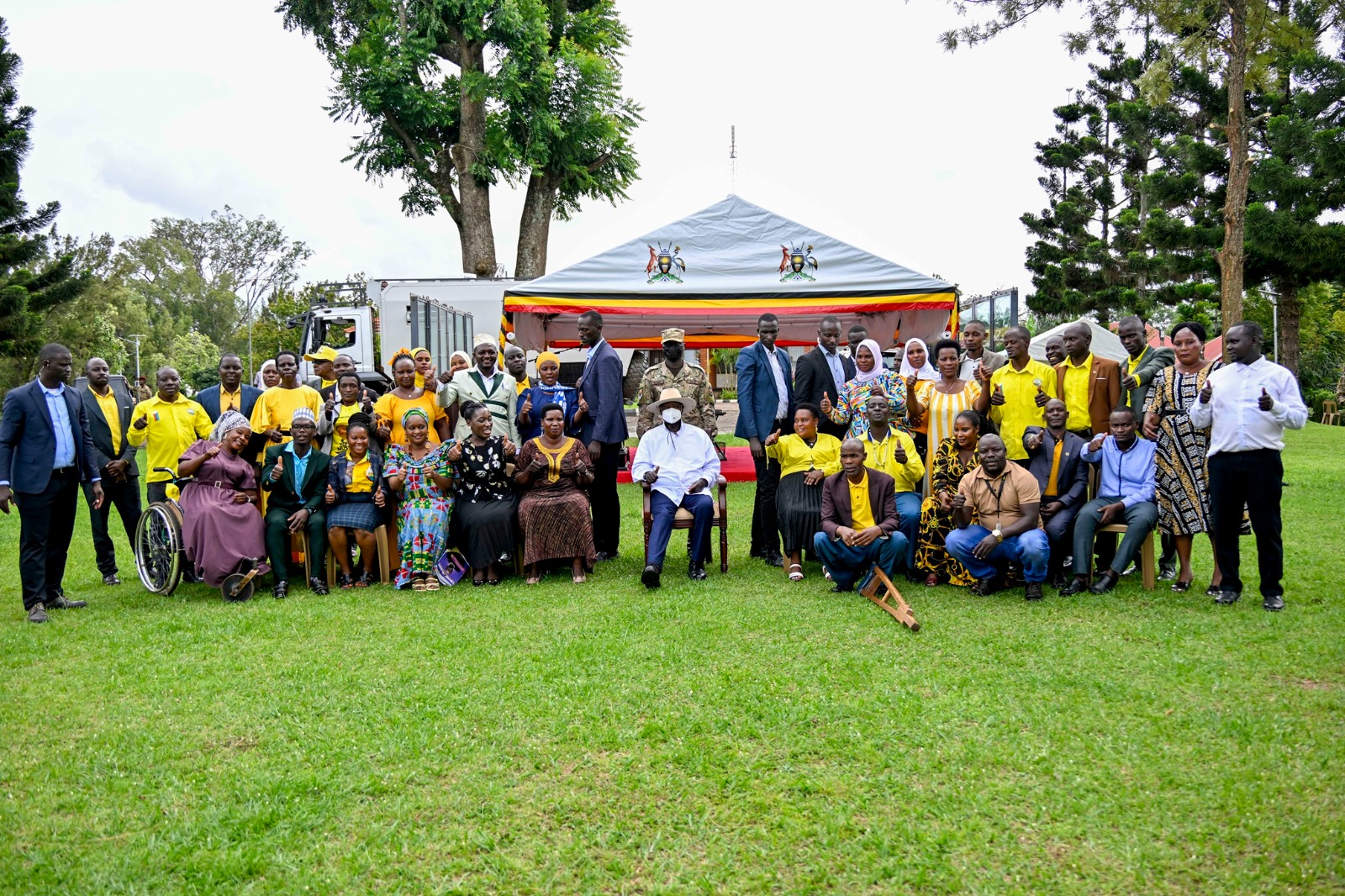
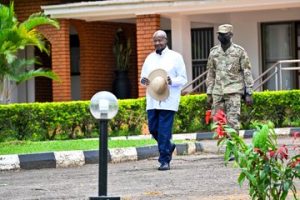
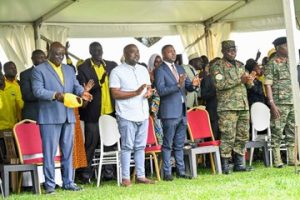
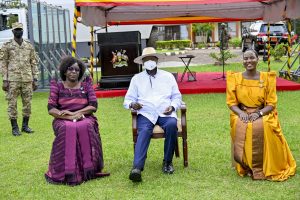
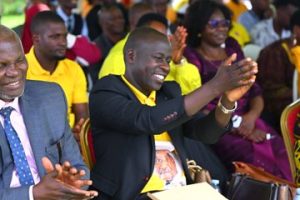
President Yoweri Museveni has met leaders of the National Resistance Movement (NRM) from the Greater Masaka region, urging them to prioritise addressing the real challenges affecting citizens and to actively promote government programmes aimed at improving livelihoods.
The meeting took place on Tuesday at State Lodge Masaka and was organised by Masaka City Woman Member of Parliament-elect Justine Nameere.
During the meeting, President Museveni criticised leaders who spend excessive time on political debates instead of addressing the concerns of ordinary citizens.
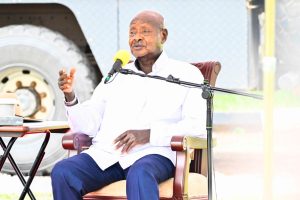
“It is unfortunate how some leaders waste time in Parliament talking instead of looking at the real issues and reaching the ordinary people. Leaders must expose wrongdoing and demand solutions to the problems affecting the wananchi,” the President said.
He warned that failure by leaders to speak out against corruption weakens public trust and undermines service delivery.
“Keeping quiet about thieves and corruption in your areas is unacceptable. If leaders at the district level are corrupt and Members of Parliament fear to expose them, then the whole system rots,” he added.
The President also challenged NRM leaders to confidently communicate government achievements to the public rather than remain silent out of fear of criticism.
“Some NRM leaders fear talking about the achievements of the government because they worry about criticism from the population. This is wrong. Instead of keeping quiet, you should promote government programmes and explain what has been achieved,” he said.
On national unity, Museveni cautioned leaders against sectarian politics, which he said threatens social cohesion. “The other poison is sectarianism, dividing people based on religion and tribe. This is dangerous, and we must not allow it,” he emphasised.
Museveni commended Nameere for organising the meeting and praised her determination during the election process. “When she contested for the Masaka city Woman MP seat, there were attempts to rig the votes, but she insisted on a recount, and when the votes were counted again, she won. That shows courage,” he said.
To emphasise the importance of unity across communities, the President shared a personal story about how people from different backgrounds contributed indirectly to his education through trade.
“I went to school in the 1950s and 1960s because my father was able to pay the school fees by selling cattle in the monthly auction markets of Ntungamo. The buyers were businessmen from different backgrounds, including Walusimbi-Mpanga from Kampala, Bukyenya from Mbarara and Shear, a Muzungu operating from Ishaka who supplied cattle to feed miners at Kilembe,” he said.
“Who, then, supported my education apart from my father? Certainly not only the Banyankore or my church denomination,” he added.
The President also urged leaders to mobilise citizens to take advantage of government wealth creation programmes such as the Parish Development Model and Operation Wealth Creation.
“NRM has always focused on the real issues affecting the people. In the past, we faced challenges like insecurity, lack of schools and health centres. Today, the main issue we are fighting is poverty,” he said.
He explained that the Parish Development Model was designed to bring government support closer to households.
“We decided that those above 18 years should engage with the PDM funds at the parish level because districts and sub-counties were too far from the ordinary person,” he noted. “Use and embrace government programmes to solve the issues in society,” he urged.
Speaking after the meeting, Nameere thanked the President for engaging with leaders from the region and offering guidance.
“I want to thank the President for sparing time to meet us and for the wise counsel he has given to us as leaders. His guidance will help us refocus on serving our people and promoting the government programmes meant to improve the livelihoods of the wananchi,” she said.
She also pledged to continue mobilising leaders and communities in Masaka to support government initiatives aimed at fighting poverty and promoting development.