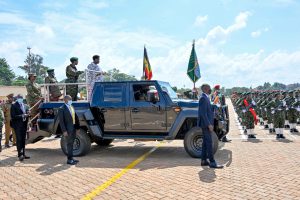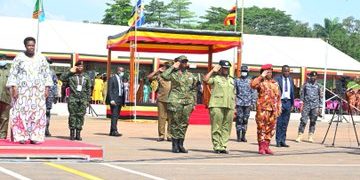



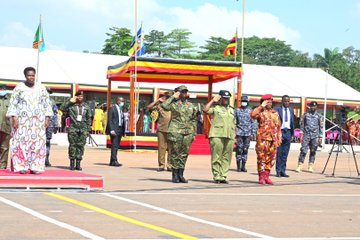
President Yoweri Kaguta Museveni has underscored the importance of education and skills development for the girl child, saying it is central to empowering women and transforming society.
In remarks delivered on his behalf by Vice President Jessica Alupo during the International Women’s Day celebrations at Kololo Ceremonial Grounds, the President said government reforms since 1986 have focused on expanding education access to address gender inequalities.
“We did this by guaranteeing education access for all at primary and secondary schools levels i.e. UPE and USE. This was a fundamental empowerment of the girl child because when someone is educated, he/she cannot be suppressed. That was the real beginning of our reforms,” Museveni said.
The celebrations were held under the theme “Scaling up investments to accelerate access to justice for all women and girls in Uganda.”
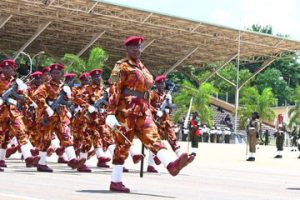
Museveni noted that when the National Resistance Movement (NRM) came to power in 1986, it found women largely marginalised despite forming more than half of Uganda’s population at the time.
“In 1986, although women formed more than 50 percent of the total population of 14 million Ugandans at that time, their full potential was not realised on account of their education, lack of opportunities, chronic health and early death,” he said.
“Women were trapped in a very disadvantaged position despite the fact that they were at the centre of the subsistence economy and also provided at least half the labour for producing the few cash crops.”
According to the President, the introduction of free education particularly benefited girls, many of whom had previously been denied schooling as families prioritised boys.
“It is the mother’s level of education and access to information which will decide whether or not she will go for a tetanus vaccination during pregnancy, whether a trained person will be present at birth, whether she knows the advantages of breastfeeding, whether foods will be cooked in the most appropriate way, whether water will be boiled and hands washed, whether a child will be weighed or vaccinated, among others,” Museveni said.
“Therefore, education and skilling of the girl child is an effective method of empowering not only women but the entire society.”
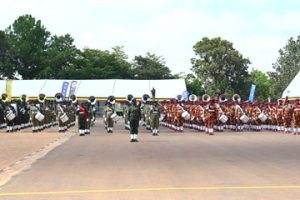
Museveni also highlighted government policies aimed at increasing women’s participation in leadership, including affirmative action in education and politics.
“For instance, for the university entry, we have the 1.5 points given to girls. They are free to stand for any elective office, but they also have additional seats which they compete for,” he said. “That way, we have been able to increase their numbers in public offices, and they have proved to be better leaders and managers than men.”
He added that the government strengthened laws to protect women and girls from violence. “During our resistance against dictatorships, we treated everyone equally and I found women to be more resolute than many men. Thirdly, in order to provide justice to women, we introduced big punishments for rape and defilement.”
Museveni also said the government has taken steps to eliminate harmful cultural practices such as female genital mutilation, early marriage and domestic violence, while introducing poverty alleviation programmes to support households.
“When the households get out of poverty through commercial agriculture, manufacturing, services and ICT, it’s easier to address the remaining challenges faced by women,” he said. “When families become wealthy, they are able to educate all their children. Therefore, families getting out of poverty is a good base for solving many problems.”
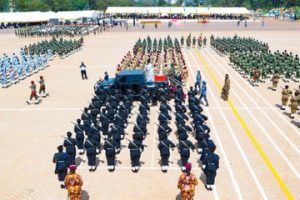
The President added that government investments in infrastructure such as electricity and roads are intended to support business growth and job creation.
“However, infrastructure development alone is not enough though it must come first. Development is a collective good for everyone, but wealth and jobs belong to individuals, families, groups and companies. We should not have spectators in the drive towards household incomes.”
Speaking at the event, Vice President Jessica Alupo congratulated Ugandans for participating in the recent general elections and thanked voters for supporting the NRM leadership. “We thank you very much as elected leaders for exercising your mandate and electing leaders at all levels to serve you. We’re sincerely thankful to all of you,” she said.
She also noted that President Museveni was attending a regional meeting in Arusha, where he was elected chairperson of the East African Community (EAC). “Join me in congratulating H.E the President upon assuming the Chairmanship of the EAC,” Alupo added.
During the event, the Vice President launched several policy frameworks including the Second National Action Plan against Gender-Based Violence (2026–2031), the Uganda Gender and Equality Climate Strategy (2026–2031), and the National Strategy to End Female Genital Mutilation (2026–2031).
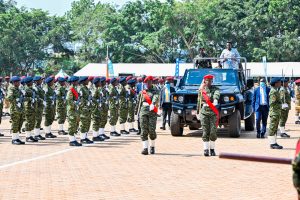
Betty Amongi, Minister of Gender, Labour and Social Development, said International Women’s Day is a moment to reflect on both progress and remaining challenges in the struggle for gender equality.
“It is the day that we celebrate the gains that we have made and reflect on the agenda that still needs to be done,” Amongi said. “We celebrate the struggle, the courage of all the women who are determined, the ordinary rural women who have worked tirelessly to feed and educate their children in order to anchor Uganda as a society.”
She added that the government remains committed to programs aimed at eliminating poverty and strengthening women’s economic independence. “We are dedicated to promoting programs that eliminate poverty, empower women economically and ensure women’s standards of living are improved because we believe economically independent women can protect themselves and their children from injustices.”
Meanwhile, State Minister for Gender and Culture Peace Mutuuzo said Uganda has made progress in promoting women’s participation in leadership but warned that gender-based violence remains a major challenge.
“Gender-based violence has remained high. Fifty-two percent of all women have ever faced physical violence, and the few who have not faced such have at least faced economic violence,” she said. “Today, we would wish to mobilise not only women but also men to acknowledge the space for women, support them in developing this country and maintaining peace together.”
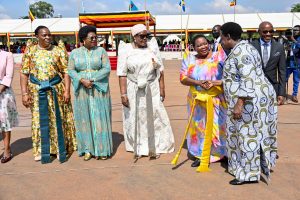
Leonard Zulu said Uganda has made notable progress through affirmative action policies that support women’s participation in governance. “Access to justice is not only a legal matter but also a development imperative: a human rights obligation and a cornerstone of peace and stability,” he said.
At the same event, 34 Ugandans were awarded national medals in recognition of their contribution to the country’s development.
The ceremony was attended by several leaders including Chief Justice Flavian Zeija, Prime Minister Robinah Nabbanja, Third Deputy Prime Minister Lukia Nakadama, members of parliament, diplomats, religious and cultural leaders, among other dignitaries.