



Mbale — President Yoweri Kaguta Museveni has urged Uganda’s youth to channel their energy toward advancing East Africa’s long-standing political and economic integration, rather than engaging in riots or unproductive debates.
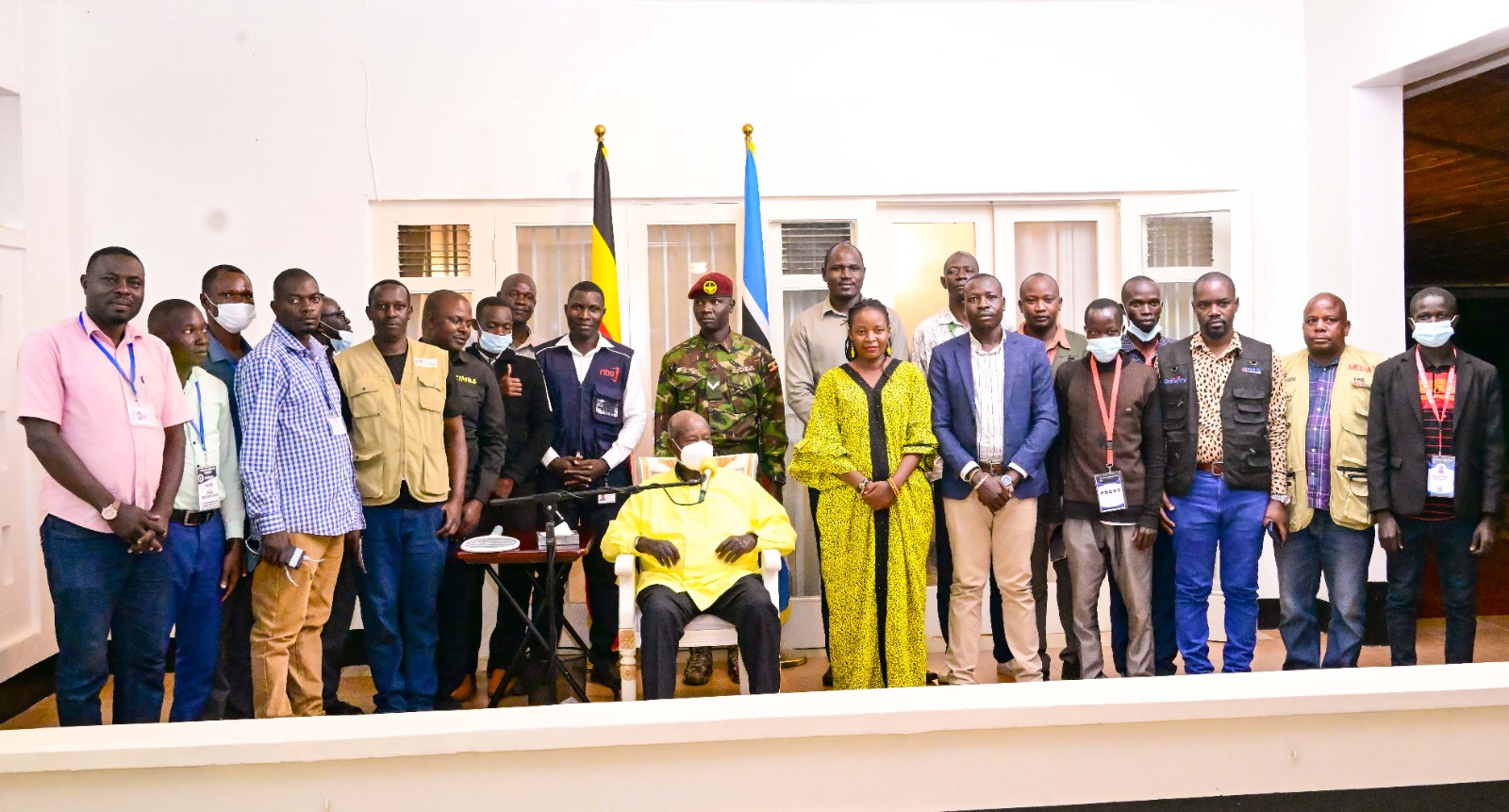
Speaking on Friday, November 14, 2025, during a media engagement with journalists from the Bukedi sub-region at the State Lodge in Mbale, President Museveni—also the NRM presidential candidate—outlined the seven core pillars of the NRM’s 2026–2031 manifesto and emphasised regional unity as the continent’s best path to prosperity.
He criticised young people who, in his view, “waste time” on riots or on radio talk shows that add little value to their future. “Where will you sell what you produce? If Uganda’s internal market was enough, why would the Chinese—with a market of 1.4 billion—be coming here? What are you intellectualising about? You are not dealing with your future,” he said.
Using dairy production as an example, he noted that Uganda produces 5.3 billion litres of milk annually against a domestic demand of only 800 million litres.
“We have a surplus of four billion litres. Sometimes Kenya buys, sometimes it doesn’t, then we look to Algeria. It’s the same issue with sugar, maize, cement,” President Museveni said.
He argued that such structural surpluses demonstrate the need for deeper East African market integration, urging young people to focus on regional opportunities rather than “talking about European football” or other distractions.
Seven Pillars of the 2026–2031 Manifesto
The President outlined the manifesto’s seven priorities: Peace, Development, Wealth Creation, Job Creation, Expansion of Services, Expansion of Markets, and the Political Federation of East Africa.
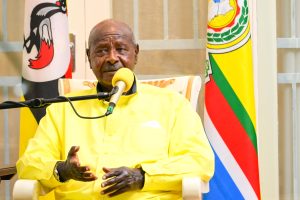
He said these pillars are interlinked, with widening markets and eventual political federation forming the backbone of long-term economic transformation.
“A Modern Economy Cannot Grow Without a Market”
President Museveni used historic examples of German and Italian unification to illustrate the power of market-driven integration.
“Before 1870, Germans were in 39 kingdoms. They couldn’t build a strong economy. What moved them was the issue of the market,” he said. “A modern economy cannot grow without a market.”
He warned that Africans risk falling behind in a rapidly advancing world.
“People have gone to the moon. They look at us from there like insects that eat sugar. How can you, professors, allow such a gap to occur?” he asked.
Push for East African Federation
The President reiterated his long-standing call for a political federation of East Africa, saying it would give the region technological strength, economic power, and robust defence capability.
“East Africa can have the capacity to go to the moon, send a satellite, and ask the Americans, ‘What are you doing here? The moon is a common property,’” he said jokingly.
He encouraged journalists to use their platforms to sustain public debate on integration, arguing that the media must remain focused on issues that determine “the destiny of Africans.”
On Independent Candidates
Museveni also addressed the issue of NRM members contesting as independents after losing primaries. He said proposals to eliminate independents were rejected during the constitution-making process because primaries can sometimes be flawed.
“It may not be correct to ban independents because primaries sometimes make mistakes,” he said, urging political dialogue and unity around party principles rather than personal ambition.
Wealth Creation and Infrastructure Priorities
On household income programs, the President maintained that the NRM is the only government that has directly funded citizens through initiatives such as the Parish Development Model (PDM). “Go and check if any Ugandan government has ever given its people money as a wealth creation fund,” he challenged journalists.
Addressing concerns over public service salaries, President Museveni said the government first prioritised strategic infrastructure—roads, electricity, and industrial parks—because these investments create long-term jobs and opportunities.
“Infrastructure creates opportunities for more jobs,” he said, adding that salary enhancements remain on the agenda.
The engagement was attended by senior NRM leaders, including the Second National Vice Chairperson and Speaker of Parliament, Hon. Annet Anita Among; the NRM Electoral Commission Chairperson, Dr. Tanga Odoi; and the NRM Director for Communications, Hon. Emmanuel Dombo.