


Kampala– To reverse years of declining performance in Biology at the Uganda Advanced Certificate of Education (UACE), Makerere University is calling for a national shift toward experiential learning and digital integration.
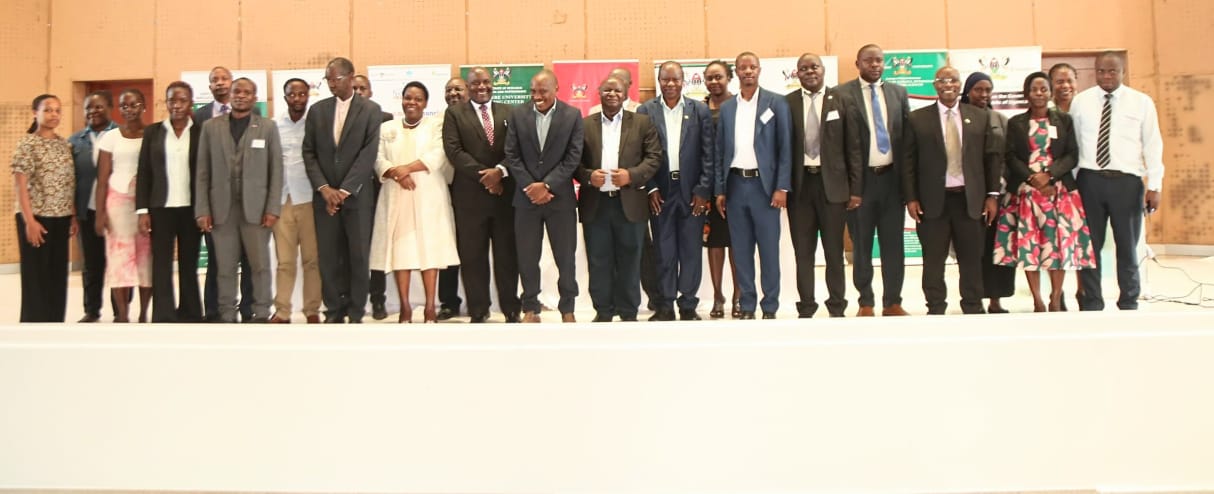
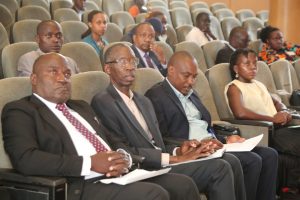
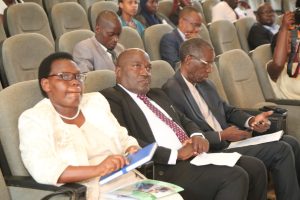
This was revealed during the Biology Dissemination Workshop held on Thursday, 19th March 2026, at the Yusuf Lule Central Teaching Facility (CTF2), Makerere University, attended by teachers, university lecturers, officials from the Uganda National Examinations Board (UNEB) and the National Curriculum Development Centre (NCDC), representatives from the Ministry of Education and Sports, parent representatives, etc.
Context and Rationale
The study, led by the School of Biosciences in the College of Natural Sciences (CoNAS), analysed nearly 50 years of academic performance data in Biology at UACE. While results in 2025 showed significant improvement, historical data revealed persistent underperformance. For instance, in the 2018 UACE examinations, of 13,061 candidates nationwide, only one achieved an “A,” with just 38% attaining a pass grade of “E” or better. The 2019 examinations saw only 44 candidates achieve an “A.”
This poor performance has far-reaching implications, given that Biology underpins academic and research programs across Makerere University’s College of Natural Sciences, College of Health Sciences, College of Veterinary Medicine, Animal Resources and Biosecurity, and the College of Agricultural and Environmental Sciences. It also affects numerous government ministries and agencies reliant on biological sciences expertise.
To address this national challenge, Makerere University, in partnership with the College of Education and External Studies (CEES) and under the guidance of the Deputy Vice Chancellor for Academic Affairs (DVC-AA), implemented a two-phase intervention.
Phase I focused on identifying root causes of poor performance, including teacher qualifications and competence, curriculum breadth, exam structure, laboratory and field infrastructure, and student attitudes toward Biology. Phase II will implement practical interventions informed by these findings.
Evidence-based interventions
Dr Juliet Muzoora, Commissioner of Higher Education, Ministry of Education and Sports, who was the Chief Guest, lauded the research and emphasised the importance of evidence-based interventions.
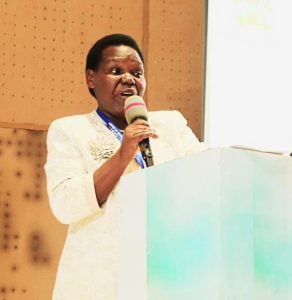
Highlighting the synergy between UNEB and NCDC, she noted, “Initially, during the lower secondary competence curriculum transition, some teachers struggled with the change, sometimes blaming different agencies. However, it is clear that NCDC and UNEB are working collaboratively, producing a curriculum that is well-prepared and properly assessed.”
Dr Muzoora stressed the importance of content, competence, and methodology integration, saying, “This ensures that project work and other learning activities are meaningful and well-integrated, so no step is overlooked in the learning process.”
She further cautioned against the monetisation of educational delivery and requested Makerere University to present the findings formally to senior management before public dissemination.
She also highlighted financial and infrastructural challenges, noting, “We recognise the financial challenges in equipping schools, providing ICT resources, and staffing. Findings from this study will support advocacy for increased funding and development partner engagement, including programs like the Uganda Secondary Education Expansion Program (USIP), which provides new schools, ICT equipment, and school leadership training.”
Experiential learning
Professor Anthony Mugagga, Principal of CEES, emphasised teacher supervision and experiential learning. “There is a need to have a framework to supervise biology teachers. Makerere is offering a free service to empower biology teachers through trainings, workshops, and seminars. Experiential learning and field trips are the key to yielding results. Ensure there is monitoring and evaluation,” he said.
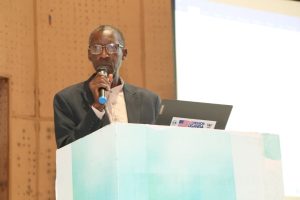
Professor Winston Tumps Ireeta, Principal of CoNAS and DVC for Finance and Administration, noted the university’s role in supporting performance improvement initiatives. “Makerere University and CoNAS are actively supporting processes to improve biology performance. We are encouraging schools to leverage local materials for experiential learning, which can be highly effective,” he said.
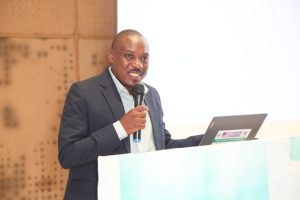
Professor Fred Masagazi Masaazi, Chair of the Makerere University Research and Innovations Fund (Mak-RIF), highlighted the project’s rigorous selection process. “I am proud to report that this project scored 92%—an exceptional result. The idea is important, focusing on improving the teaching of biology in schools,” he said.
He emphasised accountability and collaboration: “All stakeholders must be present: the College of Education, the Commissioner, representatives from international examinations, the National Curriculum, and the implementing staff. These are the people responsible for translating study findings into practice.”
The findings
Professor Frederick Muyodi, lead researcher from the Department of Zoology, Entomology and Fisheries Sciences, said the needs-based project aims to address poor student performance in Biology.
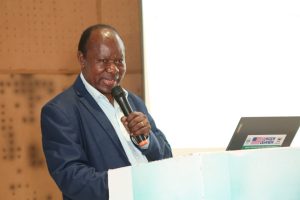
“We collected data from 5,252 respondents across 100 districts, covering students, teachers, parents, and administrators,” he explained.
Key findings included: limited experiential learning, such as field trips and project work, is a major cross-cutting challenge; poor digital infrastructure limits access to online learning; students often engage with biology only theoretically, impacting conceptual understanding and exam results; and community attitudes and misconceptions about Biology as a difficult subject affect motivation.
Professor Muyodi recommended: strengthening experiential learning, expanding digital infrastructure, enhancing laboratory functionality, supporting teacher capacity, promoting student engagement, involving families, and aligning curriculum with assessment.
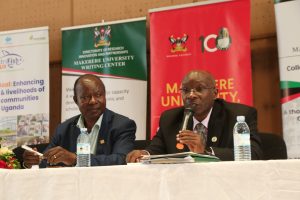
Associate Prof Arthur Tugume, Dean SBS/Department of Plant Sciences and Biotechnology, reflected on personal experiences and the importance of experiential learning. “When I studied biology in senior five, we had only 12 students, and our first practical was frog dissection. Experiential learning shaped my understanding of the subject. Today, students often lack this connection with nature,” he said.
He also emphasised the subject’s significance: “Biology accounts for over 75% of Uganda’s Science, Technology, and Innovation ecosystem. It underpins multiple degree programs and professions. Weakness in biology affects health, agriculture, environmental sciences, and research.”
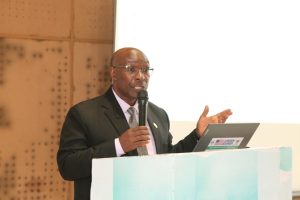
Prof. Tugume further stressed infrastructure and urbanisation challenges: “Large class sizes, limited labs, and reduced interaction with nature complicate experiential learning. Digital tools, online resources, and adequate staffing are critical to improving outcomes.”
NCDC and UNEB insights
Dr Agaba Jude, a Curriculum Specialist at the National Curriculum Development Centre (NCDC), said the study identifies three major issues: learners are not engaged in projects, field trips, or online learning.
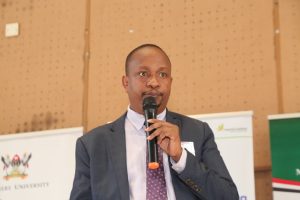
“The first two are feasible and explicitly included in the syllabus. Field excursions do not need to be expensive or far from school; local environments suffice,” he said.
Dr Jimmy Okello from UNEB emphasised aligning assessment with curriculum: “Teacher trainers and universities can help develop tools that evaluate how well assessments match curriculum objectives. Currently, assessments often lack a systematic method to verify alignment.”
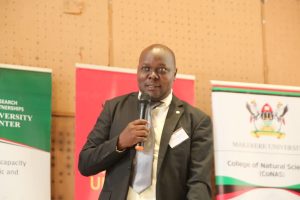
Dr Hassad Kiwuluka, a UNEB Examiner, added, “For the adapted curriculum, biology will now have two papers: one for theory and one for practical. UNEB conducts pre-tests to ensure alignment before public release. We also aim to incorporate study recommendations into assessment practices.”
The dissemination workshop marked a critical step toward improving biology education in Uganda, emphasising experiential learning, infrastructure, teacher capacity, curriculum alignment, and policy engagement.