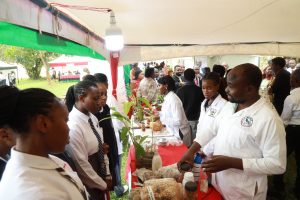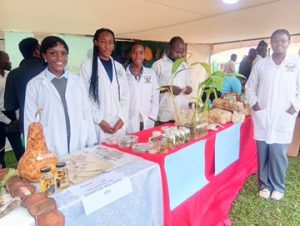



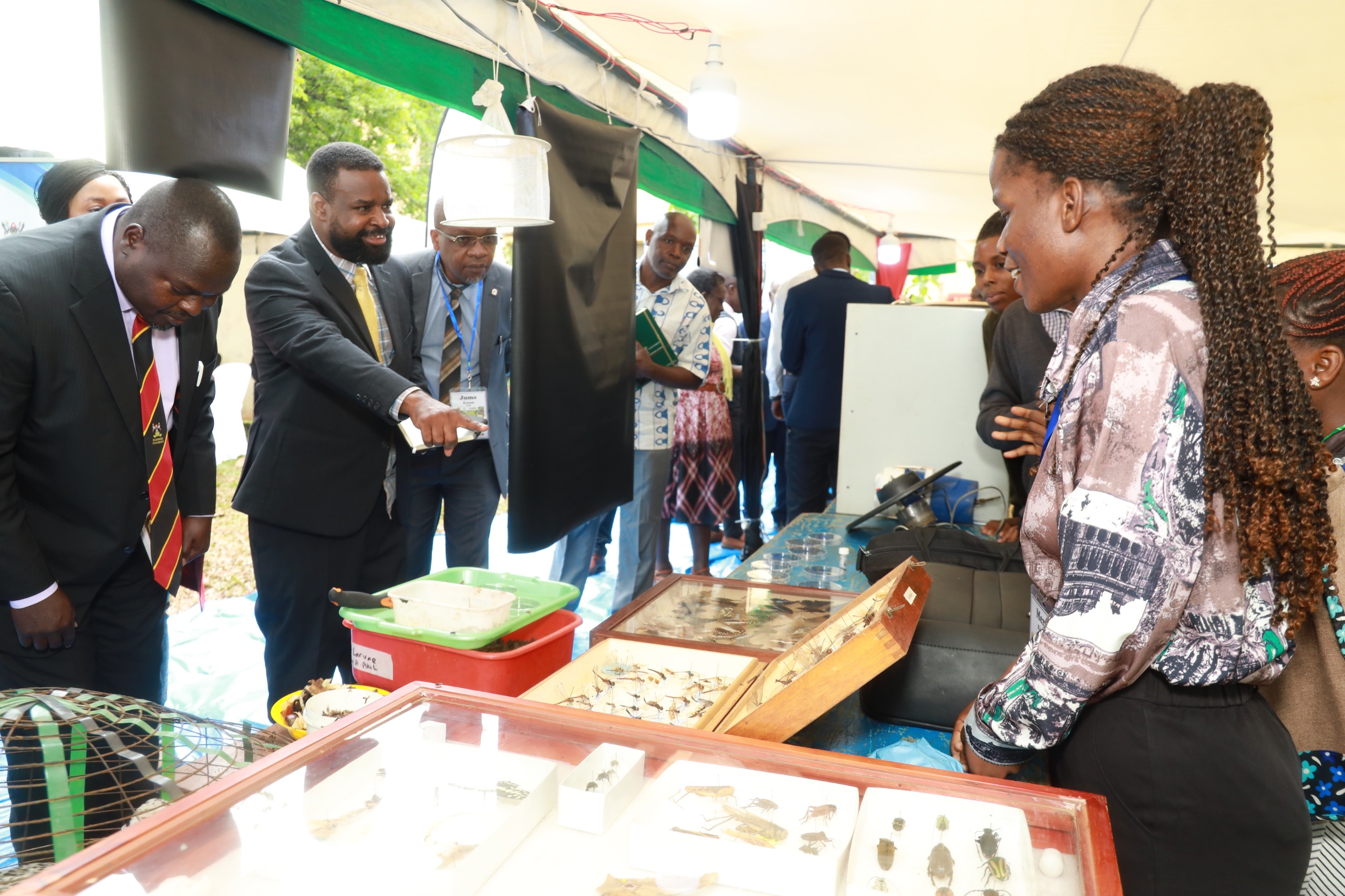
KAMPALA — Makerere University has launched its College of Natural Sciences (CoNAS) Science Exhibition and Open Day, bringing together researchers, secondary school students, and education stakeholders to showcase scientific innovations and promote careers in science, technology and innovation.
The three-day exhibition, running from 5th to 7th March 2026 at the Science Quadrangle, CoNAS, is organised under the theme “Empowering Competent Learners for Innovation & Sustainable Development.”
Prof. Robert Wamala, Head of the Directorate of Research, Innovation and Partnerships at Makerere University, said the university remains committed to strengthening research-driven development and community engagement. “Universities do not exist in isolation; they exist to serve society through teaching, research, and community engagement,” Prof. Wamala said.

Representing the Deputy Vice Chancellor (Academic Affairs), he noted that the exhibition reflects Makerere University’s ambition of becoming a research-led institution.
“Operationalising this mandate means ensuring that research conducted by our faculty, students, and partners is visible, accessible, and relevant to society,” he said.
Prof. Wamala emphasised that the exhibition provides young learners with an opportunity to experience science beyond classroom learning. “Through such interactions, curiosity is nurtured, and future scientists, innovators, and researchers are inspired,” he added.
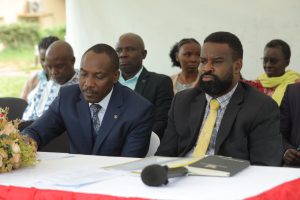
He welcomed secondary school teachers and students attending the event, encouraging them to explore scientific research and interact with university researchers.
The exhibition brings together departments across the College of Natural Sciences, including chemistry, physics, geology, mathematics, biochemistry, zoology, and biotechnology.
Solar cooking innovation showcased
Dr Bosco Oruru, Head of the Department of Physics, highlighted a solar energy innovation developed by the university.
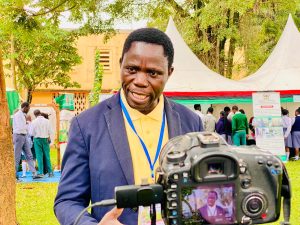
He said the research team is developing solar-powered cooking systems designed for schools and communities. “We are using energy from the sun to develop cooking systems that can be used in schools and society,” Dr. Oruru said.
The technology uses solar panels to capture and store solar energy, which can later be used for cooking.
“The advantage is that it does not require traditional fuels such as firewood or charcoal. The sun is available everywhere, making solar energy a reliable option, especially for rural communities without access to the national electricity grid,” he explained.

The system is currently being tested in schools in Madi Okollo District, where it has helped communities transition away from firewood-based cooking.
Dr Oruru noted that the innovation also contributes to public health improvement. “Smoke from firewood and charcoal can cause respiratory infections. By using solar energy, we reduce health risks associated with carbon monoxide exposure,” he said.
The research team has tested the technology in two schools so far, with plans to expand deployment after successful evaluation. “Once testing is completed, the next step will be commercialisation. The technology can then be deployed in many institutions and could generate income for the university while benefiting communities,” Dr Oruru said.
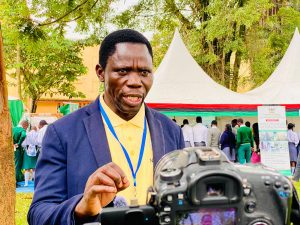
Although installation costs may be high initially, he explained that the system is durable and cost-effective in the long run. “After installation, the system can be used for a long time with minimal operational costs because solar energy is free,” he added.
The innovation also supports environmental conservation by reducing dependence on firewood and charcoal, which contribute to deforestation and climate change.
Looking ahead, the university plans to develop smaller versions of the technology for household use.
Career guidance for students
Prof. Winston Tumps Ireeta, Principal of the College of Natural Sciences and Deputy Vice Chancellor for Finance and Administration, said the exhibition is designed to guide young learners in making informed career choices.
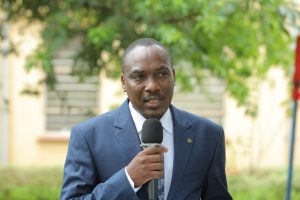
“Students sometimes choose career paths without enough information. Someone may want to become a medical doctor or engineer but end up studying subjects that do not match their ambitions,” he said.
He explained that students attending the exhibition will participate in career guidance sessions where they will learn about available science-related academic programmes. “These sessions are designed to help students understand different career options and what is required to pursue them,” Prof. Ireeta said.
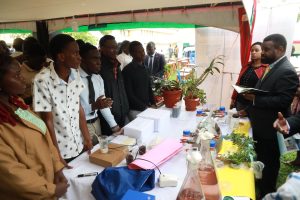
Over 30 secondary schools are participating in the event, which will run over three days.
The organisers scheduled some sessions over the weekend to avoid disrupting school academic programmes.
Strengthening research and innovation
University officials said the exhibition provides a platform for researchers to share knowledge with the public and explore collaboration opportunities.
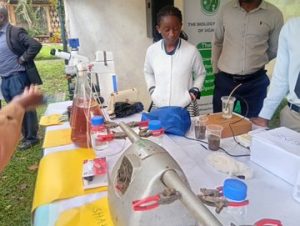
The CoNAS research showcase features innovations from multiple scientific disciplines aimed at addressing challenges in health, agriculture, the environment, and emerging technologies.
Makerere University continues to promote research, innovation, and community outreach as part of its strategic vision of supporting sustainable national development.