


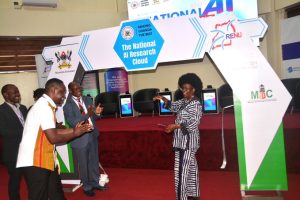
Kampala — Makerere University has marked a dual milestone in technological innovation with the launch of the National AI Research Cloud and the commissioning of an Electric Fast-Charging Station, highlighting Uganda’s growing leadership in artificial intelligence and e-mobility.
The events, presided over by Hon. Dr Monica Musenero, Minister of Science, Technology and Innovation, underscore the critical role of academia, industry, and government in advancing sustainable technology solutions.
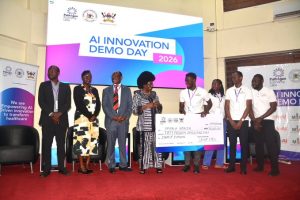
Speaking at the AI Innovation Demo Day, Prof. Barnabas Nawangwe, Vice Chancellor of Makerere University, emphasised the immediacy of artificial intelligence in transforming sectors:
“AI is no longer futuristic; it is here, shaping healthcare, education, agriculture, and governance.”
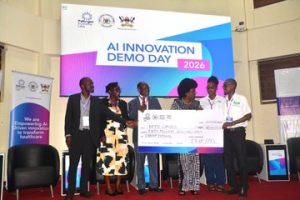
The day also featured an AI startup pitch competition, where three companies—Novita Diagnostics, Feyti Limited, and Impala Health—each received UGX 50 million to support further development of their AI-driven solutions.
“We are witnessing home-grown solutions tackling real-world problems,” noted Dr Musenero. “This partnership between government, academia, and innovators will strengthen Uganda’s capacity to leverage technology for national development.”

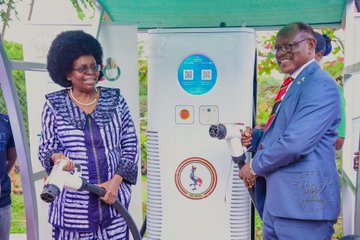
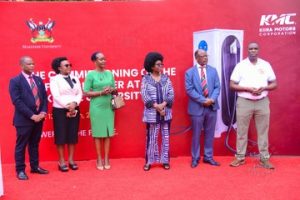
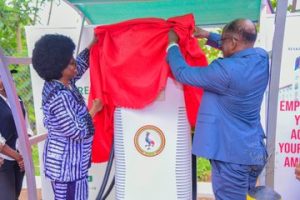
In a related achievement, Dr Musenero commissioned the Electric Fast-Charging Station at Makerere University’s Senate Building Parking Lot, a project realised in collaboration with Kiira Motors Corporation, which also donated an electric bus to aid mobility for differently-abled staff and students.
“The commissioning of this Electric Fast-Charging Station represents a transition from academic exploration into industrial reality,” said Dr Musenero. “We have moved beyond proving that an electric vehicle can be built in Uganda. Today, we are ensuring our vehicles are deployed across the continent, solving Africa’s mobility problems.”
The initiative aligns with Uganda’s National E-Mobility Strategy, which aims for 65% localization of the e-mobility value chain by 2040, creating over 500,000 green jobs and integrating renewable energy into national transport solutions.
Prof. Nawangwe hailed the dual achievements as proof of Uganda’s potential in sustainable technology: “These initiatives demonstrate Makerere University leading by example, integrating innovation into our operations and training the next generation of Ugandan engineers to drive technological advancement.”
The events highlight a growing ecosystem of innovation at Makerere, combining research, entrepreneurship, and government policy to address national challenges, from renewable energy to artificial intelligence-driven solutions.