


Rubona, Bunyangabu — Along the winding Fort Portal–Kasese Road in Rubona Town Council, Bunyangabu District, tucked against the mist-covered base of the Rwenzori Mountains, the hum of bees signals more than just honey production.
Here, amidst the scent of wildflowers and the steady hum of a quiet economic miracle, the Bunyangabu Beekeepers are proving that wealth isn’t always found in a bank vault—sometimes, it’s dripping from a honeycomb.
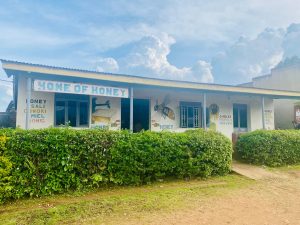
What began three decades ago as a five-man team is now the Bunyangabu Beekeepers Cooperative Society Limited (BBC)—a regional powerhouse blending age-old tradition with modern microfinance, thanks to a financial boost from the Microfinance Support Centre (MSC).
Under the Local Economic Growth Support (LEGS) framework, MSC, working closely with the Ministry of Local Government, is responsible for implementing Component B – promoting access to affordable and sustainable rural finance.
With a boost of Shs120m, this cooperative has turned “liquid gold” (honey) into a sophisticated value-addition industry, proving the sweetest money is the kind you harvest yourself. Today, the cooperative processes honey, produces beeswax candles and cosmetics, and supports nearly a thousand farmers across western Uganda.
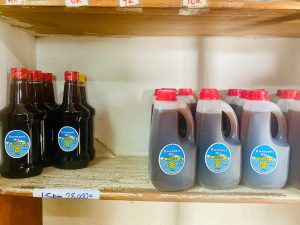
From Forest Bees to Valuable Propolis
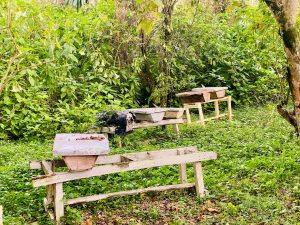
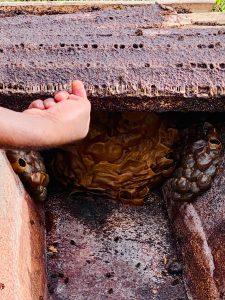
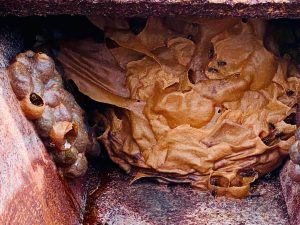
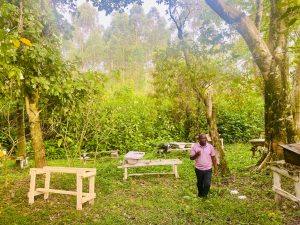
During a demonstration at the cooperative’s apiary, manager Muhindo Moris carefully lifts the lid of a hive to reveal the sticky resin produced by stingless bees.
“In beekeeping, we normally use a hive tool to remove the top bars of the hive so we can inspect it without damaging it,” Muhindo explains. “What you see here is propolis, which is produced by stingless bees. These bees give us the best quality propolis. It is very strong and sticky, which is why it can be difficult to remove.”

Propolis is a red or brown resinous substance collected by honeybees from tree buds, used by them to fill crevices and to fix and varnish honeycombs. The cooperative encourages farmers to rear stingless bees primarily for propolis production, a valuable product used in health supplements and cosmetics.
“When a hive is fully colonised like this one, it can sell for about Shs200,000,” Muhindo says. “At BBC, we mainly keep stingless bees for propolis production, not honey. We buy propolis from farmers at Shs20,000 per kilogram.”
Just a week before the interview, one farmer delivered 20 kilograms of propolis and walked away with Shs400,000. “We have about six stingless bee hives here, but some farmers in the community have 15 to 20 hives each,” Muhindo adds.
The bees themselves are often discovered in the wild. “Most of these bees are found in forests or logs. Farmers usually identify them in the bush and then inform us so we can help transfer the colonies into hives.”
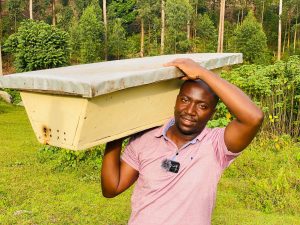
A Cooperative That Grew With Its Farmers
What started with just five farmers three decades ago has grown into one of the region’s most prominent honey cooperatives. “BBC started in 1993 as a community-based organisation,” Muhindo explains. “Later, it registered as an NGO, and in 2011, it became a cooperative under the Ministry of Trade and Cooperatives.”
Membership grew steadily over the years—from five members to 448 by 2015 and 548 by 2019. Today, the cooperative serves nearly 1,000 members across the Rwenzori region, including farmers in Kasese, Kabarole, Ntoroko, Bunyangabu, and Kyenjojo districts.
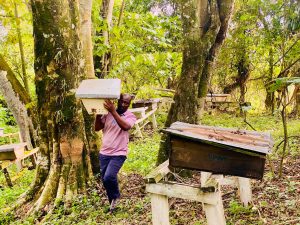
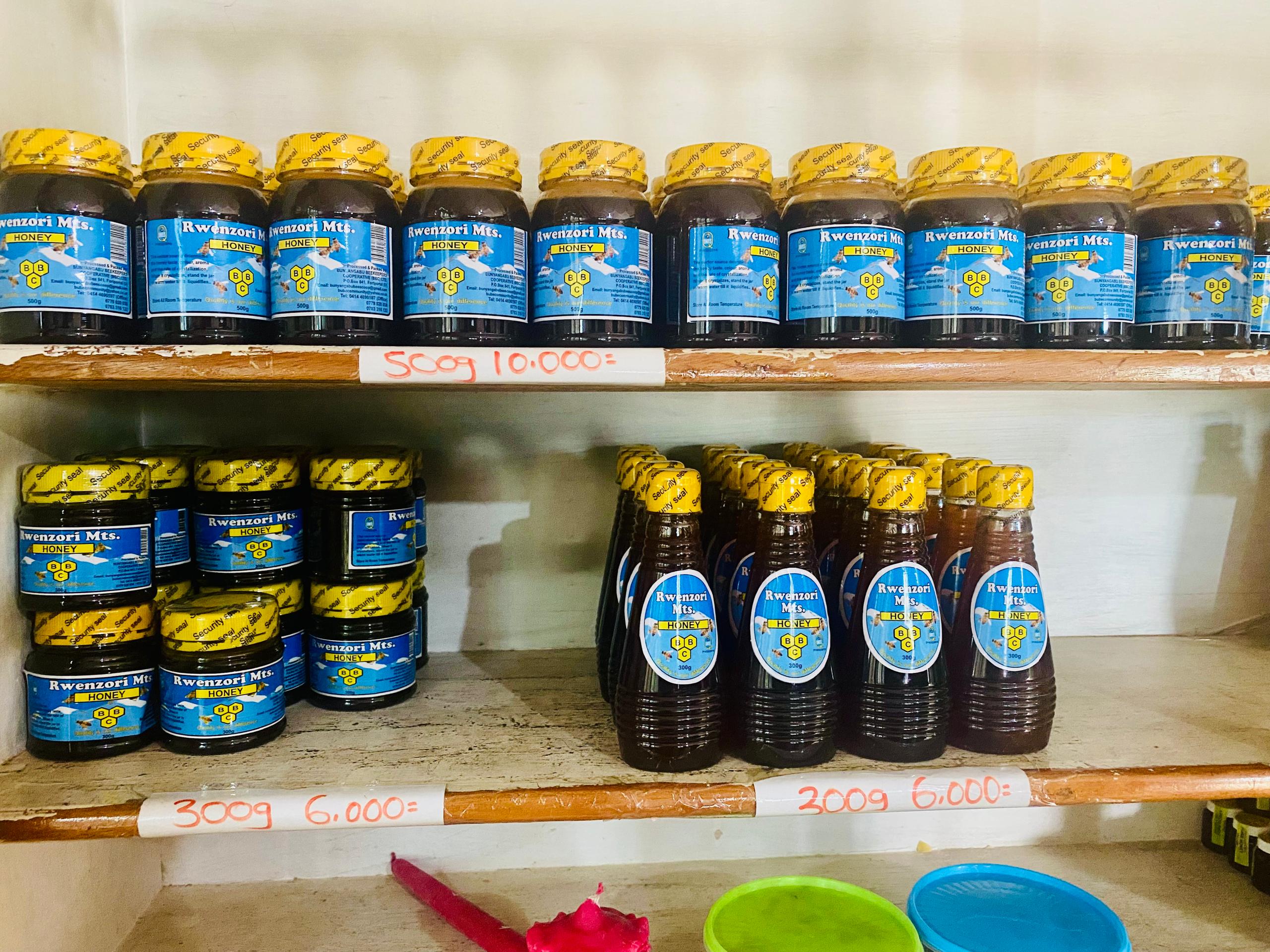
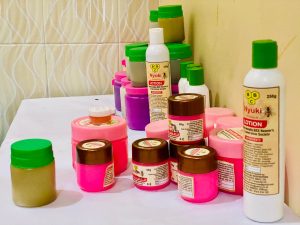
“Our main activity is beekeeping as an income-generating venture,” Muhindo says. “Our main product is honey, but we also produce propolis tincture, beeswax, candles, cosmetics and even bee venom, though venom production is still on a small scale.”
Microfinance Boosts Growth
The cooperative’s biggest turning point came in 2020 when it received Shs120m from the Microfinance Support Centre. “The funding helped us strengthen our collection centres across the districts where we operate,” notes Muhindo.
Effective since May 2019 and funded by a USD 10.43 million Islamic Development Bank envelope, the LEGS component strengthens agricultural value chains and expands financing for cooperatives, small-scale producers, and community enterprises.
According to Tadeo Atuhura, the Communications Manager at Microfinance Support Centre, the primary objective of Component B is to bolster household incomes by expanding access to affordable, Shariah-compliant financial services and strengthening agricultural value chains through strategic investments in production, processing, and marketing.
For the BBC, the impact was immediate. Farmers began receiving instant payments for their honey deliveries, attracting many more members to the cooperative. “Before receiving the loan, our membership was 548 farmers. After establishing the collection centres and improving payments, membership grew to over 990 members.”
The investment also boosted honey production. “Before the funding, we produced 20 to 25 tonnes of honey per year. After the investment, production increased to 30 to 35 tonnes annually.”

With expansion came new jobs. “Previously, we had nine permanent staff, but now we have 15 employees. During the honey season, we also hire 10 to 13 casual workers to support operations.”
A Market Growing Faster Than Production
Despite the progress, demand for honey still outpaces supply. “At one point, we received a request from a contractor who wanted four tonnes of honey per month, which would have been 48 tonnes per year,” Muhindo recalls.
However, the cooperative had to decline the opportunity. “Our production capacity was only 30 to 35 tonnes annually, so we couldn’t guarantee a consistent supply.”
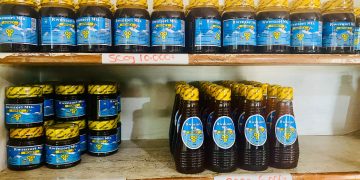
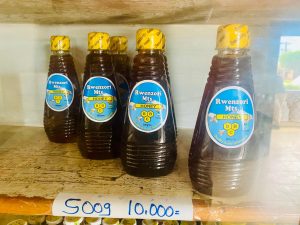
Still, the cooperative continues to expand production and value addition. “We process and package honey and propolis and sell them in supermarkets, pharmacies, tourist outlets and local markets.”
This aligns with the primary objective of Component B: to drive productivity and accelerate enterprise growth for economically active Ugandans.
Visitors to the cooperative can even watch honey processing, taste fresh comb honey and make their own beeswax candles.
Youth Find Opportunity in Beekeeping
The LEGS project gives special attention to groups that often face limited access to formal finance, including smallholder farmers, women entrepreneurs, youth, and rural traders.
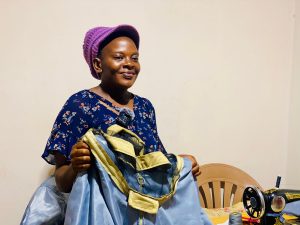
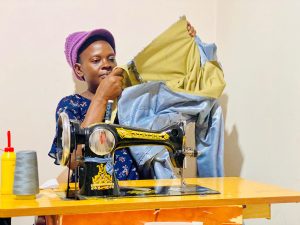
As such, the BBC has become a source of employment for young people. Judith Kanyunyuzi, 31, is one of several youths trained by the cooperative to make protective bee suits.
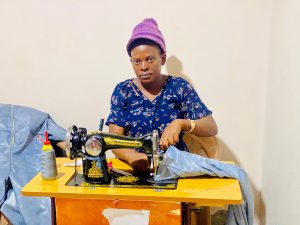
“I came here when they were looking for youth to train in skills,” she says. “I chose tailoring and specialised in sewing bee suits. After the training, I was employed by the cooperative.”
She now produces around 15 bee suits per week, earning Shs15,000 per suit for labour. “I have managed to buy my own sewing machine from the money I make,” she says. “I used to dig at home and raise chickens, but now I can pay school fees for my child and survive.”
The cooperative’s training programmes have also attracted support from international partners such as Enabel and Welthungerhilfe.
“Last year, Enabel’s Fort Portal branch contracted us to produce 380 bee suits,” Muhindo says. “We assigned the work to 15 trainees, and each earned Shs1,050,000 after completing the order.”
A Growing Sector
The cooperative’s expansion is part of a broader government effort to strengthen rural enterprises through financing and technical support.
According to Williams Okweda, Regional Manager of the Microfinance Support Centre for Western Uganda, the programme is already transforming rural livelihoods.
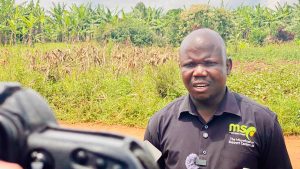
“Over the last five years, MSC, in partnership with the Ministry of Local Government, has been implementing the Local Economic Growth Support project in 17 districts with support from the Islamic Development Bank,” he says.
“Component B, which MSC implements, targets rural microfinance institutions such as SACCOs and agricultural enterprises. In the Kabarole zone alone, we have disbursed UGX 8.123 billion to 134 projects, benefiting more than 25,000 individuals.”

The programme’s repayment rates, he adds, remain strong. “We have achieved over 80 percent repayment, which shows the sustainability of these investments.”
A Sweet Future
Back at the apiary, Muhindo says the cooperative’s success proves that beekeeping can offer a reliable livelihood in rural communities.
“I encourage people in the Rwenzori region to invest in beekeeping,” he says. “It does not require a lot of time or capital. Once you have land and a hive, bees can produce honey and other valuable products.”
The cooperative has already helped farmers create wealth and expand their livelihoods. “We have many success stories,” he adds. “One youth farmer received Shs2m in credit to buy land for beekeeping. He repaid the loan and has now expanded his hives.”
For the farmers and youth of Bunyangabu, the future may well be built—one hive at a time.