


The Katikkiro of Buganda, Charles Peter Mayiga, has officially announced the completion of the long-awaited restoration of the Kasubi Royal Tombs, fifteen years after a devastating fire destroyed the iconic Muzibu-Azaala-Mpanga, the main mausoleum and spiritual heart of the Buganda Kingdom.
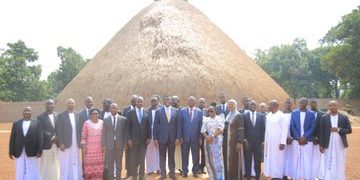
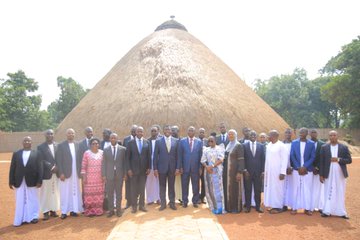
Speaking at the site on Friday morning, the Katikkiro confirmed that the reconstruction of Muzibu-Azaala-Mpanga — the thatched architectural masterpiece that houses the tombs of four Buganda kings — has been fully completed.
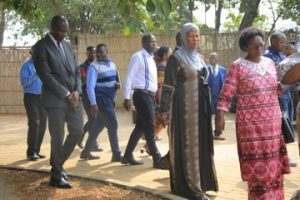
“Today, 12/12/2025, I announce to Buganda that the work of restoring Muzibu-Azaala-Mpanga at the Kasubi Masjid is complete,” Mayiga said.
“We have spent a long time on these tombs, following every necessary step and tradition, while searching for more than 13 billion shillings to complete the work.”
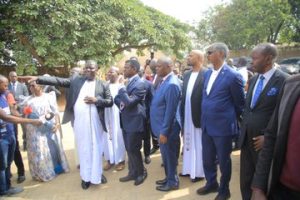
He noted that only minor finishing touches remain, with the final major cultural ceremony — the cutting of the porch of Muzibu-Azaala-Mpanga — expected soon. He promised to communicate the date to the kingdom.
A Monument Reborn After Tragedy
The Kasubi Tombs, a UNESCO World Heritage Site and one of Africa’s most significant examples of indigenous architecture, were gutted by fire on March 16, 2010, prompting outrage, grief, and calls for preservation of Buganda’s cultural heritage.
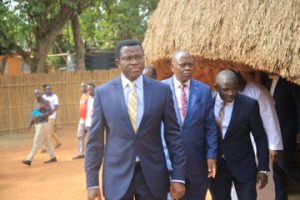
Reconstruction formally began on May 13, 2014, blending centuries-old Ganda craftsmanship with modern safety systems. “Everything we have done on this project has been inspired by the King (Kabaka), who has been directly involved,” the Katikkiro said. “We love him.”
More than Shs13 billion was raised to restore the site, with substantial support from the Buganda Kingdom, the Central Government, UNESCO, the Government of Japan, cultural institutions, and thousands of individual well-wishers.
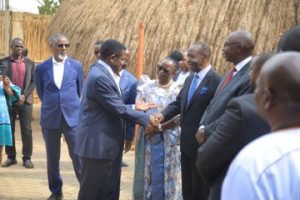
Mayiga praised all contributors: “I thank the people of Buganda, the Central Government, institutions, and individuals who donated money and materials to sustain this sacred project.”
Why the Kasubi Tombs Matter
The Kasubi Tombs date back to 1882, when Kabaka Muteesa I built a palace on the hilltop. Following his death in 1884, the site was converted into a royal burial ground.
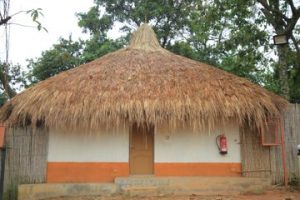
The complex houses the tombs of: Muteesa I, Mwanga II, Daudi Chwa II and Sir Edward Muteesa II, Uganda’s first President.
Recognised by UNESCO in 2001, the tombs represent exceptional examples of organic, bark-cloth-based Ganda architecture. They remain a living spiritual centre where rituals, royal lineage, and Buganda identity converge.
Fire, Loss, and Rebirth
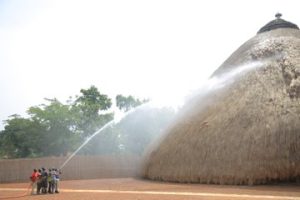
The cause of the 2010 blaze was never officially made public, though theories ranged from arson to accidental electrical faults. The inferno destroyed the primary structure, leaving only charred remains of what had been one of Africa’s most extraordinary traditional buildings.
Years of technical debate, fundraising gaps, and cultural consultations delayed progress — but the kingdom maintained the sacred flame, rituals, and restricted access, preserving the site’s spiritual continuity until reconstruction was complete.
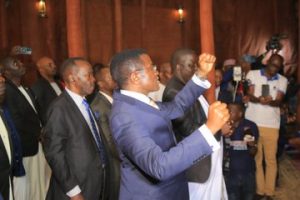
The tombs were partially reopened to the public in 2023 as work continued.
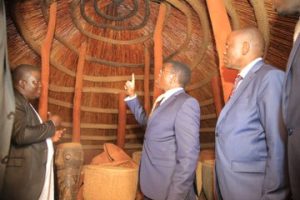
The newly restored Muzibu-Azaala-Mpanga once again features the grand circular thatched dome, the wooden columns wrapped in bark cloth, and the sacred enclosed chambers that hold Buganda’s royal ancestors.
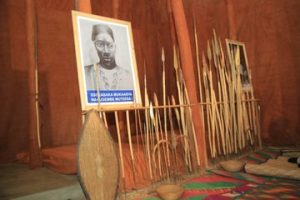
Conservation experts say ongoing maintenance will be crucial to protecting the massive thatched roofs and ensuring long-term preservation.
With the restoration now complete, the Kasubi Tombs reclaim their place as: a spiritual centre of the Baganda people, a UNESCO-protected cultural masterpiece and key tourist site and heritage beacon for Uganda.
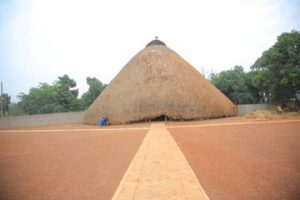
The final ritual ceremony will mark the official re-opening of the sacred sanctuary — a moment Buganda has waited 15 years to witness.