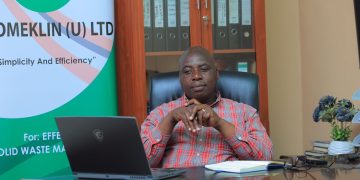




Homeklin (U) Ltd, a player in Uganda’s waste management sector for a quarter-century, is moving to transform Kampala’s persistent garbage crisis into a commercial energy source through a new facility in the Makindye division.
The plant marks a strategic shift for the company from simple collection to sophisticated resource recovery.
Through a technical partnership with Cenergy Solutions, an American firm, Homeklin will begin converting the city’s organic refuse into compressed biogas cylinders and liquid biofertiliser.
The initiative targets a critical failure in the capital’s infrastructure. While Kampala generates approximately 730,000 tonnes of waste every year, KCCA data reveal that nearly half of that volume is not formally collected.
This leaves hundreds of thousands of tonnes of organic material, which makes up about 70% of the city’s total waste, to rot in unauthorised dumpsites or burn in open-air fires.
“Waste is only waste if wasted,” said Isaac Katureebe, the founder and chief executive of Homeklin. He noted that the project is designed to intercept this organic stream and provide a scalable alternative to charcoal, the primary cooking fuel that has historically driven deforestation across Uganda.
The facility at Kevina Nsambya represents a significant experiment in the circular economy. By capturing methane from decaying organic matter and packaging it into portable cylinders, the project aims to support the government’s clean-cooking agenda and reduce respiratory health risks associated with wood-fire smoke.
The launch, themed around waste transformation and climate resilience, will draw senior leadership from the Kampala Capital City Authority and international experts, including Cenergy Solutions CEO Gary Warren Fanger.
Their involvement underscores a growing reliance on public-private partnerships to address urban sanitation gaps that have long outpaced municipal budgets.
Beyond the energy output, the plant will produce liquid biofertilizer, offering a byproduct that links urban waste management directly to agricultural productivity.