




Uganda’s tourism sector is entering a renewed phase of strategic alignment and growth, as government and industry leaders sharpen focus on positioning the country as a globally competitive destination.
This follows a high-level retreat convened by the Ministry of Tourism, Wildlife and Antiquities in Jinja, where top management from the Ministry and its agencies gathered under the theme “Reflecting, Transforming and Aligning for a Competitive Tourism Destination.”
The meeting provided a platform to assess sector performance, consolidate gains, and chart a unified path forward.
Tourism Minister, Col (Rtd)Tom Butiime, noted that Uganda’s tourism industry has fully rebounded from the effects of COVID-19, registering approximately 1.64 million international tourist arrivals in 2025, surpassing pre-pandemic levels.
“This milestone signals renewed global confidence in Destination Uganda and reflects the impact of coordinated recovery efforts by both the government and the private sector.”
He highlighted that the sector’s recovery has sustained livelihoods, created jobs, and supported businesses across the tourism value chain, reaffirming its role as a key economic driver.
Strategic shift toward global competitiveness
The retreat emphasised the need for a deliberate shift from recovery to competitiveness, aligning sector priorities with the country’s broader development frameworks, including the National Development Plan IV and the Tenfold Growth Strategy.
Tourism has been identified as a priority growth sector, with an ambitious target of generating up to USD 50 billion in revenues in the long term.
Achieving this will require a transformation in how Uganda markets itself, develops products, and competes on the global stage.
Leaders underscored the importance of adopting a “whole-of-government” approach, strengthening coordination across ministries and agencies, and empowering the private sector, which remains the engine of tourism growth.
Investments and product development drive confidence
The sector continues to benefit from growing investor confidence, with major hospitality and infrastructure developments taking shape.
New and ongoing investments including international hotel brands and convention facilitie are expected to boost Uganda’s capacity to host high-end tourists and global events.
At the same time, the government has made strides in enhancing tourism products.
Butime, explained that Improvements at key sites such as the Source of the Nile, the Equator points, and protected areas, alongside the reintroduction of rhinos into the wild, have strengthened Uganda’s unique offerings.
He noted that cultural tourism has also gained prominence, with landmark celebrations such as the coronation anniversaries of traditional leaders and royal milestones reinforcing heritage as a core pillar of the tourism experience.
Uganda’s visibility on the global stage has been amplified through targeted promotional campaigns and events.
The Pearl of Africa Tourism Expo (POATE) continues to serve as a flagship marketing platform, while sporting events like the Rwenzori Marathon and continental competitions such as CHAN have showcased the country’s potential in sports tourism.
Additionally, the lifting of travel advisories by key source markets, particularly in western Uganda’s national parks, has boosted confidence in regional tourism circuits, Butime said.
Infrastructure gaps and sector challenges remain
Despite the positive trajectory, stakeholders acknowledged persistent challenges that could hinder growth. Poor road infrastructure on key tourism routes particularly in western and northern Uganda continues to limit access to major attractions.
Butime also raised concerns about recent negative publicity affecting the national carrier, highlighting the need for swift interventions to protect Uganda’s international image.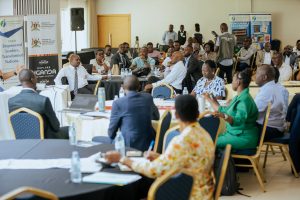
Leadership and coordination key to transformation
He noted that that with new leadership at key agencies such as the Uganda Wildlife Authority and the Uganda Tourism Board, expectations are high for accelerated performance and innovation within the sector.
The government has reaffirmed its commitment through increased budget allocations, but officials stressed that this must be matched with disciplined execution, accountability, and results-driven leadership.