


KAMPALA — Female candidates performed better than their male counterparts in several subjects in the 2025 Uganda Advanced Certificate of Education (UACE) examinations, even though they remained fewer in number than male candidates.
According to the Uganda National Examinations Board (UNEB), girls registered stronger results at the principal level pass (A–E) in most Humanities subjects as well as in Mathematics, Physics, General Paper, Subsidiary Mathematics, and Subsidiary ICT.
However, boys maintained an edge at the top A grade level in Mathematics and other Science subjects, highlighting a continued performance gap at the highest distinction levels.
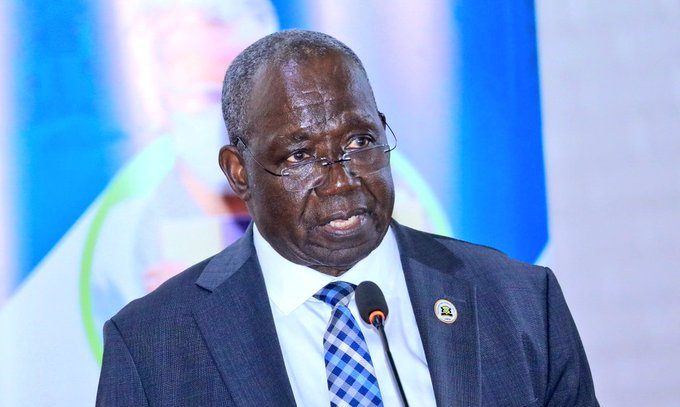
The results were officially released at State House Nakasero by UNEB officials led by Executive Director Dan Odongo.
More candidates sit UACE
A total of 166,400 candidates registered for the 2025 examinations, representing a 17.2 percent increase from 141,996 candidates in 2024.
Of those registered, 72,764 (43.7 percent) were female, while 93,636 (56.3 percent) were male.
The number of candidates who actually sat the examinations was 165,172, compared to 140,884 in 2024, also reflecting a 17.2 percent increase.
Among those who sat the examinations, 72,374 were female (43.8 percent) while 92,798 were male (56.2 percent).
UNEB noted that the number of female candidates at the UACE level has consistently remained significantly lower than that of males, a trend also reflected in lower female enrolment in Science subjects.
More students qualify for university
Overall performance improved in 2025 compared to 2024, particularly in the number of candidates attaining principal level passes.
According to UNEB, 68.9 percent of candidates qualified for the UACE certificate, which requires at least a subsidiary pass in a principal subject.
For university admission—where a candidate must obtain at least two principal passes—a total of 113,291 candidates (68.6 percent) qualified in 2025. This represents an increase from 92,273 candidates (65.5 percent) who qualified in 2024.
The rise in qualifying candidates means that an additional 21,018 university places may be needed to accommodate students eligible for degree programmes.
If admissions criteria from other tertiary institutions such as Technical and Vocational Education and Training (TVET) institutions are considered—requiring one principal and two subsidiary passes—then 145,129 candidates (87.9 percent) would qualify for further education.
Performance trends across subjects
UNEB reported notable improvements in several subjects, including Mathematics, Chemistry, Agriculture, Geography, and Economics, as well as Biology and Literature in English.
However, performance declined in Entrepreneurship Education, Christian Religious Education, Fine Art, and Physics.
Overall, grades in Science subjects improved significantly compared to Humanities.
Despite this progress, UNEB highlighted persistent challenges in Humanities subjects, mainly linked to poor interpretation of examination questions and difficulty applying concepts to the expected answers.
For example, in History, candidates showed weak analytical and evaluative skills and often failed to support arguments with relevant examples.
Similarly, in Religious Education, many struggled to apply teachings from holy texts to real-life situations.
Challenges in Science practicals
In the Sciences, UNEB said performance continues to be affected by limited practical exposure.
Common problems included misinterpretation of experimental procedures, incorrect data collection, poor graphical presentation of results, and difficulty drawing conclusions from observations.
Candidates also struggled to relate scientific concepts to real-life situations, while the board noted evidence that some teachers skip certain topics, particularly in areas such as Physical Chemistry.
UNEB said detailed subject performance reports will be sent to schools to help teachers address the gaps and improve future learning outcomes.