


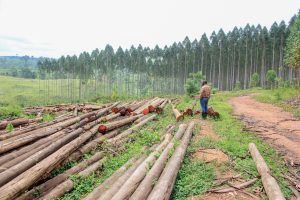
On the outskirts of Uganda’s towns and trading centres, rows of eucalyptus and pine trees stand tall—quiet proof of an investment that began more than two decades ago. These forests were planted with patience in mind, and today, many of them are ready. Ready to be cut, processed, sold—and to change lives.
Uganda’s forestry sector is at a turning point. With pressure mounting on natural forests and timber imports draining foreign exchange, plantation-grown wood is emerging as a practical, climate-smart alternative. Thanks to the Sawlog Production Grant Scheme (SPGS), the country now has 90,000 hectares of commercial forest plantations, a figure expected to push annual wood production from 350,000 cubic metres in 2020 to 2.6 million cubic metres by 2030.
But trees alone do not build an industry.
“The challenge now is turning these trees into prosperity,” says Zainabu Kakungulu, National Project Coordinator at the Food and Agriculture Organisation (FAO). “If we don’t strengthen processing and market linkages, much of this investment risks going to waste, or worse, could drive illegal logging from natural forests.”
Two Decades in the Making
SPGS was launched in 2004 as a partnership between the Government of Uganda and the European Union, with FAO providing technical support. Its goal was simple but ambitious: encourage private-sector investment in commercial forestry by offering grants per hectare, technical guidance, and access to certified seedlings through accredited nurseries.
Over time, the programme evolved.
“SPGS has gone through multiple phases,” explains Dr Antonio Querido, former FAO Representative in Uganda. “Its third phase has been pivotal in increasing Uganda’s forest estate, supporting private growers, and contributing to the country’s aspiration to restore forest cover to pre-millennium levels. This approach links conservation with commercial forestry while ensuring medium- and long-term timber supply.”
At the policy level, forests are about much more than timber.
“Forests provide employment, food, medicine, energy for cooking, shelter, and a healthy environment for millions of Ugandans,” says Alfred Okot Okidi, Permanent Secretary at the Ministry of Water and Environment. “Well-managed forests contribute significantly to Uganda’s economic development.”
The Gap Between Trees and Markets
Despite this progress, a critical bottleneck remains. By 2030, plantations are expected to produce 2.6 million cubic metres of wood annually, but Uganda’s sawmills, carpenters, and furniture workshops are not yet equipped to absorb or process that volume efficiently.
Without investment in machinery, skills, and market standards, valuable timber risks being underpriced, wasted, or worse, encouraging unsustainable harvesting elsewhere.
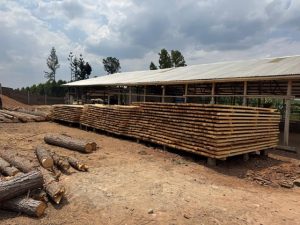
At Kirangwa Investments Limited in Mubende district, Dr Godfrey Bahiigwa sees the issue daily. “We produce mature pine timber—no tree is cut below 17 years,” he says. “But some buyers pay the same for younger, lower-quality wood. Through the Uganda Timber Growers Association, we advocate for timber standards so that growers get fair prices and consumers can access quality timber.”
A €15 Million Push to Close the Gap
To tackle these challenges, the European Union is backing a €15 million Sustainable Wood-Based Value Chains initiative, working with partners such as AVAYO and the Gatsby Foundation to unlock private investment and strengthen processing capacity.
The project focuses on ensuring a sustainable supply of legally sourced wood, expanding processing and market demand, improving access to affordable finance for wood-based SMEs, and promoting inclusive growth—particularly for women.
At the heart of the effort is a broader vision. “Together, the European Union and Uganda are working towards a lasting legacy of sustainable development and shared prosperity—where green energy, protected forests, and inclusive economic growth reinforce one another,” says Jan Sadek, Ambassador of the European Union to Uganda.
Clean energy is central to this approach. “By improving access to clean and affordable energy, particularly in rural communities, we can ease pressure on forests while creating new economic opportunities and supporting climate action.”
For Kakungulu, the opportunity is practical and immediate. “With the right tools and machinery, Ugandan SMEs can make full use of the wood from our forests to produce quality products locally. This reduces imports, creates jobs, and supports climate-smart forestry.”
From Sawmills to Showrooms
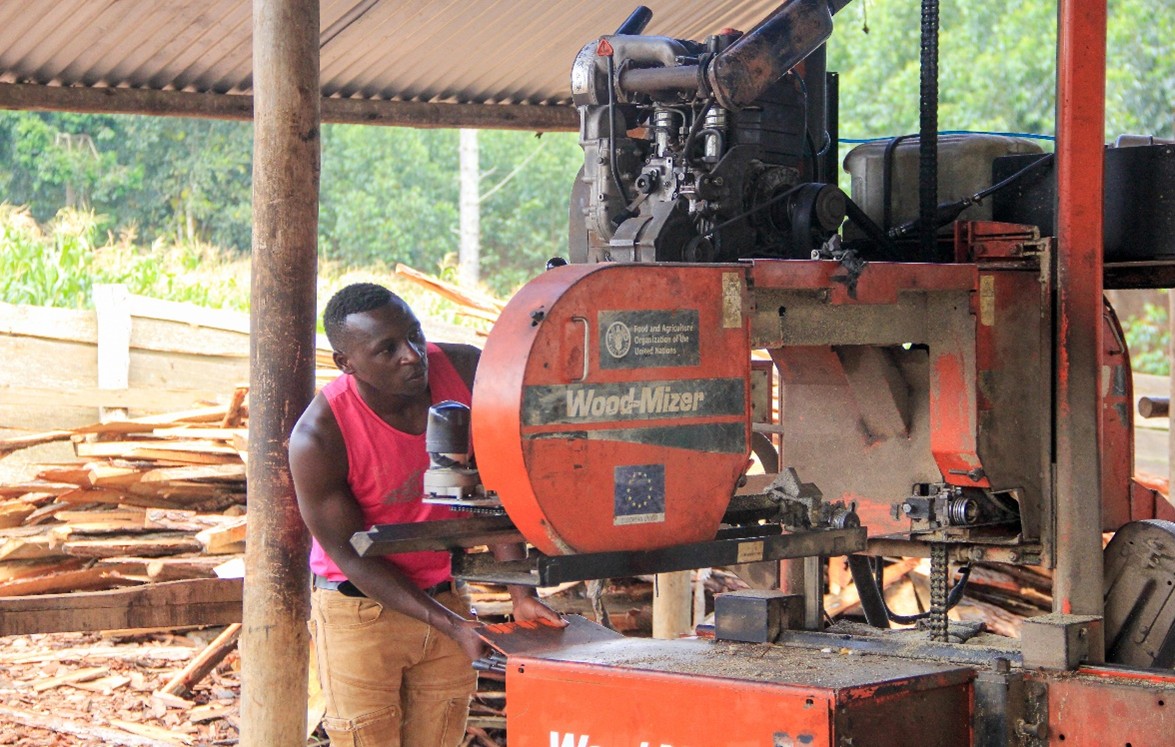
At Kirangwa’s sawmill, EU-supported diesel-powered machinery improves cutting precision, reduces waste, and lowers emissions. Depending on the season, the operation employs 150 to 250 workers.
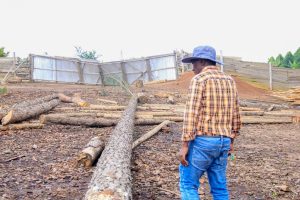
“Each hectare holds 250–300 trees at planting,” Bahiigwa explains. “By managing growth in stages, we maintain a continuous supply of mature timber.”
Across industrial zones in Jinja and Namanve, carpenters and furniture makers are switching from imported MDF and plastics to locally grown pine and eucalyptus. “With better-quality wood nearby, we no longer rely on imported MDF or plastic alternatives,” says one local carpenter.
Sustainability remains central. Plantations follow SPGS standards, with controlled harvesting and conservation buffers. “We leave natural valleys, streams, and forest patches intact, combining production with conservation,” says Bahiigwa, whose company holds FSC certification.
Lives Changed on the Ground
For smallholder tree farmers, the shift is tangible. “We used to sell logs for a few thousand shillings,” says Sarah Nabirye from Buikwe. “Now, with the new sawmill nearby, we earn more from sawn timber—and we replant every year.”
Women, too, are finding new opportunities along the value chain. “By empowering women to engage in value-added activities—from tree planting to processing—we enhance household incomes and support climate-smart initiatives like using coffee husks for clean cooking fuel,” says Teopista Nakkungu, Chief Coordinator of the International Women’s Coffee Alliance (IWCA) Uganda Chapter.
Forests, Energy, and the Bigger Picture
Uganda continues to lose an estimated 122,000 hectares of forest annually, a challenge underscored by the National Forestry Authority (NFA). “Since 2001, the country has lost an estimated 1.16 million hectares of tree cover, mainly due to agricultural expansion, charcoal production, and settlement growth,” says Aldon Walukamba, NFA’s Communications and Public Relations Manager.
“By law, the National Forestry Authority manages only 15 percent of Uganda’s total forest cover. The remaining 70 percent lies under communities, private landowners, and local governments, which makes sustainable alternatives outside natural forests absolutely critical.”
Charcoal remains a major driver of degradation. “Reducing this pressure requires affordable, cleaner alternatives that can meet household and institutional energy needs,” Walukamba says, noting that biomass briquettes combined with improved cookstoves can reduce household fuel costs by 20 to 30 percent while significantly lowering wood consumption.
“The greatest conservation impact comes when every tree spared from cutting is matched by new trees planted.”
Research is also expanding the circular economy. Mildred Julian Nakanwagi, a PhD student at Makerere University, hosted at NaCORI under the EU-funded ROBUST Project, points to agricultural byproducts as part of the solution.
“Certain native Robusta coffee genotypes consistently produce larger cherries with thicker husks, which means more biomass that can be repurposed for eco-friendly uses such as briquettes.” “If coffee husks are harnessed for briquettes, they offer a renewable alternative to charcoal. This reduces pressure on forests that are often cut down for firewood and charcoal.”
Growing More Than Trees
As Uganda aligns this work with Vision 2040 and its green growth agenda, the message from growers, policymakers, and partners is clear: the future of forestry lies not just in planting trees, but in what comes after.
“We are not just growing trees,” reflects Bahiigwa. “We are growing a timber industry that Uganda can rely on for the future. If we manage it well, this sector can be a cornerstone of climate-smart growth and economic opportunity for generations to come.”
As of 2023, Uganda’s forest cover recovered to approximately 13.4% (3.2 million hectares) of its total land area, supported by 557,000 acres (225,567 hectares) of commercial plantations—divided between 335,000 acres of government-managed industrial forests and 222,000 acres of private plantations—which serve as a critical, climate-smart alternative to the country’s much larger but declining natural woodland cover.
Disclaimer: The views and opinions expressed in this article are those of the author(s) and do not necessarily reflect the official position of the European Union. Responsibility for the content lies solely with the author(s) and the publishing platform.