


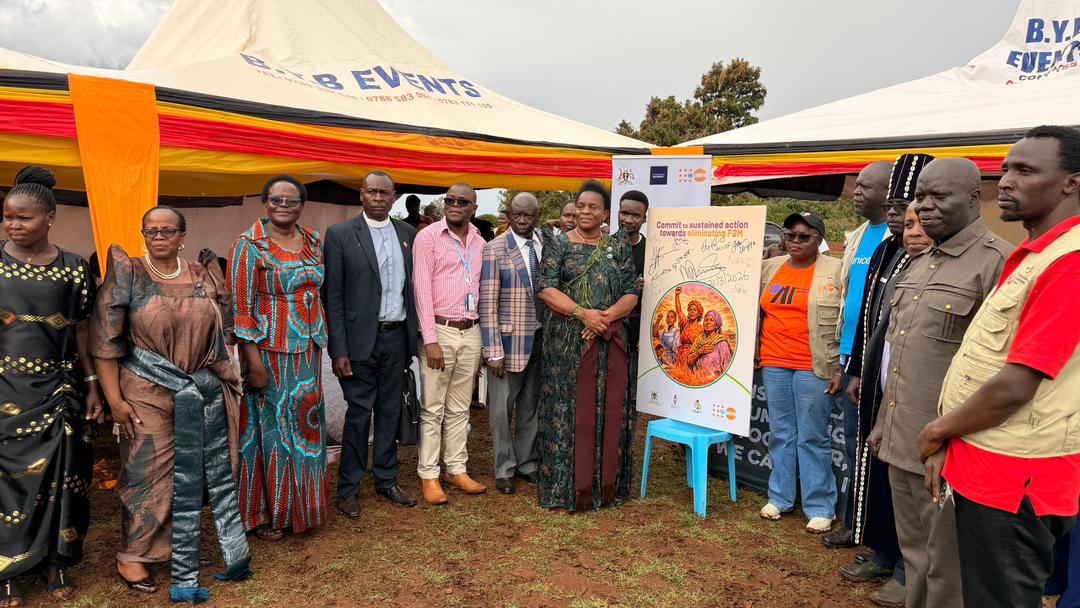
The government, in partnership with the UNFPA, UNICEF, and other partners have commemorated the International Female Genital Mutilation (FGM) Zero Tolerance Day in Bukwo district under the theme “Towards 2030: No End to FGM without Sustained Commitment and Investment.”
Although the Government of Uganda banned FGM in 2010, the practice continues quietly in some parts of Eastern and North Eastern Uganda, particularly among the Sabiny, Pokot, and Tepeth communities, driven by deeply entrenched cultural norms upheld by elders, often carried out in secrecy and across borders to evade detection by authorities.
The Minister of State for Gender and Culture, Peace Mutuzo, said, “FGM prevalence has significantly declined in Uganda over the past decade, from 4.2% in 2016 to 0.02% in 2026, marking strong progress in the fight to #EndFGM.”
She attributed this progress to Government interventions, sustained community engagement, strong partner support, and the implementation of cross-border frameworks to combat the vice.
Mutuuzo welcomed the introduction of Alternative Rites of Passage led by cultural leaders as a positive step forward.
She cautioned against the stigma faced by girls and women who have not undergone FGM, noting that such discrimination contributed to the unexpected resurgence of the practice in 2018.
Mutuzo emphasised the need for programs that support men in adapting to a changing society with educated and empowered women.
The commemoration event was also held in line with the UN Sustainable Development Goal 5 on gender equality, calling for coordinated efforts through Government support, strong systems, adequate financing, community action, data-driven approaches, and platforms that amplify the voices of girls and survivors.
Since November 2025, UNICEF Uganda, through its U-Report, has conducted community engagement activities across the Sebei and Karamoja sub-regions to help curb FGM and child marriages.
Focusing mainly on Amudat, Bukwo, Kapchorwa, Kween, Nakapiripirit, and Moroto districts, these efforts continue to raise awareness, strengthen community dialogue, and promote collective action to address the harmful effects of such practices, reaching over 30,000 community members to date.
U-Report is UNICEF’s flagship youth platform for young people by young people (aged 14 to 24 years). It offers free digital tools and a dynamic community space where young Ugandans can share their views, express their opinions, propose solutions and drive positive change within their communities.
By utilising real-time insights and engagement, U-Reporters help shape policies at the local level.
Vicky Chebet, a U-Reporter involved in the community engagement program, said that visits to communities take place at least three times a week, with efforts intensified in 2026, being a circumcision year. During such visits to the community, they not only share information but also listen to survivors’ stories, understand the challenges faced, and promote behaviour change through drama, posters, and fliers.
“We also work with religious leaders, Local Council leaders, Village Health Teams (VHTs), and Savings group leaders to help spread the messages to wider audiences during their gatherings,” Chebet explained.