


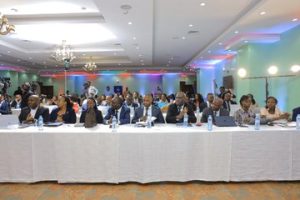
The Electricity Regulatory Authority (ERA) has assured Ugandans of improved power quality, transparency, and stronger consumer engagement during the 2026–27 financial year, following a highly attended public tariff hearing held at the Imperial Royale Hotel in Kampala.
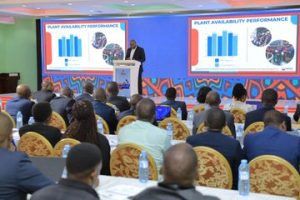
The public hearing brought together key electricity sector players—including UEGCL, UETCL, and UEDCL—alongside consumers, civil society groups, and energy experts. ERA said the engagement was aimed at helping Ugandans better understand power costs, how tariffs are set, and what is required to ensure a reliable electricity supply.
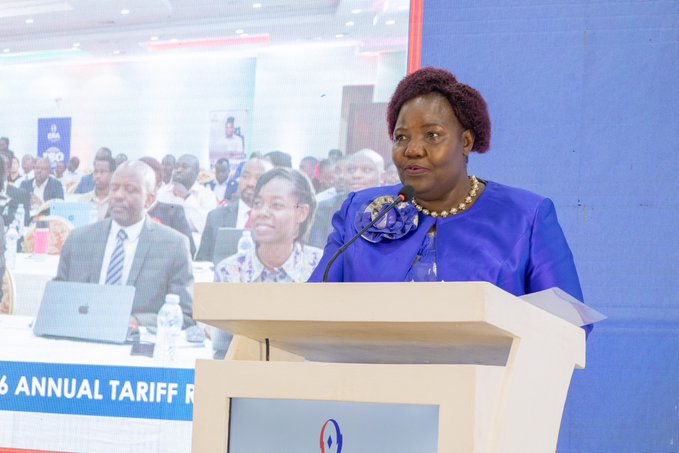
ERA Chief Executive Officer Eng. Ziria Tibalwa Waako underscored the importance of public participation, saying electricity is central to Uganda’s economic ambitions.
“We want the public to be interested in what constitutes the prices of electricity. Electricity is a fuel for economic development. It is a fuel for industrialisation. Industrialisation creates jobs, and jobs and markets are inputs to social-economic transformation,” she said.
Eng. Waako emphasised that ERA is committed to monitoring sector companies to ensure that improved service delivery, reliability, and value for money are achieved in the coming financial year.
Sector Companies Present Budgets, Challenges, and Plans
During the sessions, the Uganda Electricity Generation Company Limited (UEGCL) presented its 2026–2030 tariff application.
UEGCL Chief Operating Officer Eng. George T. Mutetweka highlighted the urgent need for reinvestment in power plants: “We need sustained investments and rehabilitation to maintain reliable generation. UEGCL remains committed to making electricity safely available for supply at all times from all our plants.”
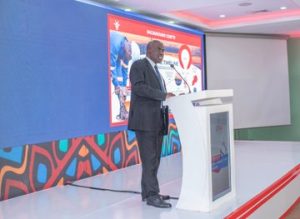
The Uganda Electricity Transmission Company Limited (UETCL) warned that vandalism and unpaid electricity bills continue to undermine infrastructure development.
UETCL Senior Financial Economist Noah Mwesigwa noted: “When one tower is vandalised, multiple towers are affected. We may have to invest in tower-protection and monitoring systems. And when UGX 600 billion of unpaid bills sits on our books, it is not just a number—it delays projects that would have lit up communities and powered industries.”
The Uganda Electricity Distribution Company Limited (UEDCL), meanwhile, shared achievements made in 2025 and its expansion plans for 2026.
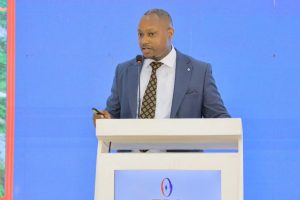
UEDCL Managing Director Paul Mwesigwa reiterated the company’s mission to expand access and improve reliability: “Our vision is clear: a modern, efficient electricity distribution network that reaches every corner of Uganda. Every connection we install represents a home lit, a classroom powered, and a factory running. Our mission is not just to distribute electricity — it is to empower Uganda.”
He added that transitioning to fully metered connections would ensure fairness and accountability: “By moving towards 100% metered connections, we ensure every customer pays fairly for the electricity they use and that every unit counts towards Uganda’s development.”
ERA Board Emphasises Transparency
ERA Board Chairperson Eng. Grania Rosette Rubomboras said the annual tariff hearing is crucial for ensuring openness in the tariff-setting process:
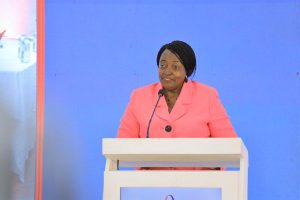
“The purpose of this hearing is to ensure transparency and stakeholder participation. It allows customers to raise concerns about tariffs and supply issues before final decisions are made.”
Officials described the hearing as part of a wider government commitment to transparency and improved service delivery in the electricity sector.
The session ended with ERA encouraging citizens to continue engaging in such forums, as the decisions made affect power pricing, reliability, and development across the country.