



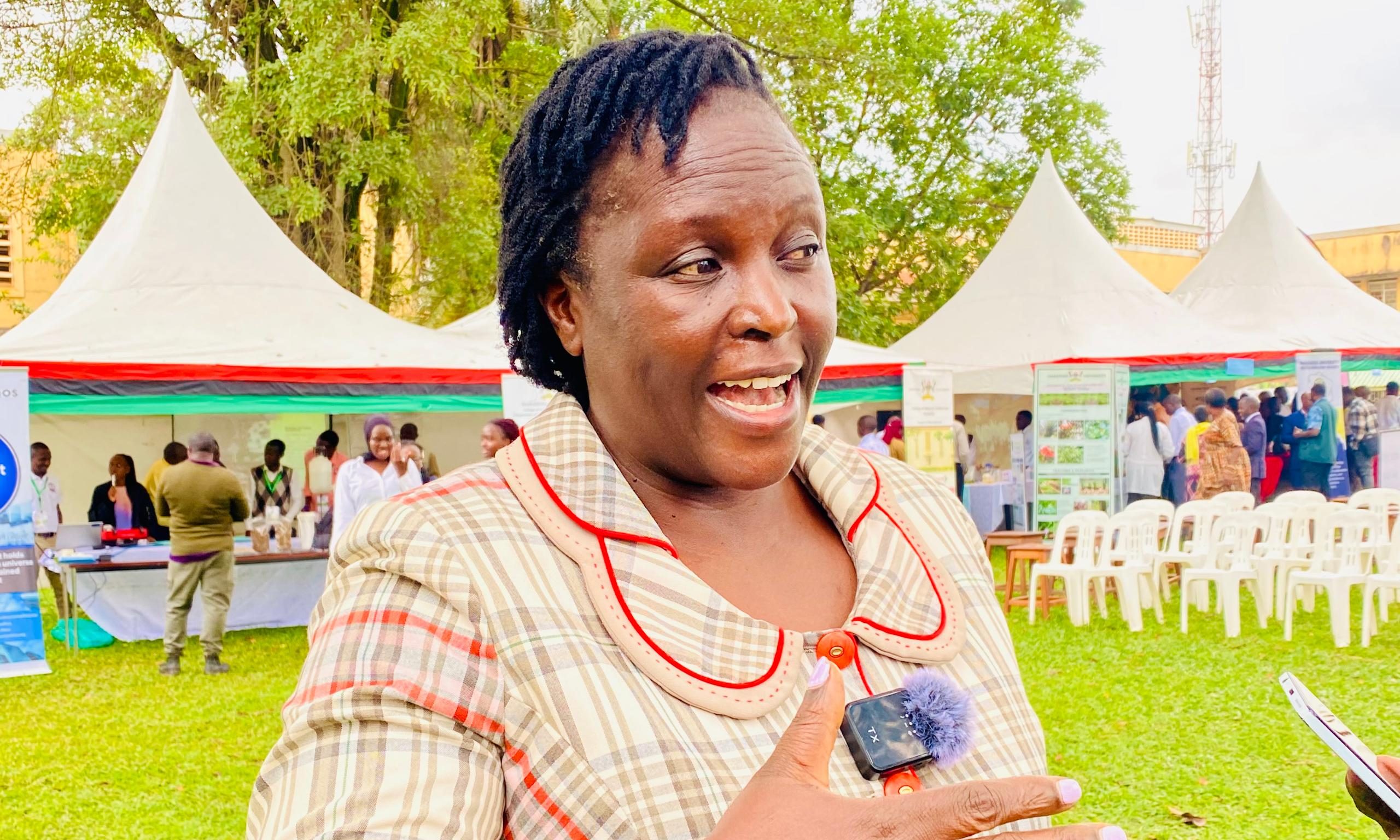
KAMPALA — Ugandan scientist and academic researcher Patience Tugume is advancing sustainable science solutions through innovative research on bio-energy, medicinal plants, and environmentally friendly agriculture.
Speaking about her work during the College of Natural Sciences (CoNAS) Science Exhibition & Career Fair held on Thursday at the Science Quadrangle, Dr Tugume said her research seeks to translate basic science into practical solutions that address community challenges.
“Although our work is rooted in basic science, it serves as the foundation for many other scientific disciplines. Our research focuses on the discovery and development of medicinal plants for diseases such as cancer, diabetes, prostate cancer, and malaria,” she said.
Dr Tugume is a senior lecturer in the Department of Plant Sciences, Microbiology and Biotechnology, and has built a multidisciplinary career combining botany, environmental economics, and management science.
Her academic journey includes a PhD in Economic Botany and Natural Resource Economics, an MBA in Accounting and Finance, an MSc in Plant Pathology and Microbiology, and a bachelor’s degree in Botany and Zoology — all obtained from Makerere University.
Turning food waste into clean energy
One of Dr Tugume’s flagship research projects focuses on converting food waste into renewable energy.
She is leading the development of a portable household bioreactor designed to transform discarded food materials into biogas, bio-fertiliser, and bio-pesticides.
“In many urban centres and schools, large amounts of food waste are generated and often discarded. We developed a portable bioreactor that converts food waste into biogas that can be used for heating and lighting,” Dr Tugume explained.
The innovation is particularly aimed at addressing environmental degradation caused by dependence on firewood and charcoal. Uganda continues to experience pressure on forest resources as many households rely on biomass fuel for cooking.
“Deforestation remains a major challenge. Charcoal is also becoming increasingly expensive. By producing biogas from food waste, we can provide a sustainable and environmentally friendly source of energy,” she said.
The project is currently being implemented in urban areas, including Mbarara City, where the research team has trained women and youth groups. Dr Tugume noted that women were intentionally involved because they are the primary users of household cooking energy.
“Smoke from firewood and charcoal contributes to respiratory infections. Promoting biogas helps reduce the burden of disease among women and children while protecting the environment,” she said.
She added that biogas technology also provides an affordable alternative for households that cannot access or afford electricity.
Tackling aflatoxin contamination in maize
Another major research focus is controlling aflatoxin contamination in maize — a problem that has affected Uganda’s agricultural exports.
Recent market reports have shown rejection of Ugandan maize exports to countries such as Kenya and Sudan due to high contamination levels.
Dr Tugume’s team is developing a plant-based fungicide designed to suppress fungal growth responsible for aflatoxin production. “We are extracting oils from different plants and formulating a natural product that can control fungal growth and improve maize quality during storage and transportation,” she said.
The product is expected to be packaged in small diffusers or balls placed inside storage facilities. These devices will release natural vapours that inhibit fungal growth and protect stored maize.
“This innovation will benefit traders, retailers, and exporters by ensuring Ugandan maize meets international quality standards,” Dr Tugume added.
Promoting organic agricultural innovations
Dr Tugume advocates the use of bio-based agricultural technologies over synthetic chemicals. She explained that many inorganic pesticides and fertilisers accumulate in soil and may enter the food chain over time.
“Some chemical pesticides have been banned globally because of their harmful effects. Bio-based products are biodegradable and are broken down naturally by microorganisms in the soil,” she said.
She also warned that synthetic agricultural chemicals can contaminate water bodies and harm aquatic ecosystems. Plant-based solutions, she said, provide a more sustainable pathway for modern agriculture.
However, she emphasised the need for scaling production and increasing farmer awareness. “We usually work with farmer groups and model farms to demonstrate the technology. Farmers need to see innovations working before adopting them,” she said.
Before commercialisation, research products must undergo certification by regulatory bodies such as the Uganda National Bureau of Standards (UNBS) and the Ministry of Agriculture, Animal Industry and Fisheries (MAAIF).
Dr Tugume also highlighted the importance of intellectual property protection. “We cannot release products to the market without patents and proper regulatory approval. Some of our innovations are currently undergoing registration processes,” she noted.
Conserving medicinal plants
Another research initiative focuses on conserving medicinal plants in Eastern Uganda. A survey conducted in Namutumba District documented approximately 178 plant species used by communities to treat diseases such as malaria, hypertension, and diabetes.
However, researchers discovered that four species are critically endangered according to the global Red List. “These plants are at risk of disappearing if conservation measures are not taken. We are working with traditional healers to encourage sustainable harvesting practices,” Dr Tugume said.
The research team is exploring the establishment of botanical gardens for medicinal plants. “Instead of collecting medicinal plants from the wild, communities could cultivate them near their homes. This will protect biodiversity while allowing people to continue benefiting from traditional medicine,” she explained.
Recognition of research leadership
Dr Tugume’s work has received international recognition. In 2023/2024, she was among 28 women globally awarded the OWSD Early Career Fellowship, receiving research funding of up to USD 50,000 to study the conversion of bio-waste into renewable energy and bio-inputs.
She also received the Vice Chancellor’s Research Excellence Award in 2025, acknowledging her contribution to scientific research and innovation. Through multidisciplinary research spanning ethnobotany, environmental sustainability, and economic valuation of natural resources, Dr Tugume continues to promote science-based solutions to Uganda’s development challenges.