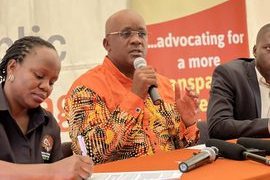



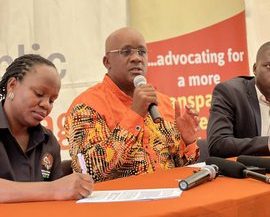
Civil society organisations under the umbrella of the Civil Society Budget Advocacy Group (CSBAG) have called for a citizen-focused approach to Uganda’s FY 2026/27 National Budget Framework Paper (NBFP), emphasising the need for equitable resource allocation, improved service delivery, and support for inclusive economic growth.
Speaking at a press briefing held at the CSBAG offices in Ntinda, Julius Mukunda, Executive Director at CSBAG, stressed the importance of linking budget priorities to citizen welfare. “Government must put citizens at the centre of budget decisions, ensuring that macroeconomic growth translates into real improvements in livelihoods, health, education, and access to markets,” he said.
The FY 2026/27 NBFP, tabled in Parliament in December 2025, is themed “Full Monetisation of the Ugandan Economy through Commercial Agriculture, Industrialization, Expanding and Broadening Services, Digital Transformation and Market Access”. CSBAG acknowledged government efforts to maintain macroeconomic stability, noting that Uganda’s economy grew by 6.3% in FY 2024/25, with projections of 6.5–7% growth in FY 2025/26.
Gains and Cuts in the Budget
The civil society group highlighted key gains in the proposed budget, including a 94% increase in funding for Sustainable Extractives Industry Development and moderate increases in Sustainable Energy Development, Regional Balanced Development, and Integrated Transport Infrastructure. However, they raised concerns about significant cuts to Human Capital Development (-14%), Agro-Industrialisation (-20%), and Sustainable Urbanisation & Housing (-56%), warning that these reductions could undermine social development priorities.
“While capital-intensive investments are important, we must not neglect sectors that directly affect citizen welfare, like health, education, and agriculture,” said Mukunda.
Fiscal Risks and Rising Debt
CSBAG also expressed concern over Uganda’s growing public debt, which reached US$32.33 billion (UGX 116.21 trillion) by June 2025, driven by infrastructure projects and election-related expenditures. The organisation warned that the shift toward domestic borrowing could increase macro-fiscal risks. “High interest costs, now at 25% of government revenue, limit the fiscal space for social services and could lead to higher borrowing in the future,” Mukunda explained.
Health, Education, and Social Services
The briefing highlighted critical gaps in human capital development, particularly in health and education. Uganda’s public health facilities are staffed at only 34% of approved levels, with severe shortages of psychiatrists and trained mental health workers outside urban centres. CSBAG urged the government to prioritise the recruitment and deployment of health professionals, especially in rural districts, and to fast-track the National Health Insurance Scheme to reduce out-of-pocket expenses for citizens.
In education, CSBAG noted that many Universal Primary Education (UPE) schools still fall short of Basic Requirements and Minimum Standards, with classroom, latrine, and desk shortages, particularly in Karamoja and West Nile. Mukunda called for UGX 21 billion to recruit additional teachers and UGX 30 billion to rehabilitate school infrastructure, alongside full implementation of the digital learning agenda.
Support for Farmers and Market Access
Civil society also cautioned against the proposed 20% cut to the Agro-Industrialisation Programme, warning it could undermine small and medium-scale farmer support, food security, and job creation. “Production without access to markets will not yield the desired results. Government must strengthen the marketing component under PDM to ensure farmers realise profits from their outputs,” said Mukunda.
The group also recommended expanding eligibility for government agricultural loans to include medium-scale and nutrition-sensitive farmers to promote agro-industrialisation and human development.
Call for Digital Transformation and Accountability
CSBAG encouraged the government to fast-track automation of public services, strengthen e-governance systems, and increase funding for audit institutions to sustain accountability gains. Despite improvements in clean audit opinions (rising to 97% in FY 2024/25), implementation of audit recommendations remains weak, according to CSBAG.
While commending the government for macroeconomic stability, revenue mobilisation, and strategic investments, CSBAG emphasised the need for the final budget to address human capital gaps, social services, market access, and fiscal transparency. “Civil society stands ready to work constructively with government and Parliament to ensure the FY 2026/27 budget delivers meaningful outcomes for all Ugandans,” Mukunda concluded.