


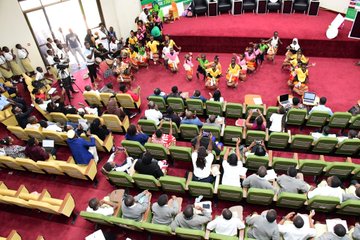
KAMPALA — Education is no longer confined to classrooms; it is no longer about the transmission of knowledge alone, but about developing the competencies that prepare learners for a rapidly changing world,” declared Dr Anne Ampaire, a leading lecturer in Educational Psychology at Makerere University, during the inaugural School Stakeholders’ Exhibition 2026.
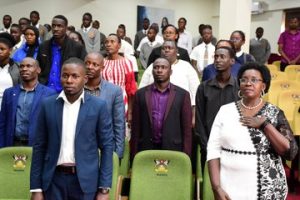
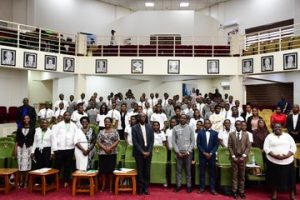
Held at the School of Public Health Auditorium on Thursday, March 26, 2026, the School Stakeholders’ Exhibition was hosted by Makerere University’s Centre for Teaching and Learning Support (CTLS) under the College of Education and External Studies (CEES) to strengthen the implementation of Uganda’s Competence-Based Curriculum (CBC).
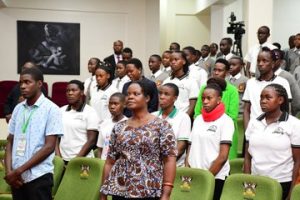
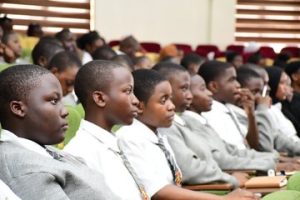
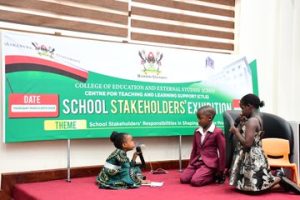
It brought together learners from pre-primary, primary, secondary schools, university students, teachers, and education stakeholders under the theme: “School Stakeholders’ Responsibilities in Shaping Minds for Productive Life.”
Education is no longer confined to classrooms
The Principal Investigator and lecturer in Educational Psychology, Dr Anne Ampaire, said the CBC marks a fundamental shift in how education is delivered in Uganda.
She explained that the new curriculum promotes hands-on, project-based, and experiential learning. “It promotes hands-on learning and project-based learning. This type of learning emphasises that teaching should build on what the learner already knows,” she said.
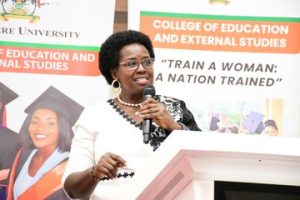
Dr Ampaire added that learning is shaped by both psychological theory and real-life interaction. “A child is not born as an empty slate; rather, the environment continuously shapes learning,” she said, referencing classical behaviour theory.
She also noted the importance of social learning in education. “Children learn through interaction with their context and learning environment,” she said.
Dr Ampaire emphasised that modern education must be collaborative rather than teacher-centred. “Gone are the days of teacher-centred learning where the teacher is the sole authority. Today’s learning model recognises that none of us knows it all. Learning is collaborative,” she said.
She stressed that combining knowledge from different sources strengthens learning outcomes. “What I know, what you know, and what others know—when combined—form a stronger system or model,” she said.
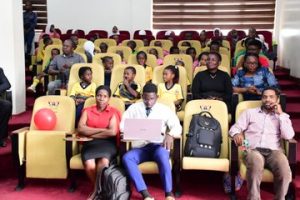
Dr Ampaire also highlighted the importance of linking education to real-life environments. “A banana plantation is a laboratory. A craft workshop is a laboratory. Farming is a laboratory. Learning is everywhere,” she said.
She urged stakeholders to support learners in career exposure and practical learning. “Learners should be exposed early to practical skills such as electricity, crafts, agriculture, and construction-related activities,” she said.
Learners impress with roleplays, drama, and cultural dances
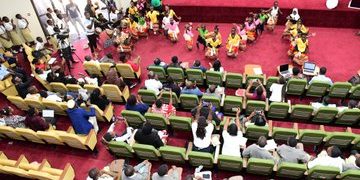
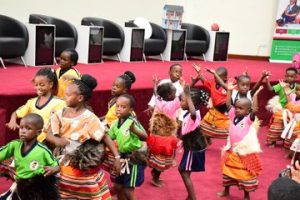
A key highlight of the exhibition was a series of vibrant performances by learners, who used drama, roleplay, and traditional dances to demonstrate real-life social and academic lessons.
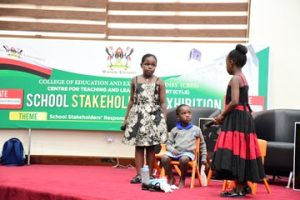
Children from participating schools staged short dramatisations illustrating everyday community situations, including family interactions, classroom behaviour, and moral decision-making. Some roleplays portrayed positive parenting practices, respectful communication between learners and teachers, and teamwork in school activities.
Other performances highlighted societal challenges such as peer pressure and irresponsible behaviour, with learners demonstrating both negative scenarios and improved alternative responses, reflecting the CBC emphasis on problem-solving and values education.
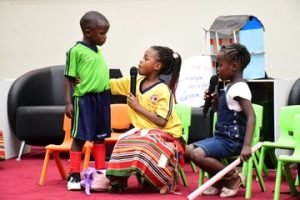
The young performers also engaged the audience through storytelling skits that combined humour and moral lessons, attracting applause from parents, lecturers, and fellow students.
In addition to drama, learners showcased a rich cultural heritage through energetic traditional dances performed to Ugandan folk songs. The dances, drawn from different regions of the country, celebrated unity in diversity while reinforcing messages of identity, discipline, and community values.
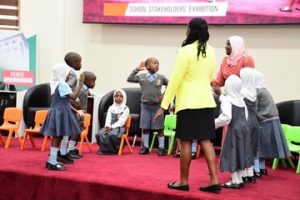
Students must work hard to reach their dreams
The Dean of the School of Psychology, Dr Martin Mabunda Baluku, welcomed stakeholders to Makerere University and encouraged learners to focus on their academic goals. “If you want to be here, then it means you must work hard in school and take your studies seriously,” he said.
He emphasised the role of both teachers and learners in shaping identity and future outcomes. “As teachers, we have a responsibility to shape the minds and identities of young people. At the same time, learners also have a responsibility to actively shape themselves,” he said.
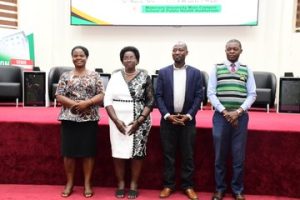
He also highlighted the importance of emotional well-being and community care among young people. “We must be our brother’s keeper and our sister’s keeper,” he added.
Children must be guided through positive approaches
Dr Richard Balikoowa emphasised positive psychology in education and child development. He introduced the “four Cs” of development: confusion, chaos, compromise, and change. “Human beings are dynamic and grow through these stages,” he said.
He encouraged educators to focus on positive reinforcement and constructive discipline. “We should strengthen desired behaviour, remove distractions, and apply correction carefully and scientifically,” he said.
The CBC is a necessary reform
The Principal of the College of Education and External Studies, Prof. Anthony Mugagga, praised the initiative, noting its alignment with Uganda’s Competence-Based Curriculum. “This is a new model through which teachers can rethink and improve teaching and learning approaches,” he said.
He encouraged learners to value time and opportunity and emphasised resilience in life choices. “When one door closes, try a window. If the window closes, try a ventilator,” he said.
The exhibition showcased practical demonstrations by learners across different education levels, reinforcing the CBC principle of learning by doing. Organisers said such engagements help bridge theory and practice while improving creativity, confidence, and communication skills among learners.
The event concluded with calls for stronger collaboration among parents, teachers, and policymakers to support holistic education and child development.