




Bank of Uganda Governor Dr Michael Atingi-Ego has called for a rapid but carefully calibrated regulatory framework for virtual assets, warning that Uganda risks falling behind neighbours like Kenya if it does not act decisively and strategically.
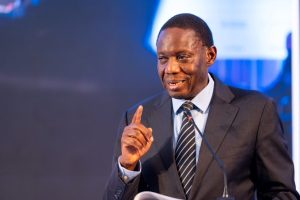
Delivering the keynote address at the Kampala Blockchain Summit 2025 at Four Points by Sheraton, the Governor said Uganda stands at “a pivotal moment” in shaping the future of digital finance.
“We meet at a moment when the decisions we make today will shape the structure, the safety, and the competitiveness of our economy for decades to come,” Atingi-Ego told delegates. “The question for Uganda is no longer whether these technologies are important; it is whether we will be architects of their adoption or merely users of systems designed elsewhere.”
The summit, hosted by the Blockchain Association of Uganda, brought together industry players, regulators and policymakers, with the Association noting it was “honoured to welcome” the Governor as keynote speaker.
‘Get Uganda out of the financial stone age’
Atingi-Ego said Uganda’s cautious posture toward cryptocurrencies and blockchain had been misunderstood by some as resistance. He insisted that regulators were acting to protect citizens while studying global best practices.
“Our stance has not been one of obstruction, but of protection,” he said. “What is conservative about protecting millions of citizens from products they may not fully understand?” He added: “Colleagues, we must get Uganda out of the financial stone age.”
The Governor noted that 84.5% of virtual asset activity in Uganda happens on decentralised platforms, well above the Sub-Saharan African average. This, he warned, creates supervisory blind spots and exposes consumers to fraud.
“Virtual assets in Uganda present significant risks, stemming primarily from limited customer due diligence, weak governance structures, and informal shadow systems operating without oversight,” he said.

Stablecoins, used widely for remittances, also pose macroeconomic risks. “Their appeal is understandable, but their implications are serious,” he emphasised.
Lessons from Kenya’s regulatory leap
Atingi-Ego devoted a significant portion of his speech to analysing Kenya’s regulatory framework, which went live this month. “Kenya has clarity. We are still building it,” he said bluntly. “Kenya has begun licensing its first virtual asset service providers. We have zero.”
But he argued that Uganda could use Kenya’s head start to its advantage. “Kenya has shown what is possible. Now Uganda must show what is achievable with intelligence, determination, and strategic focus,” he said. “Being second to legislate does not mean accepting second-tier status.”

Six pillars for Uganda’s regulatory framework
The Governor outlined the six foundations he believes should anchor Uganda’s virtual asset legislation: Licensing and fit-and-proper standards, Client asset protection, AML/CFT compliance, including the FATF Travel Rule, Cybersecurity and operational resilience, Market integrity and conduct and Transparency and data reporting.
“These pillars are not theoretical,” he said. “They are the backbone of every jurisdiction that wants to safely integrate virtual assets into its financial system.”
He encouraged innovators to make greater use of existing sandboxes under the Bank of Uganda and Capital Markets Authority, saying: “This is how we learn before we legislate.”
A challenge to industry, regulators and consumers
Atingi-Ego issued a direct challenge to stakeholders across the ecosystem. “To industry: engage constructively. Share expertise. Build trustworthy businesses,” he said.

“To regulators: build capacity, avoid reflexive rule-making, and coordinate tightly. Regulation must be rigorous, proportionate, and evidence-based.” “And to consumers: be vigilant. Avoid guaranteed-return schemes. Invest only what you can afford to lose.”
“Why should firms choose Kampala over Nairobi?”
The Governor returned to the summit theme — ‘From Regulation to Growth: Uganda as a Regional Hub’ — by asking the audience a pointed question.
“How can Uganda position itself as a regional leader in virtual assets when Kenya is already ahead of us?” he asked. “Why will the virtual asset firm choose Kampala over Nairobi? These are not theoretical questions — they demand concrete answers.”
He suggested Uganda must differentiate itself through high-quality legislation, world-class supervisory capacity, and a deep ecosystem of talent and infrastructure. “Uganda does not need to follow,” he said. “Uganda is ready to lead — but only if we move with urgency and quality simultaneously.”
Atingi-Ego said the choices made now would shape Uganda’s digital economy for generations. “Let us build a digital financial future worthy of Uganda’s creativity, talent, and ambition,” he said.