


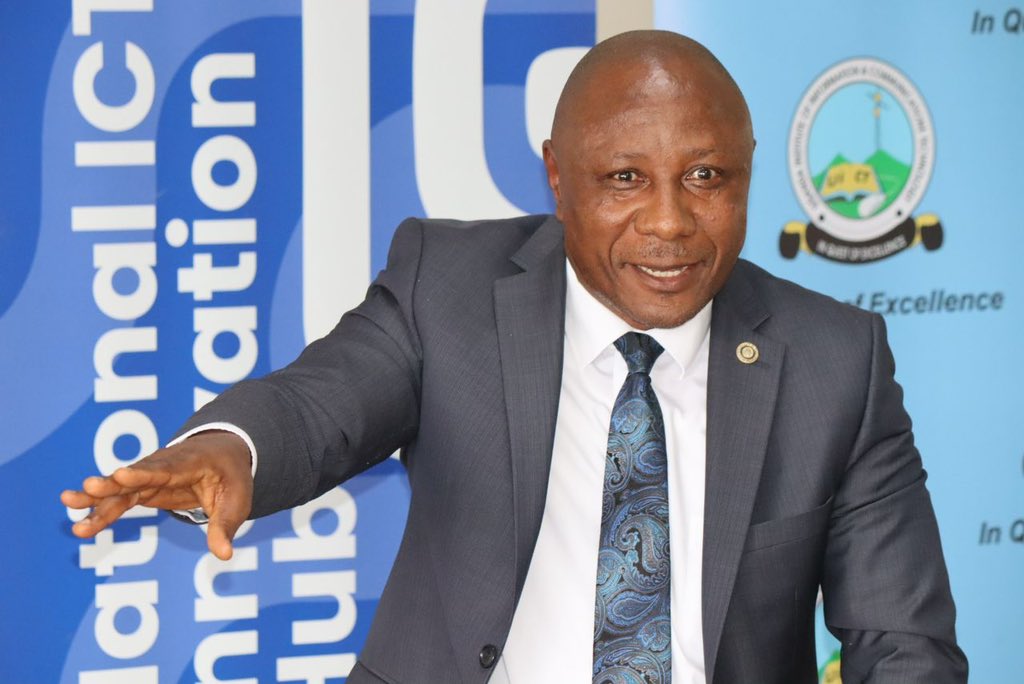
The State Minister in Charge of National Guidance, Godfrey Kabbyanga Baluku, has revealed that government is working on reducing the cost of the internet which is still high.
The cost of internet use in Uganda is the highest in the world, according to research by Surfshark; a cybersecurity company based in the Netherlands that deals in virtual private network (VPN) services, data leak detection systems, and private search tools.
According to Surfshark’s latest research of 2022 quoted by The Independent Magazine, Uganda’s internet affordability ranks 116th out of 117 countries surveyed in the world or 92% of the global population.
This means the Internet in Uganda is not affordable compared to global standards.
To afford mobile internet, Ugandans have to work 510 times more (41 min 50 s/month) than Israeli citizens, for whom the most affordable 1GB package costs only 5 seconds of work monthly.
Meanwhile, fixed broadband costs Ugandan citizens around 59 hours of their precious working time each month.
“We are trying to see how we can reduce the cost of the internet. We are working on this as a ministry,” said Kabbyanga on Tuesday.
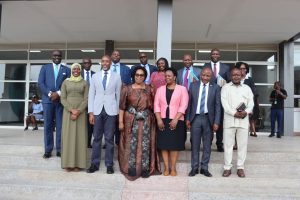
He was speaking at a meeting between MPs, the ICT ministers, Permanent Secretary and Technical staff at the Nakawa-based ICT Hub.
 He said the Department of Information Communication and National Guidance has received zero money for operations.
“We cannot talk about what we are doing; there is no money for it. In fact, the Ministry released funds for salary (3 months only) we may not pay money for the next 12 months but because the work in the ministry is intellectual work, we have the brain to do the work. That is why you see all this happening. We have decided to do the work even without enough funding.”
He appealed to parliament to help appropriate enough money for innovations and research in the country.
“We need to commercialize some of our innovations, we have better systems that can match the systems we are innovating and by doing that, people will start earning. The IGG report revealed that the government lost Shs 3 trillion in procurement-related corruption, and as a ministry, we shall save the government this money by perfecting its e-procurement.”
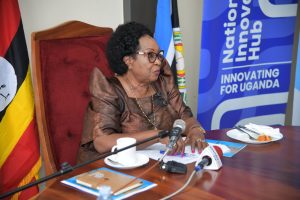
The State Minister for ICT, Hon. Joyce Nabbosa Ssebugwawo, said that the ICT hub will go a long way in enhancing the innovation skills of the young people in Uganda in various sectors.
“Uganda’s Government has opened its first ICT Hub for Young Ugandan Innovators in various Sectors such as Procurement, Agriculture, Transport, Logistics, and Creatives,” she said.
She told MPs that the hub was constructed in 2017 by the UPDF engineering brigade under the Ministry of ICT & National Guidance to benefit the promotion of local innovations, increase import substitution and improve coordination within the ICT innovation ecosystem.
Before taking the MPs on a tour, the Principal of Uganda Institute of Communications Technology, Dr Fredrick Kitogo, told MPs that the National ICT Innovation Hub has a hosting capacity of 800 innovators.
This is part of the National ICT Initiatives Support Program (NIISP).