


ADDIS ABABA — Africa will not achieve health sovereignty if each country tries to build its own medicines and vaccines alone.
That was the central message at the fifth International Conference on Public Health in Africa (CPHIA 2026) in Addis Ababa on Wednesday, where experts argued that the continent needs collective investment in research, manufacturing, regulation and markets to stop depending on imports.
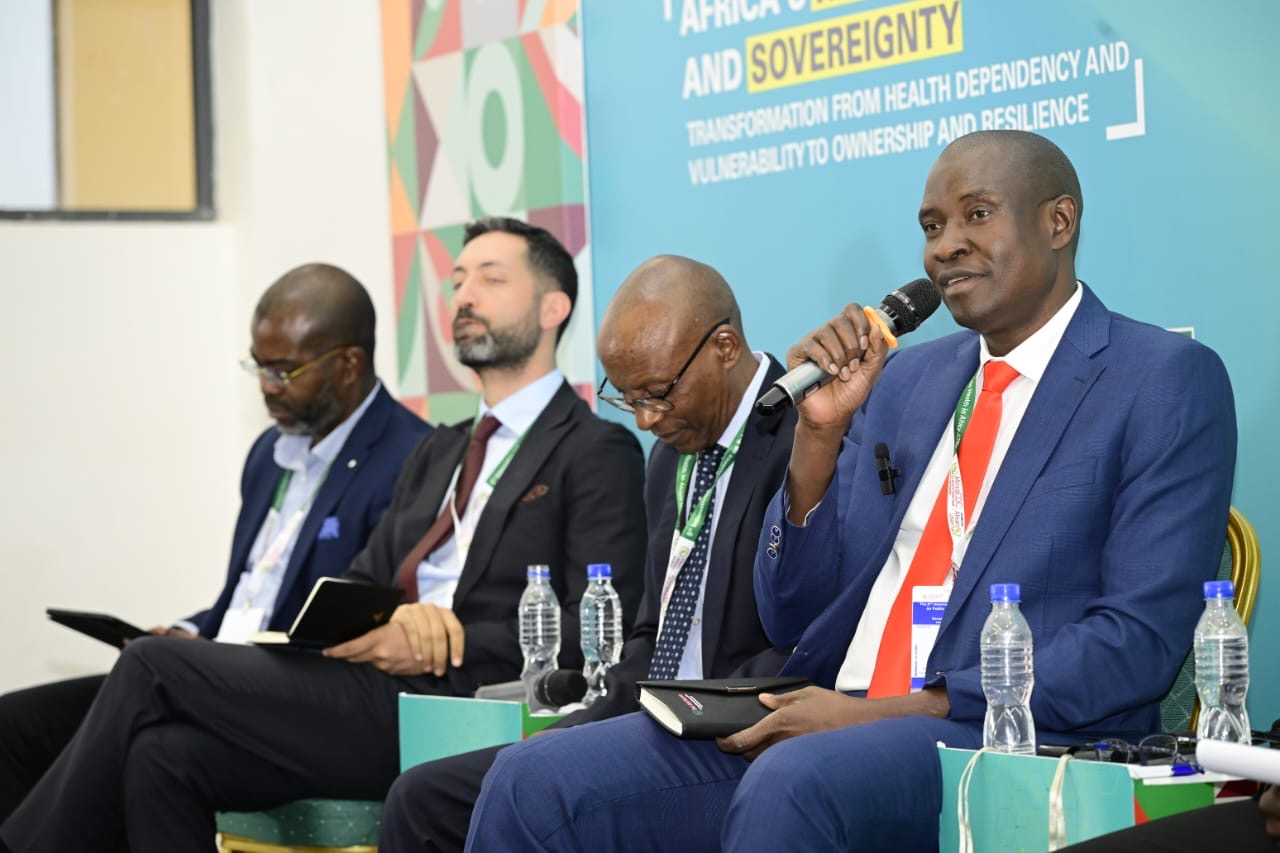
The call came during a special scientific session titled “Advancing End-to-End Research, Development and Innovation: Investing in Africa’s Health Sovereignty”, moderated by Dr Alemseged Abdissa, Africa CDC’s deputy director general for research.
Africa currently imports 99% of its vaccines and almost 70% of its medicines, according to Dr Skhumbuzo Ngozwana, Africa CDC’s director of local manufacturing. The share is likely higher for diagnostics.
African heads of state want the continent to produce 60% of its needs by 2040. With 14 years left, Ngozwana said meeting that target will require both investment and patience, and a shift from fragmented national efforts to a single African market.
More than 620 health product manufacturers have been mapped across the continent, along with more than 27 vaccine manufacturing initiatives and 20 technology transfer projects. However, only 10 of Africa’s 55 countries have national regulators at WHO Maturity Level 3.
Ngozwana called on countries to accept each other’s approvals, instead of making companies spend 26 to 27 months registering the same product in one country after another.
He rejected arguments that Africa should simply buy cheaper medicines from India and China. “Covid told us: you cannot price the product that you cannot access,” he said. He also said African manufacturers could compete on price once they reach enough volume.
“A factory is not a vaccine,” he said. Manufacturers need registered, quality-assured products, a single African market instead of 55 separate ones, and long-term supply agreements instead of one- or two-year tenders. Success should be measured by doses and patient packs actually released and bought, and by repeat orders, “not project announcements”, he said.
The case for collective investment was illustrated by Uganda’s Dei BioPharma, whose founder Dr Matthias Magoola presented its Matugga campus in Wakiso District as an example of what end-to-end manufacturing could look like when it is built to serve the continent, not just one country.
During a special manufacturing session sponsored by Dei BioPharma Ltd, Dr Adrian Kivumbi Ddungu, the firm’s executive manager for business development, said the Ugandan drug maker wanted to pioneer a CDMO model for Africa.
Under the model, African and international partners would use shared facilities for product development, technology transfer, scale-up and commercial production, instead of each country building duplicate plants.
Dr Magoola said the Matugga campus covers more than 400 acres and has more than 30 factories under development. He described it as the largest such campus in Africa.
He said it would make medicines from start to finish, including producing active pharmaceutical ingredients and excipients from local raw materials such as cassava, maize, potatoes and sugarcane. The campus would also make the PVC, aluminium foil, empty capsules, cleanrooms and air-handling systems that drug makers usually import.
“How can you compete with the people who are manufacturing APIs, excipients, PVC, foil, everything, and you think you can manufacture a drug and compete with them? Impossible,” he said. He argued that African firms that only formulate imported ingredients start “from the middle”.
He said the campus has facilities for oncology, antimalarials, biologics, biosimilars, blood fractionation, in vitro diagnostics, cell and gene therapy, mRNA vaccines, generics, hormones, penicillins, cephalosporins, carbapenems, injectables, inhalers and human vaccines. It also has facilities for animal vaccines against diseases including foot-and-mouth and anthrax.
“What do we need now? Market. We are ready to become a continental CDMO,” he said.
He said the company will launch six antimalarial medicines within two weeks: artesunate-pyronaridine, dihydroartemisinin-piperaquine, artesunate-amodiaquine, sulfadoxine-pyrimethamine, and higher- and lower-dose artemether-lumefantrine.
He said Dei BioPharma is the only manufacturer in Africa making artesunate-pyronaridine, a combination he said had been recommended as resistance to older treatments grows. He invited Africa CDC officials to the launch.
He said the company has more than 500 products available, including hydroxyurea for sickle cell disease, tranexamic acid for bleeding disorders, and injectable artesunate, artemether and quinine. He said these cover 70% to 80% of the molecules Africa imports.
Magoola added that Dei BioPharma has filed more than 100 patent applications in the US, 90% of them for biological drugs. More than 72 have been published, he said, covering vaccine technologies for Ebola, Marburg, Zika, malaria, HIV, HPV, cancer and Alzheimer’s disease, as well as genetic disorders.
Speakers said the money Africa already spends on imported medicines could fund its own science if it were pooled and spent on medicines made on the continent.
“Africa is supposed to be giving aid, not the other way around. We import 90% of the drugs in Africa on average. If all that money that is going out of Africa was used to buy those drugs from the African continent, we would be able to fund our own research without needing money from anybody else,” Dr Magoola said.
He said the continent cannot claim sovereignty over its science while it imports more than 90% of its medicines and vaccines and many of its people cannot get biological drugs.
He urged African leaders and their governments to give strong financial and political backing to the Africa Centres for Disease Control and Prevention (Africa CDC), so that it can support home-grown solutions to the continent’s health problems.
Africa CDC is the African Union’s public health agency. Set up in 2017 and based in Addis Ababa, it supports member states in preventing, detecting and responding to disease threats. It also leads the continent’s drive to make more of its own vaccines and medicines.
He also called on governments to fund their own researchers and the African Medicines Agency, instead of waiting for the European Union. He noted that companies such as Pfizer spend more than $10bn a year on research.
“Look at your budget in Africa, the budget for R&D. Do we have a budget, or are we lying to ourselves? These people don’t have money to do R&D, so what do you expect them to do? They are depending on handouts,” he said, pointing at the professors in the room.
The session also heard how dependence played out during Covid-19. Dr Misaki Wayengera, who chaired Uganda’s scientific advisory committee during the pandemic, recalled how hard it was for African countries to get vaccines, even after paying into the Covax scheme.
He said the African Union’s vaccine acquisition effort, led by Strive Masiyiwa, had also struggled to secure doses. Africa carries almost 25% of the global disease burden but makes very few vaccines, he said.
Dr Wayengera said that when Uganda declared an outbreak of Bundibugyo Ebola virus in May, President Museveni told health officials he was tired of hearing about problems without solutions. He said the president asked what had been done since the virus was first identified in Bundibugyo District in 2007.
Responding to a fellow panellist who said that life began in Africa, Dr Magoola asked why the continent that “carries the original DNA” remained the least developed.
“Because we are afraid to learn,” he said, asking why almost all the medicines tested in clinical trials in Africa came from elsewhere.
“You are saying that 99% of all the clinical trials we do here, the drugs come from the West. What happened to our labs?”
He used sickle cell disease to show why Africa needs its own advanced medicines. He said Lyfgenia and Casgevy, the two gene therapies approved in Europe and the US, were not available in Africa, even though the continent carries 80% of the global burden of the disease.
Lyfgenia is a single-dose treatment costing $3.1m, and Casgevy costs $2.2m.
Citing WHO figures, he said disease costs Africa $2.4tn a year. He argued that local production could recover much of that loss for an economy he put at $3.6tn.
He urged African researchers to study traditional medicinal plants and patent what they find, saying that is where the continent’s intellectual property lies. He gave paclitaxel, a cancer drug derived from the Pacific yew tree, and quinine, from the cinchona tree, as examples of medicines that come from plants.
He commended Africa CDC for driving the manufacturing agenda but said it “needs to do much more”. He also urged African countries to work together instead of copying one another.
“Uganda is doing this, you also go there. The other is doing this, they go. And then we just keep going around and around,” he said.
The other panellists were Dr Duncan Thela of the WHO Regional Office for Africa; Prof Placide Mbala, Africa CDC’s director of research, clinical trials and innovation; Dr Kevin Massoudi; and Prof Samuel Kariuki, continental lead for DNDi Africa. Officials from Africa CDC and the Ethiopian government were among those at the evening session.
CPHIA 2026 is co-hosted by Africa CDC and the Ethiopian government. It runs from 23 to 27 November at the Addis International Convention Centre, under the theme “Africa’s Health Security and Sovereignty: Transformation from Health Dependency and Vulnerability to Ownership and Resilience”.