


KAMPALA — Makerere University researchers have urged Parliament to integrate the economic value of forests, water, wetlands and other natural resources into national planning, budgeting and investment decisions, warning that environmental degradation could undermine Uganda’s long-term growth ambitions.
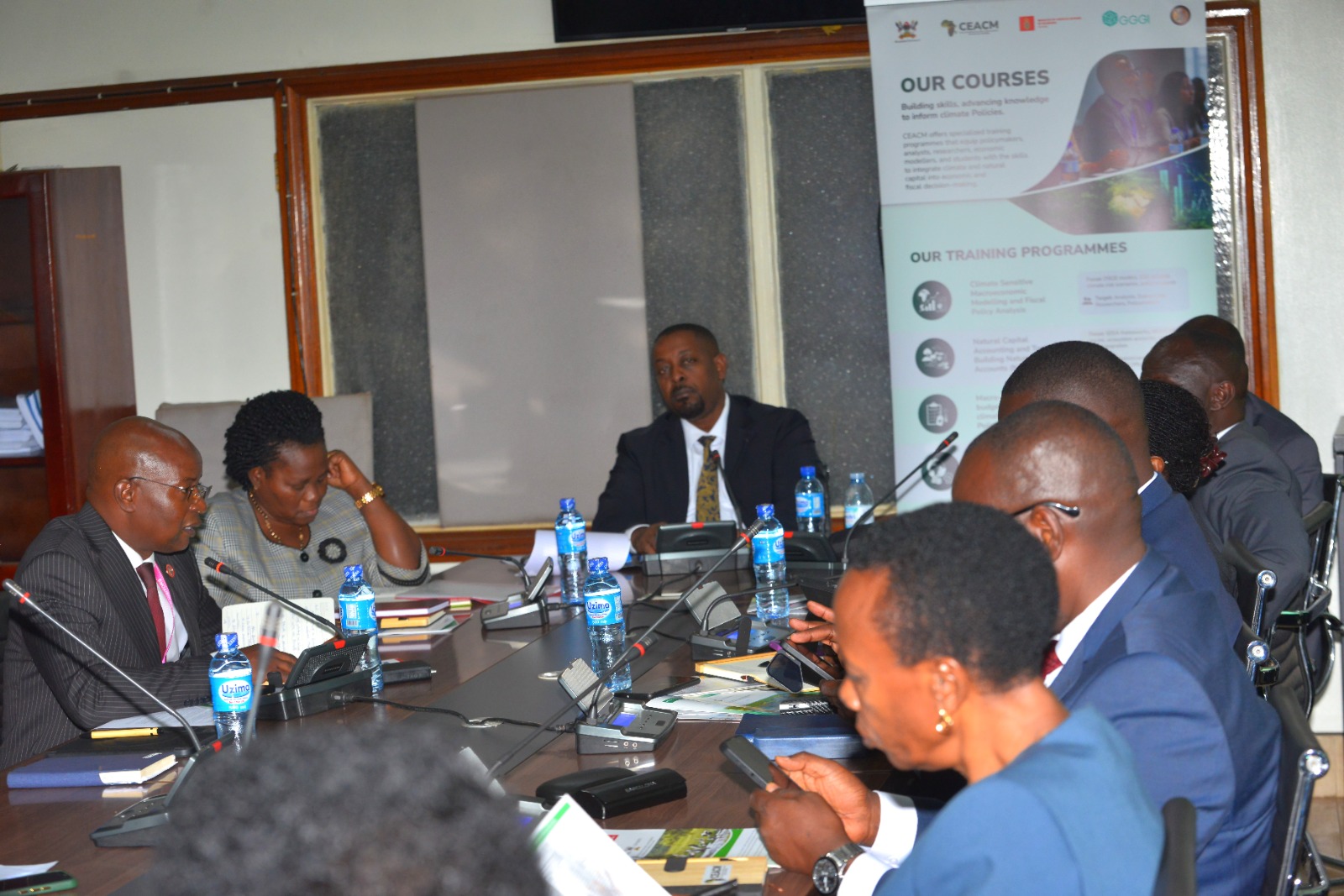
The researchers, led by Prof. Edward Bbaale, presented a climate-sensitive macroeconomic modelling framework developed by Makerere University’s Centre of Excellence for Africa Climate-Sensitive Macroeconomic Modelling (CEACM) to Parliament’s Committee on Environment and Natural Resources on Thursday.
The presentation, titled From Natural Capital Accounts to Economic Growth: Making Informed Nature–Economy Planning and Budgeting, demonstrated how the model can help government assess the economic costs of environmental degradation and the returns from investing in conservation and restoration.
Prof. Bbaale, the CEACM team leader and Principal of the College of Business and Management Sciences (CoBAMS), said conventional economic assessments often fail to capture the full contribution of nature to the economy, making it difficult for policymakers to appreciate the consequences of environmental destruction.
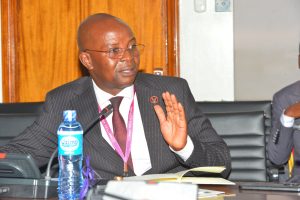
He said the Centre was committed to bridging the gap between academic research and policymaking by producing evidence that directly informs government decisions.
“We recognise that there has been a gap between academic research and policymaking. However, more than ever before, Makerere University is committed to working with policymakers to ensure that the questions we address are not only relevant to academic publications but also directly inform policy,” Bbaale said.
He said the model, developed with support from GIZ, was already being introduced at the Ministry of Water and Environment, with collaboration involving the Ministry of Finance, the National Planning Authority and the Uganda Bureau of Statistics.
Bbaale urged Parliament to support the initiative and work with the Ministry to make the model a basis for policy analysis and legislative oversight. “The days of working in silos are behind us. We are working together,” he said.
He also cautioned against describing interventions as successful without conducting proper assessments to establish their actual impact.
Responding to questions about investment in clean cooking, Bbaale said determining the impact required comparisons between households that had adopted clean cooking technologies and those that had not.
“In many cases, what people describe as impact is not necessarily impact. To establish the actual impact, you need a group that has not adopted clean cooking and compare it with another group that has adopted it,” he said.
He added that the Centre could undertake further analysis and provide Parliament with evidence on the effects of clean cooking investment.
On rainwater harvesting, Bbaale said Uganda needed to make better use of its rainfall instead of allowing water to flow away before communities experience shortages.
“Water that runs past our compounds and gardens should not simply be allowed to go to waste,” he said, adding that the Centre could undertake a scientific assessment comparing different water-harvesting scenarios.
Dr Peter Babyenda, the centre coordinator and member of the research team, said Uganda’s economic growth remained heavily dependent on natural capital, given the country’s reliance on agriculture, water resources, tourism and ecosystem services.
“Our growth, as we often say, largely depends on natural capital. Even when you look at our industries, most of them are agro-based,” Babyenda said.
He warned that conventional GDP measurements did not adequately account for nature’s contribution, which could result in conservation and forest management being overlooked during budget cuts. “Using this model, we can demonstrate what nature actually contributes,” he said.
Babyenda said the framework could help policymakers compare the economic returns from preserving forests and wetlands with the projected benefits of converting them to other uses.
He presented two illustrative investment scenarios generated using the model.
In the first, an investment of Shs10 billion in afforestation and forest management was projected to contribute approximately 0.02% to GDP, generate 3,663 full-time equivalent jobs and increase household welfare by about 0.021%.
The investment would also increase forest cover and reduce carbon emissions.
In the second scenario, an investment of Shs20 billion in the water sector was projected to increase GDP by approximately 0.04%, generate 4,215 full-time equivalent jobs and improve household welfare.
Babyenda emphasised that the figures were modelled projections intended to demonstrate the potential returns from investment, rather than reported outcomes from completed projects.
He said the model could also help government assess the water requirements of industrialisation, road construction and irrigation under the Tenfold Growth Strategy.
“We need jobs, products and economic growth. But there is a way of achieving this while balancing the economy with nature,” he said.
He also called for a planned transition to cleaner energy, including electric public transport and clean cooking technologies, cautioning against introducing restrictions before alternatives were accessible.
“You cannot announce today that charcoal cooking has been banned when there is no distribution network to ensure that households can access alternative energy sources,” he said.
Babyenda said the Centre had trained 26 officers from the Ministry of Water and Environment to use the model and urged Parliament to support its institutionalisation, increase funding for environmental restoration agencies and demand accountability based on measurable results.
He cited inadequate funding for tree maintenance as an example of weaknesses in environmental programmes, saying planting trees without resources to monitor and maintain them could undermine restoration efforts.
“Planting a tree is not the end of the exercise. You must follow it up until it grows,” he said.
Committee chairperson Hon Dan Kimosho said natural resources should be recognised not merely as environmental assets but also as economic and political assets whose depletion affects growth, government revenue and household welfare.
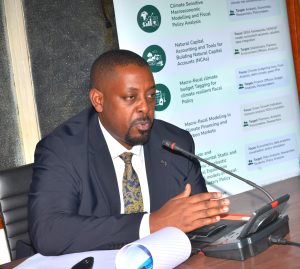
He said planning and budgeting needed to capture both the value of natural resources and the costs associated with their degradation.
Buliisa County MP Allan Atugonza called for a rethink of how Ugandans value natural capital amid population growth and deforestation. He also urged the adoption of a unified approach to nature-economy planning and investment.
Rushenyi County MP Naome Kabasharira endorsed the model and called on the Ministry of Water and Environment to implement the proposed solution.
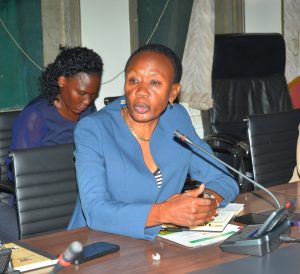
Rubanda District Woman MP Evelyne Ninsiima Kikafunda urged the government to invest in forests and water resources. She said the model could demonstrate the contribution of Bwindi Impenetrable National Park to Uganda’s GDP and help establish the natural resources needed to achieve economic growth targets.
Bukuya County MP Dr Michael Bukenya Iga praised the research as homegrown evidence, noting that the model had been developed by Ugandans. He called for a shift from policy discussion to practical action and invited researchers to support the committee’s work on budgeting and implementation.
The CEACM team said the model could also serve private investors, development partners, civil society organisations and communities by providing evidence on the economic returns from sustainable investments.