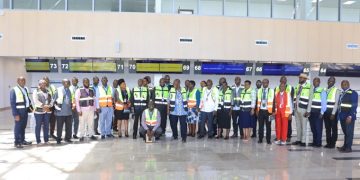



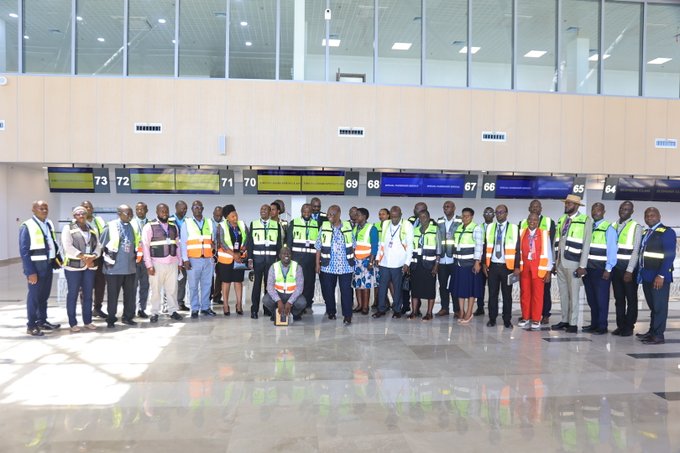
ENTEBBE — Members of Parliament on the Committee on Physical Infrastructure have commended infrastructure developments at Entebbe International Airport following a guided tour of the facility by the Uganda Civil Aviation Authority (UCAA).
The MPs visited the airport on Wednesday, November 18, 2026, to assess ongoing developments, examine operational facilities and understand challenges facing the aviation regulator ahead of a three-day engagement with its management.
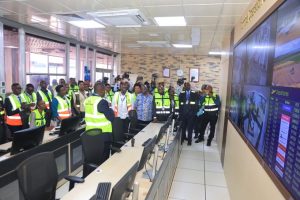
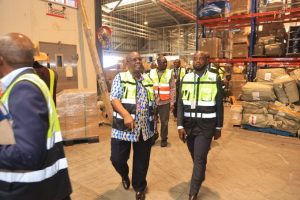
The tour, led by UCAA Director General Fred K. Bamwesigye, covered the Emergency Operations Centre, Terminal Operations Control Centre, Karibuni Business Class Lounge, the new terminal extension, airport rescue and firefighting services, cargo centre and Air Traffic Control Tower.
Committee Chairperson Mwine Mpaka Rwamirama said the visit was intended to establish the actual state of the authority amid public concerns about its management, staffing and expenditure.
“We have been hearing so much, including concerns about the firefighting vehicles and other issues, so we decided to do an oversight visit,” Mpaka said.
He, however, acknowledged the progress made in expanding airport infrastructure, particularly the new terminal facilities and cargo-handling areas.
“When you look at the expansion, it is going to reduce congestion. When you look at the cargo bay, really there is some good work being done,” he said.
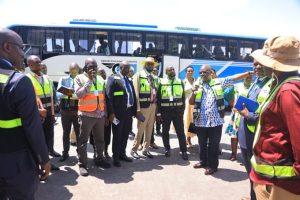
Bamwesigye said the authority had invited the committee to witness developments at Entebbe and understand how its investments were supporting airport operations and the wider aviation industry.
“We are showing them what we have been able to do depending on our strategic plan and the activities we intended to undertake in the financial year and the five-year period of our plan,” he said.
The MPs were also taken through the airport’s emergency response systems, including how UCAA coordinates with other stakeholders during aircraft accidents and other emergencies.
Bamwesigye said the systems enable the authority to communicate incidents quickly and coordinate responses.
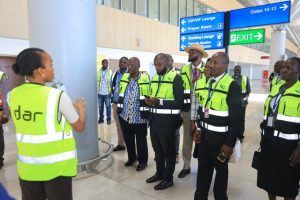
“We can communicate within the shortest time possible to be able to coordinate and handle such an emergency,” he said.
The Director General also said the new terminal building extension was expected to open within the next two months.
On the airport’s firefighting capacity, Bamwesigye defended the specialised vehicles, explaining that their specifications were determined by the airport’s classification and the nature of aircraft fires they are designed to handle.
“This is not a fire truck for fighting fires in a municipal market. It is designed to fight aircraft fires,” he said.
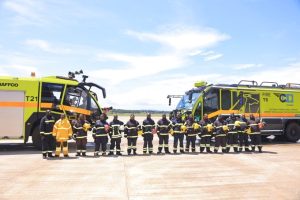
He explained that aircraft carry highly flammable fuel and require specialised firefighting equipment capable of handling fires involving aircraft structures and fuel.
Bamwesigye said the two fire trucks cost Shs5 billion and that their specifications should be considered when assessing their price. “The specifications of the equipment must be analysed before anybody talks about its price,” he said.
He added that Entebbe International Airport is classified as Category 9, requiring equipment with the appropriate firefighting capacity and adequately trained personnel.
The committee also visited the Air Traffic Control Tower, where members were shown equipment used in aerodrome control, area control, approach control, communication, navigation and surveillance, as well as approach radar systems.
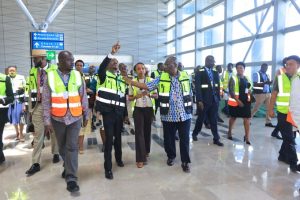
Mpaka said the committee would continue engaging UCAA officials and examining documents up to Friday before preparing a report for Parliament.
“We want to understand the real status at Uganda Civil Aviation Authority and report back to the House and Parliament on behalf of Uganda,” he said.
The committee’s assessment will cover both the authority’s achievements and outstanding challenges, including questions surrounding staffing, infrastructure and the management of aviation fuel facilities.
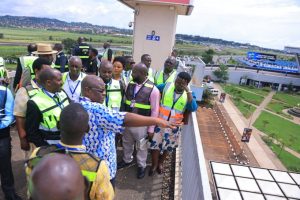
Bamwesigye welcomed the parliamentary oversight, saying it offered an opportunity for lawmakers to assess the authority’s work directly rather than rely on information from third parties.
“When they come, like they have been here, they have been able to see what we have been able to do,” he said.
He added that the visit also allowed MPs to understand areas where progress had been constrained by inadequate funding and potentially support efforts to secure additional resources.