


President Yoweri Kaguta Museveni has pledged Shs125 billion to establish a Savings and Credit Cooperative Organisation (SACCO) for medical doctors and announced plans to exempt medical workers from paying taxes as part of efforts to improve their welfare and strengthen healthcare delivery.
The President also directed the health sector to shift towards preventive healthcare, arguing that greater investment in immunisation, sanitation, nutrition and public education would reduce the cost of treating diseases.
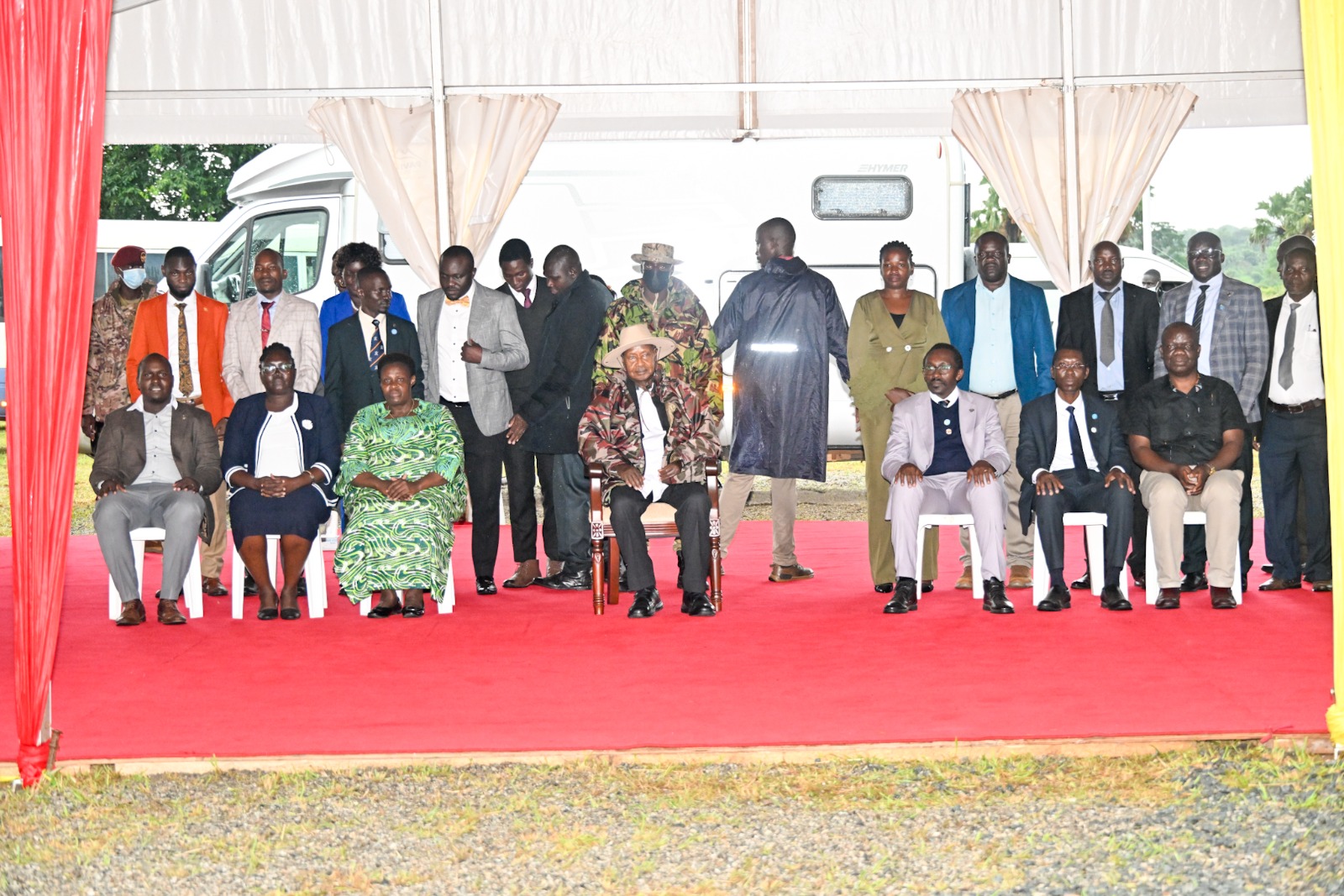
Museveni made the commitments on Friday, November 13, 2026, while presiding over the 10th Uganda Medical Association (UMA) Grand Doctors’ Conference at Soroti University in Soroti District.
The conference was held under the theme, “Harnessing the Numbers and Quality for Socioeconomic Transformation and Global Health.”
The Shs125 billion commitment is intended to provide seed capital for the doctors’ SACCO, which is expected to support medical professionals with affordable financing, further education and improved financial stability.
Museveni said improving doctors’ welfare was necessary to address challenges such as moonlighting, where medical professionals divide their working hours between public health facilities and private medical establishments.
He argued that better remuneration and access to affordable credit would help doctors concentrate on their professional responsibilities.
The President also announced that medical personnel would be exempted from paying taxes on their salaries, comparing their work to that of security personnel who enjoy similar exemptions.
“I have already agreed with them on the tax waiver. We shall exempt medical personnel from paying taxes because we do not tax policemen, prison officers or soldiers. Why, then, should we tax doctors and other medical workers? Let them retain their current earnings,” Museveni said.
Push for preventive healthcare
On healthcare delivery, Museveni challenged medical professionals to develop a cost-effective national strategy that prioritises preventing diseases rather than spending heavily on treating illnesses that could have been avoided.
He estimated that about 80 per cent of illnesses in Uganda are preventable, arguing that many could be addressed through basic public health interventions.
He identified immunisation, proper nutrition, personal hygiene, access to safe water, sanitation and public education as key measures for reducing the country’s disease burden.
Museveni cited Uganda’s progress in eliminating measles and polio as evidence of the benefits of preventive healthcare, recalling that the country’s initial immunisation programme targeted six killer diseases responsible for approximately 96,000 child deaths annually.
He also identified poor hygiene, inadequate nutrition, early marriages, alcoholism and unsafe food handling as contributors to preventable illnesses.
The President particularly warned against consuming mould-contaminated groundnuts, saying they contain harmful substances associated with cancer.
He urged medical professionals to take health education beyond hospitals by using radio programmes and other community platforms to reach ordinary Ugandans.
He proposed that district health officers dedicate at least one radio programme every two weeks to educating communities about disease prevention and healthy living.
Museveni also cited previous public health campaigns against HIV/AIDS, tuberculosis, Guinea worm and bilharzia as examples of how community mobilisation, sanitation and public awareness can improve health outcomes.
200 geriatric specialists targeted
The President further directed Government to facilitate the training of at least 200 geriatric specialists to address the shortage of medical professionals specialising in the healthcare needs of elderly people.
He said Uganda currently has only three to four geriatric specialists, a situation requiring deliberate investment in specialised medical training.
He also raised concern about the shortage of paediatric cardiologists, saying the country has approximately 12 specialists to manage congenital heart conditions among children.
Museveni challenged medical training institutions to identify other critical areas where specialised personnel are needed and pledged government support towards developing the required human resource capacity.
He cautioned universities against commercialising medical education at the expense of professional standards, warning that poorly trained medical personnel could compromise patient care.
He commended Soroti University for prioritising science-based academic programmes, saying higher education should respond to the country’s scientific, technological and development needs.
The President also endorsed proposals for annual meetings of medical professionals and supported the idea of establishing doctors’ shops similar to those operated by the armed forces.
He advised that such shops should concentrate on essential commodities, including building materials, rather than non-essential products.
Doctors seek health sector reform compact
Presenting the medical fraternity’s position, UMA President Dr Frank Asiimwe proposed a Strategic Compact for Health Sector Reforms to strengthen cooperation between Government and medical professionals.
Asiimwe said the proposed framework would bring together the expertise and experience of doctors to address persistent challenges in healthcare delivery.
He said UMA brings together close to 15,000 doctors across 14 branches and remains committed to strengthening professional discipline, accountability, mentorship and collaboration with Government.
While acknowledging improvements in Uganda’s health sector, he said systemic challenges still require joint intervention.
He cited increased life expectancy, now estimated at 68 years, improvements in maternal health, domestic pharmaceutical manufacturing and stronger capacity to respond to disease outbreaks as some of the country’s achievements.
He also highlighted kidney transplantation at Mulago National Referral Hospital as an important step towards reducing dependence on foreign countries for specialised medical treatment.
Asiimwe commended Ugandan doctors for delivering specialised services under difficult conditions, training new generations of medical professionals and responding to public health emergencies, including Ebola and cholera.
He also announced that the UMA National Executive Council had awarded President Museveni its highest institutional distinction, honorary membership number UMAHM00001, in recognition of his contribution to the medical profession and the country’s health sector.
The association also presented its proposed priorities and a detailed breakdown of the Shs125 billion requested from the President to support the doctors’ SACCO.
Omaswa calls for stronger primary healthcare
Professor Francis Omaswa, a distinguished medical scholar and founding Chairperson of UMA, called for increased investment in primary healthcare and community-based services.
He said Uganda had made progress in life expectancy and maternal and child health but needed more deliberate interventions to meet international health targets.
Omaswa urged political leaders at all levels to prioritise healthcare and mobilise communities to participate in demanding and improving health services.
He cited the village COVID-19 task forces established during the pandemic as an example of how community participation can strengthen public health interventions.
He also called for stronger cooperation between ministries, arguing that health outcomes should not be treated as the sole responsibility of the Ministry of Health.
He said sectors such as water, education and housing must incorporate health considerations into their programmes because their activities directly affect people’s wellbeing.
On medical education, Omaswa urged authorities to enforce professional standards and close institutions that fail to comply with regulations issued by the Medical and Dental Practitioners Council and the National Council for Higher Education.
He warned that inadequate training could produce health workers whose professional competence and conduct put patients at risk.
He also challenged doctors to uphold professionalism, accountability and ethical conduct, saying medical practitioners should hold one another responsible for maintaining standards.
Alupo, Soroti University highlight health investments
Vice President Jessica Alupo credited President Museveni’s leadership and political commitment for improvements in Uganda’s health sector.
She said a healthy population was essential for wealth creation, employment, productivity and socioeconomic transformation because healthier citizens are better positioned to contribute to national development.
Alupo highlighted the expansion of Uganda’s immunisation programme from six vaccines targeting killer diseases to the current 13 vaccines, saying the programme had strengthened protection for children.
She also called for greater public awareness of hygiene, proper nutrition and healthy lifestyles.
Meanwhile, Soroti University Vice Chancellor Professor Robert Ikoja-Odongo thanked the Government for its continued investment in the institution, saying funding had enabled the completion of an academic block that is now operational.
He said the facility had eased the shortage of teaching space but appealed for additional lecture blocks and laboratories to accommodate the growing student population.
Ikoja-Odongo also highlighted plans to establish a teaching and regional referral hospital at the university, revealing that the institution had allocated 50 acres of land for the project.
He said encroachers had been removed and an irregular land title cancelled, clearing the way for the construction of the Ministry of Health-managed facility.
He further commended Government for establishing the Centre for Nuclear Science and Technology at Soroti University, saying it would support specialised training and research.
The centre is expected to contribute to the production of radioisotopes used in cancer treatment, potentially reducing Uganda’s dependence on foreign countries for some specialised medical technologies.