


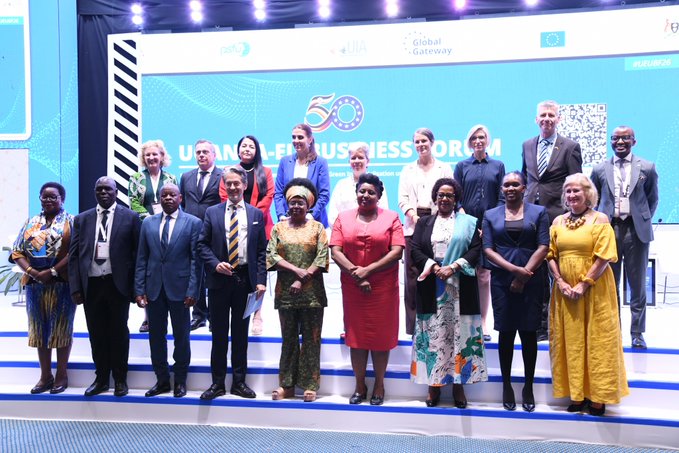
KAMPALA — The European Union and Ugandan officials have called on investors to translate business discussions into concrete investments in renewable energy, electricity infrastructure and green industrialisation, as Uganda and the EU mark 50 years of diplomatic and economic cooperation.
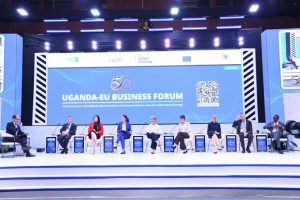
Speaking at the Uganda-EU Business Forum 2026 at Kampala Serena Hotel, EU Ambassador to Uganda Jan Sadek said the partnership should deliver investment, jobs and economic growth by connecting European technology and financing with Uganda’s development priorities.
“Europe’s message to Uganda is simple. You can rely on us,” Sadek said, citing the EU’s market access arrangements and the growth of Ugandan exports to Europe.
He said Uganda’s exports to the EU had risen from €420 million in 2015 to €1.8 billion in 2025, describing Europe as a key trade and investment partner. “Last year, around 79% of all foreign direct investment came from Europe. €2.2 billion, around 10 trillion shillings,” Sadek said.
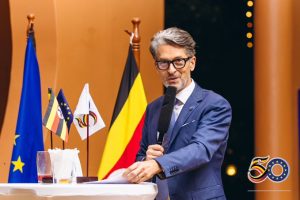
“These are not abstract numbers. Our economic ties translate into factories, farms, salaries, and finally livelihoods. It simply puts bread on the table for many, many Ugandans,” he added.
The forum, ndustria with the Government of Uganda and the Private Sector Foundation Uganda, is being held alongside the Renewable Energy Conference and Expo. This year’s focus is on investment, renewable energy partnerships and green ndustrialization under the EU’s Global Gateway strategy.
Sadek said reliable, affordable and clean electricity was essential to Uganda’s ambitions in manufacturing, mineral processing, healthcare and education. “Energy is not just another sector. It is the condition for everything else Uganda wants to achieve,” he said.
He said Team Europe had helped extend electricity access to 1.5 million people in Uganda and was working towards reaching three million by 2030. It had also supported the addition of 500 megawatts of renewable power.

Sadek cited a financing package for the rehabilitation of the Nalubaale and Kiira hydropower plants, saying the EU was providing €30 million in grants as part of a €170 million Team Europe package, which includes concessional loans from the European Investment Bank and the French Development Agency.
The rehabilitation, he said, would help keep the country’s oldest large hydropower stations operational for another 30 years.
“Through Global Gateway, European Union institutions, Member States and European Development Finance Institutions work together as Team Europe to support highest quality connectivity investments,” Sadek said.
“In practice, this means that Uganda leads, and Team Europe stands ready to support its priorities with expertise, financing, and a long-term partnership for sustainable development.”
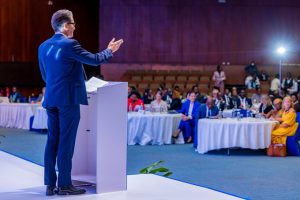
He encouraged European companies to explore opportunities in renewable energy generation, electricity transmission, clean cooking and energy storage, while supporting technology transfer and skills development.
Private sector seeks affordable power
The Vice Chairperson of the board of directors of the Private Sector Foundation Uganda (PSFU), Sarah Kagingo, said Uganda’s economic outlook and the 50-year EU-Uganda partnership presented opportunities to expand trade, processing and investment.
She cited the International Monetary Fund’s growth projections for Uganda, saying: “A very beautiful country is projected by the IMF in its latest economic outlook to grow in 2027 at a 9.9% growth rate, which will outpace Nigeria, South Africa and East African peers.”
Kagingo said the projection had been revised upwards from 8.2% in April, adding that Uganda’s growth could rise into double digits following the start of oil production.
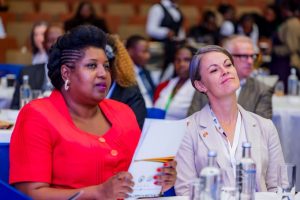
She commended the government for maintaining a predictable business environment and said the private sector had contributed proposals to the national budgeting process. “This financial year, the Minister of Finance adopted 82% of our proposals,” she said.
Kagingo said the EU-Uganda commercial relationship should move beyond exporting raw materials to processing more products locally and supplying higher-value goods to European markets.
“The next steps should be to build on this performance by processing more of what we produce and supplying higher value products to the European market,” she said.
She urged investors to ensure energy projects respond to the needs of businesses, particularly manufacturers and small enterprises. “For a manufacturer, this means reliable power at a manageable cost. For a microprocessor, it means keeping equipment running and produce refrigerated. For a small enterprise, it means an energy solution the enterprise can afford and maintain,” Kagingo said.

She encouraged energy developers and businesses to use the forum’s business-to-business matchmaking sessions to identify suppliers, clarify requirements and establish partnerships in installation, engineering, equipment supply and maintenance.
Kagingo also called for investment partnerships to include small businesses owned by women and young people. “Responsible investment must respect communities, workers and the environment,” she said.
She proposed an initial review within 90 days to assess the progress of investment leads, identify obstacles and determine the support required to move projects forward.
“Progress should be measured through projects financed, contracts implemented and jobs created,” she said.
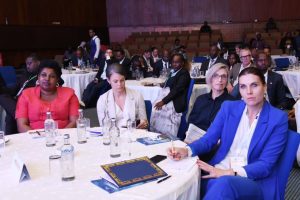
Kagingo also raised concerns about misinformation, citing the Reuters Institute’s Digital News Report 2026, which she said found that 62% of respondents across 48 markets were concerned about false or misleading information online.
Government calls for technology transfer
Minister of Energy and Mineral Development Dr Monica Musenero Masanza, who represented Vice President Jessica Alupo, said the 50-year relationship between Uganda and Europe had evolved from traditional development cooperation into a broader partnership covering trade, investment, infrastructure, regional integration and climate action.
She said Uganda had significant renewable energy potential, including hydropower, solar and biomass, which could support industrial production, expand electricity access and create jobs.
“However, achieving these ambitions requires reliable, affordable and sustainable energy,” Musenero said.
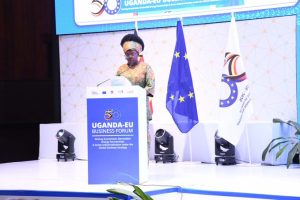
She identified opportunities in solar generation, geothermal exploration, electricity transmission and distribution, energy storage, clean cooking and decentralised renewable energy solutions for rural communities.
“I, therefore, invite European investors, financial institutions, technology providers and development partners to collaborate with the Ugandan enterprises to unlock this immense potential,” she said.
Musenero said partnerships should extend beyond financing to include technology transfer, skills development, research, innovation and local participation in renewable energy supply chains.
“Renewable energy investment must therefore not be viewed merely as an environmental obligation. It is an economic opportunity, a catalyst for industrialisation and a strategic investment in our shared future,” she said.
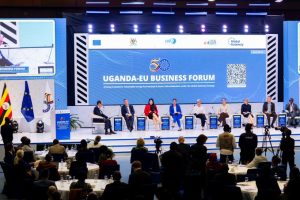
She also urged European businesses to consider Uganda as a base for manufacturing, value addition and regional market expansion, citing the country’s position within the East African Community and access to the wider African market through the African Continental Free Trade Area.
“Let this forum mark a turning point from dialogue to concrete investment commitments, and from traditional cooperation to transformative economic partnerships,” Musenero said.
She urged participants to identify bankable projects, establish business partnerships and agree on mechanisms to track implementation.
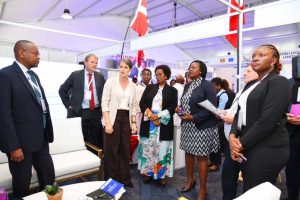
“The success of this forum should ultimately be measured not only by the discussions held but by the investments mobilised, enterprises established, jobs created and communities transformed,” she said.
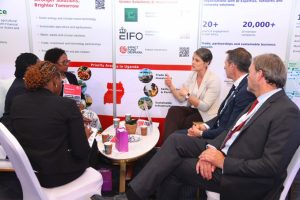
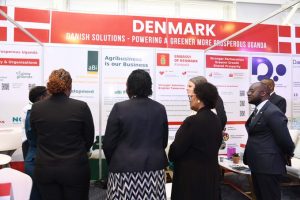
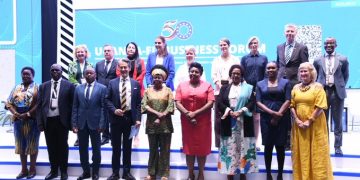
The forum brings together European and Ugandan businesses, investors, government officials and development partners to explore opportunities in energy and green industrialisation as the two sides commemorate five decades of relations.