


The government has released Shs21.82 trillion for the second quarter of the 2026/27 financial year, with Shs10.75 trillion earmarked for debt and treasury operations, accounting for nearly half of the total expenditure release.
The release, equivalent to about 26% of the approved annual budget, also provides for public-sector salaries, essential services, infrastructure development and strategic investments in agriculture, tourism, minerals, science and technology.
Patrick Ocailap, the acting Permanent Secretary and Secretary to the Treasury, said the second-quarter funding was intended to sustain economic activity, protect essential public services and finance priority investments while maintaining fiscal and debt sustainability.
The expenditure limits were determined based on annual and quarterly workplans, projected domestic revenue collections, available cash resources and anticipated disbursements from external financing, according to the Ministry of Finance.
Accounting officers have been directed to operate within the expenditure limits communicated by the Treasury.
Debt operations take largest share
Of the Shs21.82 trillion released, Shs10.75 trillion is allocated to debt and treasury operations, making it the largest expenditure category in the second-quarter release.
Government has also provided Shs2.42 trillion for wages and salaries across public institutions, while Shs376.6 billion is allocated to pensions and gratuities.
Parliament will receive Shs242.5 billion, the Judiciary Shs79.5 billion and the Office of the Auditor General Shs21.2 billion.
The allocations reflect the government’s obligations to finance public institutions and meet statutory payments alongside development spending.
Health, education and infrastructure
The Ministry of Health has been allocated Shs416.5 billion for operational requirements, GAVI vaccines and the procurement of ambulances for constituencies that have not yet received them.
National Medical Stores will receive Shs284.7 billion to purchase essential medicines and medical supplies.
The Uganda Cancer Institute and Uganda Heart Institute have been allocated a combined Shs165.5 billion for operations, specialised cancer and cardiovascular services, and development of the nuclear medicine and positron emission tomography (PET) centre.
National and regional referral hospitals will receive Shs94.5 billion.
In education, the Ministry of Education and Sports has been allocated Shs154.6 billion, while public universities will receive Shs209.1 billion.
Infrastructure spending includes Shs1.48 trillion for the Ministry of Works and Transport to support ongoing transport infrastructure development and maintenance, as well as activities involving Uganda Airlines, Uganda Railways, Kalangala Infrastructure Services and the Standard Gauge Railway.
The Ministry of Energy and Mineral Development has been allocated Shs337.1 billion for rural electrification, transmission lines and power-generation projects.
Kampala Capital City Authority will receive Shs223.8 billion for social services and city development projects, particularly roads. The Ministry of Kampala Capital City and Metropolitan Affairs has been allocated Shs67.9 billion for the Greater Kampala Metropolitan Area Urban Development Project, which covers roads, drainage and sanitation.
Funding for agriculture, tourism and oil
Under the government’s Agro-industrialisation, Tourism, Mineral-based development and Science, Technology and Innovation (ATMS) priorities, Shs224.5 billion has been allocated to agro-industrial research, innovation and related interventions.
Tourism development and promotion, including the Explore Uganda campaign, will receive Shs48.2 billion.
The Uganda National Oil Company and Petroleum Authority of Uganda have been allocated a combined Shs46.7 billion to continue interventions aimed at fast-tracking first oil.
Science, technology and innovation initiatives, including internet connectivity, digitisation and the creative industry, will receive Shs372.9 billion.
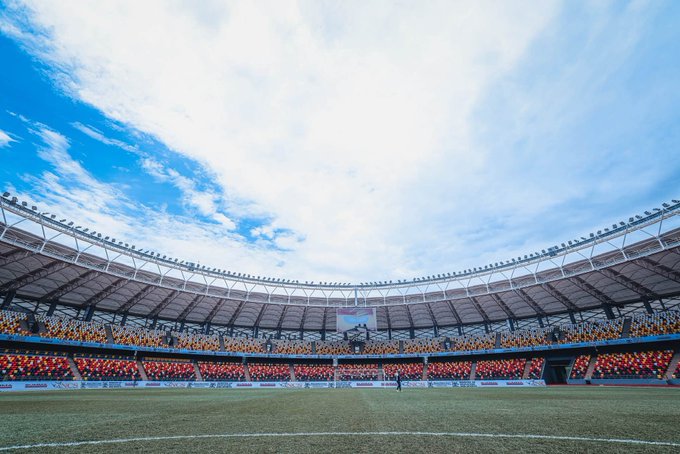
The government has also allocated Shs260.5 billion to the National Council of Sports to accelerate preparations for the 2027 Africa Cup of Nations (AFCON), which Uganda is scheduled to co-host with Kenya and Tanzania.
Security and local government
The Ministry of Defence and Veteran Affairs has been allocated Shs414.7 billion, while the Uganda Police Force will receive Shs74.9 billion and the Uganda Prisons Service Shs92.2 billion.
The Office of the President has been allocated Shs118.4 billion, while the Internal Security Organisation and External Security Organisation will receive Shs33.7 billion and Shs25.1 billion, respectively.
Local governments will receive Shs457.4 billion, comprising Shs164.6 billion in conditional and unconditional grants and Shs292.8 billion for capital development.
The Treasury has directed local government accounting officers to prioritise timely implementation of projects and service delivery within their approved allocations.
The Uganda Revenue Authority has been allocated Shs130.6 billion to facilitate revenue collection, while the Uganda Registration Services Bureau will receive Shs12 billion.
The government has also provided Shs130 billion to clear verified salary, pension, gratuity and utility arrears. Accounting officers have been directed to validate the claims before payment and avoid accumulating new arrears.
The second-quarter releases set spending limits for government entities, with actual expenditure expected to be implemented within the approved allocations and available cash resources.