



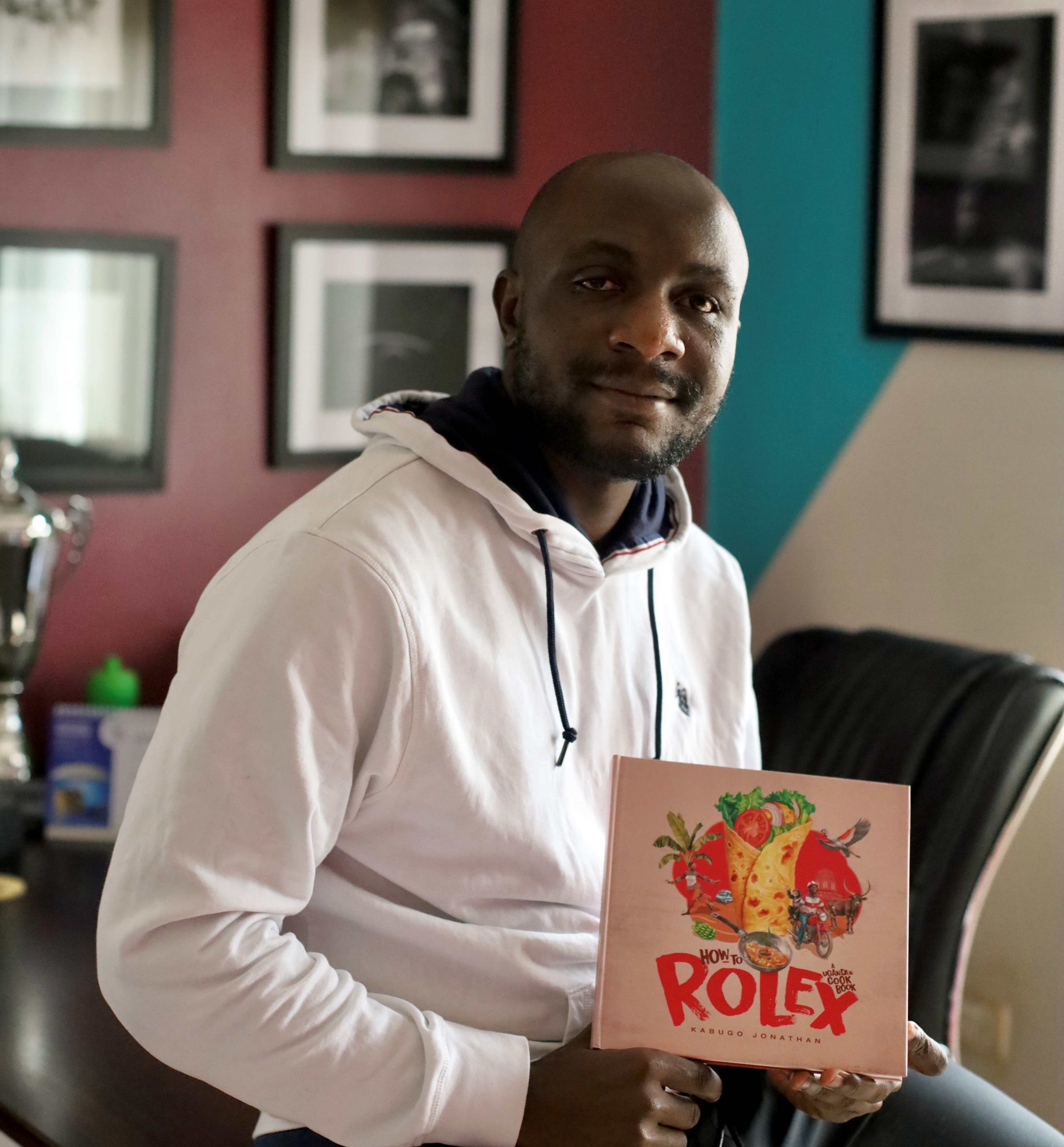
The Rolex is one of Uganda’s most loved street foods: a chapati wrapped around an omelette, fresh vegetables and whatever else fits the moment. In How to ROLEX, a Ugandan Cookbook, author and creative Jonathan Kabugo explores this everyday street dish through more than 40 tried-and-tested recipes inspired by Ugandan and East African ingredients.
The beautifully crafted hardcover book looks beyond the usual street Rolex, experimenting with vegetables, meat, chicken, sauces, dips and other fillings while keeping the chapati and egg at the centre of the wrap. It explores new ways to wrap, fold and manipulate the chapati around different fillings, while documenting the people, ingredients, businesses and communities that have grown around the Rolex stand.
Across Uganda, the chapati stall is more than a place to buy food. It serves breakfast, lunch and dinner, feeding students, workers, boda riders, travellers and entire neighbourhoods. It is also a small business and often a place where people stop, talk and catch up.
Kabugo’s deeper exploration of the Rolex began while he was revising his first book, Food That Grew Us. What started as a small section on Uganda’s street-food culture soon became a much bigger idea. One recipe led to another. Different fillings were tested. Chapatis were compared, while friends and colleagues became tasters. Some ideas worked, while others never made it into the final book. Nearly a year and more than 100 chapatis later, How to ROLEX, a Ugandan Cookbook was born.
The book now features more than 40 recipes built around chapati, omelette, vegetables and ingredients commonly found in katales (food markets) across Uganda and East Africa. Kabugo also travelled to different Rolex stands in Kampala and beyond, following recommendations and speaking to the people who run them.
Those visits helped shape an important part of the book: the life and business around the chapati stall. Vendors shared how they work, what customers like and how these small food stands survive while serving communities every day. The book consequently becomes more than a collection of recipes; it is also a record of the chefs, vendors, people, places and small businesses that have helped make the Rolex one of Uganda’s most recognised foods.
More Than Nyanya Mbissi
In Uganda, when it comes to the Rolex, some people belong to ‘Team Nyanya Mbissi’. They want fresh tomato slices added after the omelette is cooked. Others prefer ‘bisikilemu’, where the tomato is beaten into the egg and fried together. Both sides are convinced they are right.
But at the street stall, the choice is not always yours. Tomatoes may be finished. Cabbage may be missing. You get what is available. And that is part of what makes the Rolex special: it meets you where you are.
A Rolex can be simple or full. It can have cabbage, tomato, avocado, sausage, meat, chicken or chilli. It changes depending on the person making it, the customer and what is available—like most things in this dear country.
This versatility is at the heart of Kabugo’s book. Across more than 40 recipes, he experiments with different fillings while keeping the familiar chapati and omelette as the mainstay. The recipes borrow from native and regional cuisines, offering new ways of looking at a food that Ugandans already know and love.
The book also brings the street-tested techniques and hacks of the Rolex stand into the home kitchen, inviting Ugandans and visitors to recreate and reinterpret the dish for themselves.
But the Rolex is about more than food. The small stalls provide affordable and reliable meals throughout the day while creating livelihoods for vendors and opportunities for suppliers of ingredients and other services. They are also social spaces where people stop, talk, argue and catch up on everything from which Arsenal player should be sold to which Gravity Omutujju song is the best.
So, whether you prefer nyanya mbissi or bisikilemu, the Rolex is much bigger than the tomato debate. It is simple, flexible, affordable and creative—and a reflection of Uganda’s street culture. How to ROLEX, a Ugandan Cookbook, is available in selected bookshops in Uganda and online for readers abroad. written by Mercy Grace Kyomuhendo.